Division of Allergy and Immunology, Children's National Hospital, Washington, DC; Department of Pediatrics, George Washington University School of Medicine, Washington, DC.
Division of Allergy and Immunology, Children's National Hospital, Washington, DC.
Ann Allergy Asthma Immunol. 2021 Aug;127(2):206-213. doi: 10.1016/j.anai.2021.03.002. Epub 2021 Mar 12.
Severe food allergic reactions can be life-threatening or fatal and are experienced by up to 40% of children with food allergies, with adolescents at greatest risk. There are no comprehensive measures to assess food allergy management behaviors that could prevent allergic reactions.
To describe food allergy self-management behaviors as reported by adolescents on a 24-hour recall measure and identify related factors.
Adolescents aged 10 to 14 years with immunoglobulin E-mediated food allergy completed the Food Allergy Management 24-Hour Recall as an interview. Participants answered questions on each food they ate on the previous day and food allergy self-management behaviors.
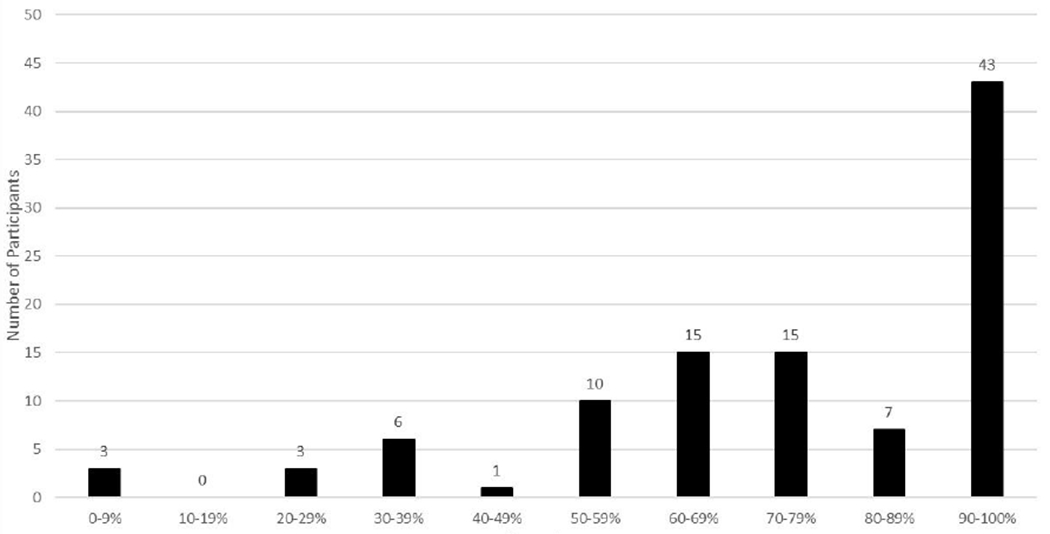
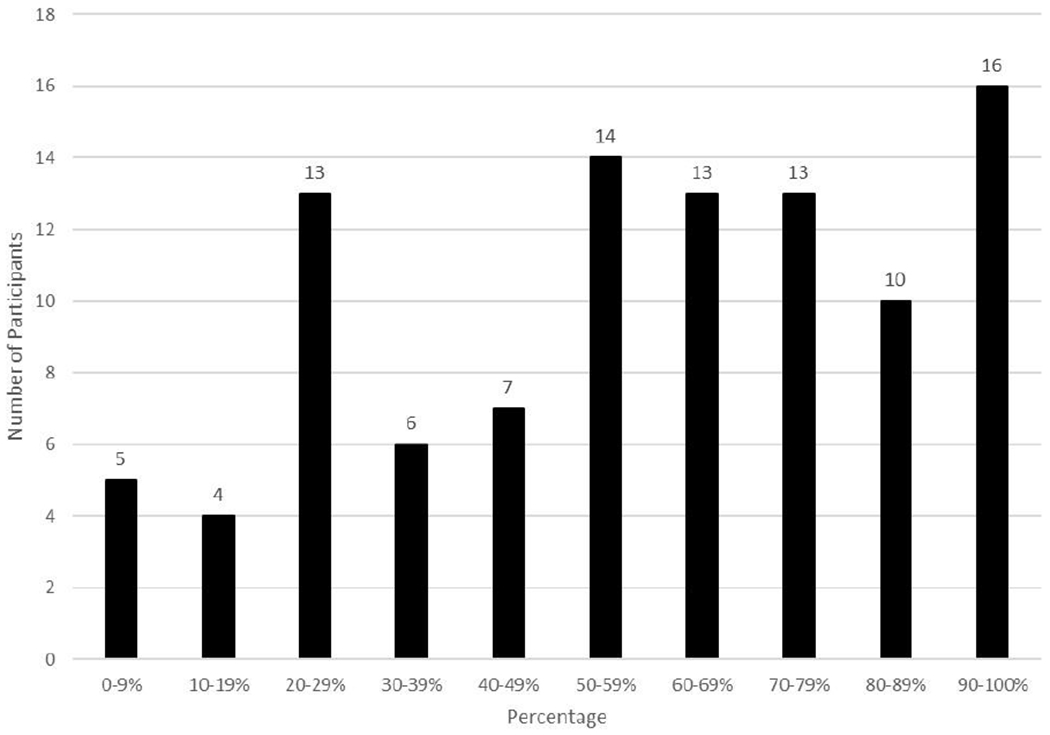
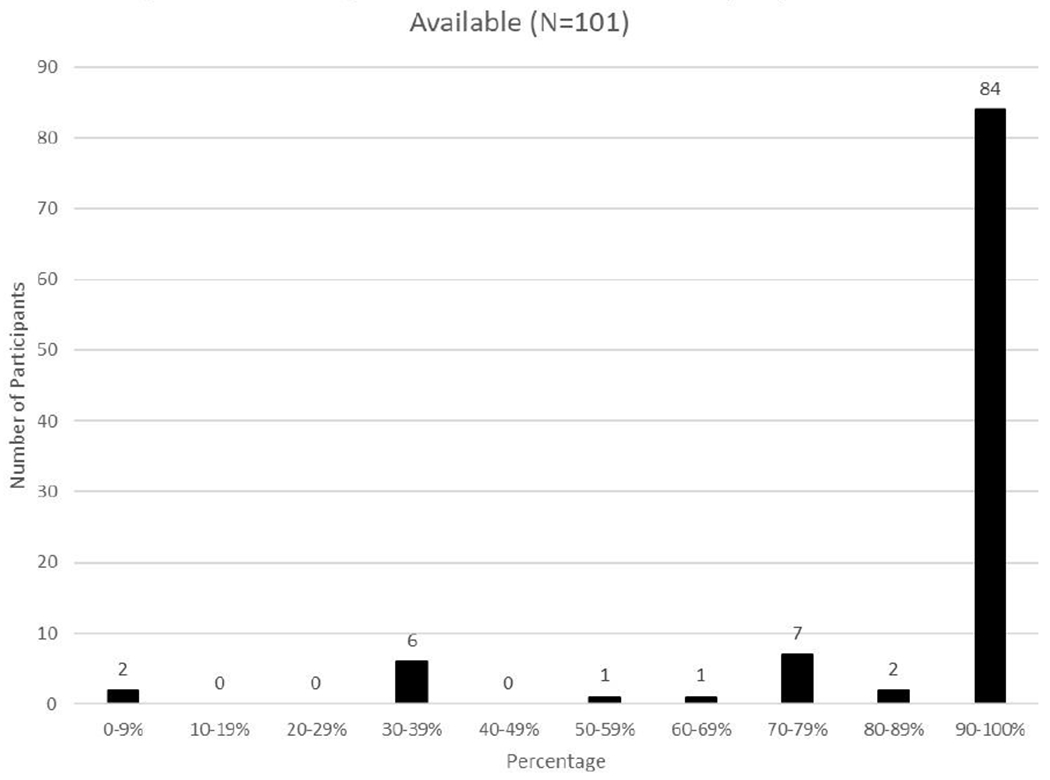
Participants were a diverse sample (28% White) of 101 adolescents (mean age = 11.80 years; 53% male sex). Most meals and snacks (76%) were observed by adults. Epinephrine autoinjectors (EAIs) were reportedly available for almost all meals and snacks (93%). Almost all foods had been eaten before (95%) and were verified as allergen free (92%). Furthermore, 35% of the time, past experience with the food was the only method used to verify safety. Child age, number of food allergies, or time since allergic reaction was not related to self-management behavior. EAI availability and ingredient verification were most common at home and in school; adult observation was least likely in the home.
Adolescents reported that EAIs were frequently available, but they relied on past experience with food to determine safety. Appropriate assessment of food safety should be a primary intervention target. The Food Allergy Management 24-Hour Recall may be a useful tool to assess and track food allergy self-management.
严重的食物过敏反应可能危及生命或导致死亡,高达 40%的食物过敏儿童会出现这种情况,青少年的风险最大。目前还没有全面的措施来评估可以预防过敏反应的食物过敏管理行为。
描述青少年在 24 小时回忆测量中报告的食物过敏自我管理行为,并确定相关因素。
年龄在 10 至 14 岁之间、具有免疫球蛋白 E 介导的食物过敏的青少年使用食物过敏管理 24 小时回忆测量进行访谈。参与者回答了前一天吃的每一种食物以及食物过敏自我管理行为的问题。
参与者是一个多样化的样本(28%为白人),共 101 名青少年(平均年龄为 11.80 岁;53%为男性)。大多数餐点和零食(76%)由成年人观察。肾上腺素自动注射器(EAI)据称几乎可用于所有餐点和零食(93%)。几乎所有食物都曾吃过(95%),且被确认为无过敏原(92%)。此外,35%的时间仅通过食物过敏的过往经验来验证安全性。儿童年龄、食物过敏数量或过敏反应发生时间与自我管理行为无关。EAI 的可用性和成分验证在家中和学校中最常见;在家中,成年人观察最不可能。
青少年报告称 EAI 经常可用,但他们依靠食物过敏的过往经验来确定安全性。适当的食品安全评估应成为主要干预目标。食物过敏管理 24 小时回忆测量可能是评估和跟踪食物过敏自我管理的有用工具。