Department of Biology and Biological Engineering, Chalmers University of Technology, SE412 96 Gothenburg, Sweden.
Department of Biology and Biological Engineering, Chalmers University of Technology, SE412 96 Gothenburg, Sweden;
Proc Natl Acad Sci U S A. 2021 Mar 23;118(12). doi: 10.1073/pnas.2020154118.
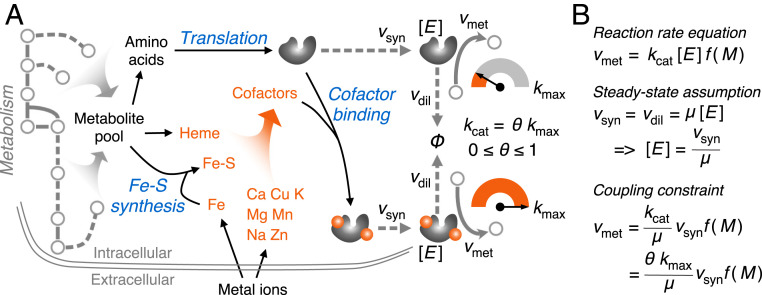
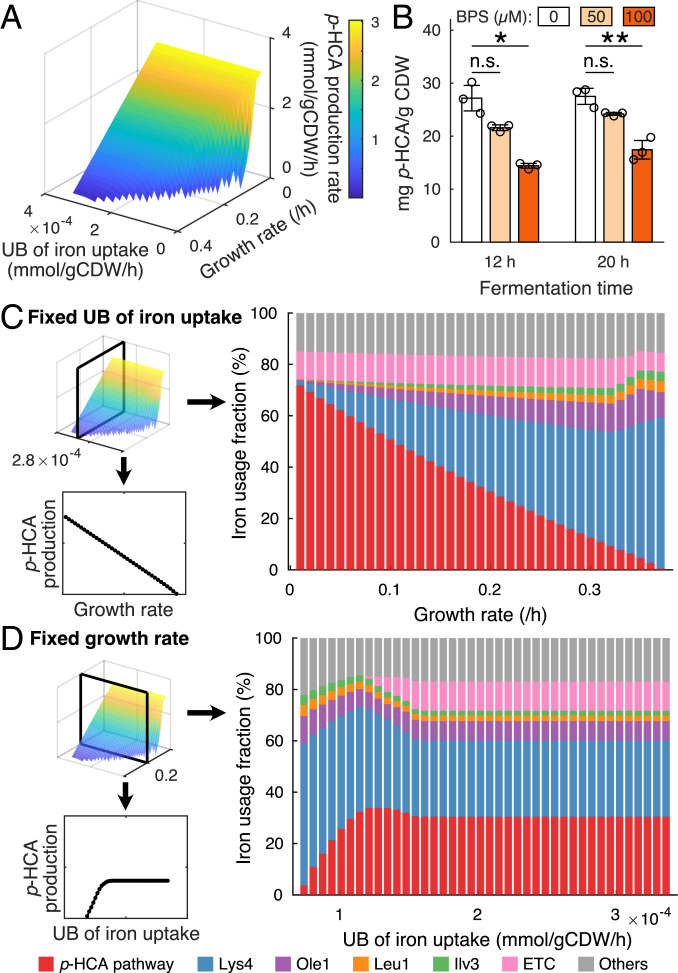
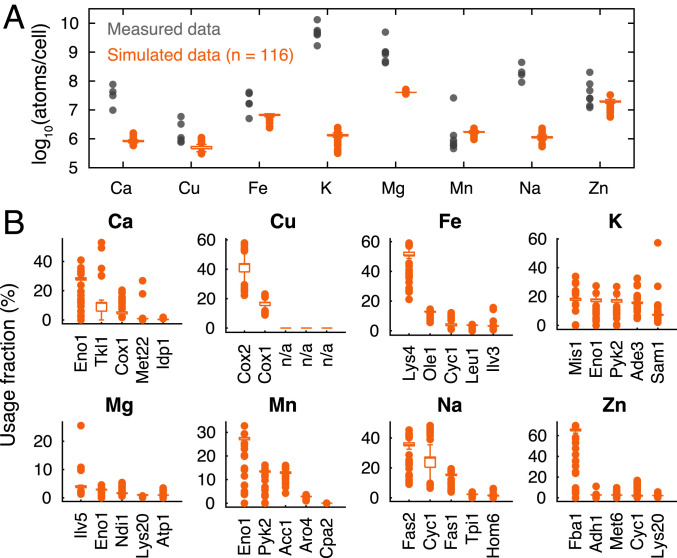
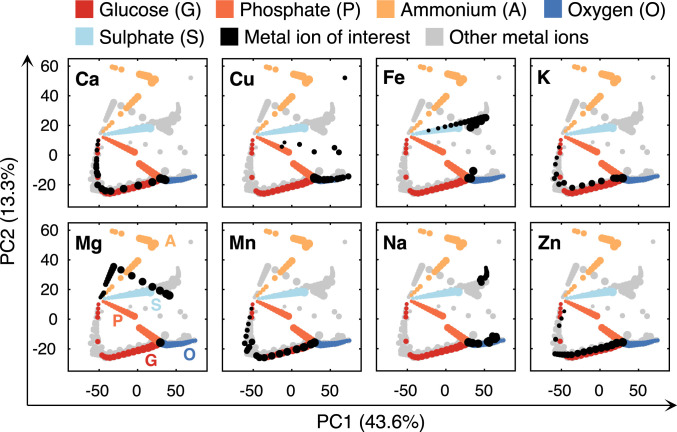
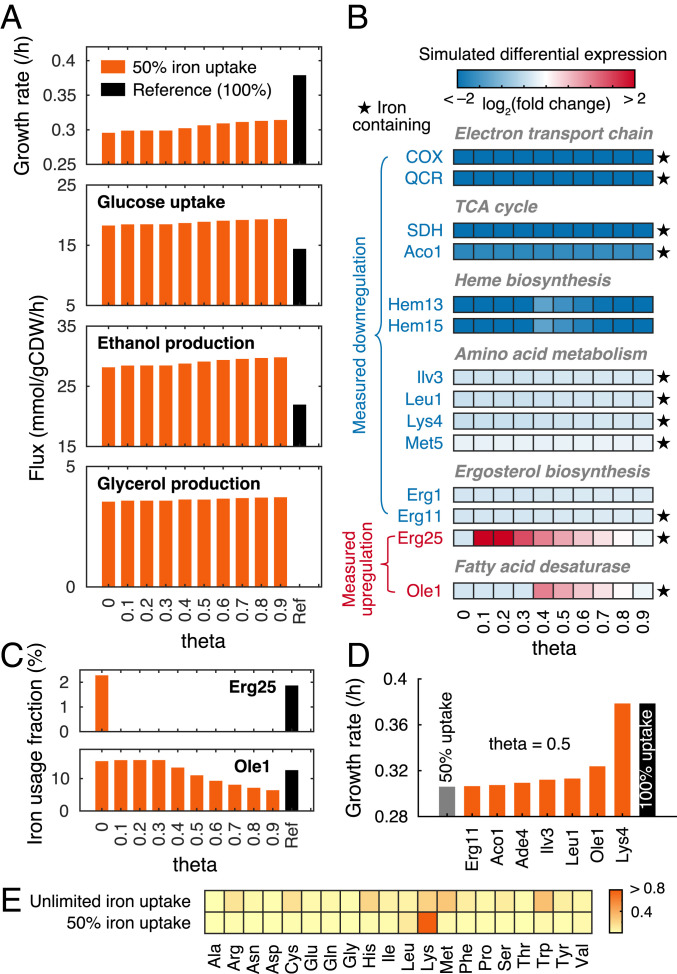
Metal ions are vital to metabolism, as they can act as cofactors on enzymes and thus modulate individual enzymatic reactions. Although many enzymes have been reported to interact with metal ions, the quantitative relationships between metal ions and metabolism are lacking. Here, we reconstructed a genome-scale metabolic model of the yeast to account for proteome constraints and enzyme cofactors such as metal ions, named CofactorYeast. The model is able to estimate abundances of metal ions binding on enzymes in cells under various conditions, which are comparable to measured metal ion contents in biomass. In addition, the model predicts distinct metabolic flux distributions in response to reduced levels of various metal ions in the medium. Specifically, the model reproduces changes upon iron deficiency in metabolic and gene expression levels, which could be interpreted by optimization principles (i.e., yeast optimizes iron utilization based on metabolic network and enzyme kinetics rather than preferentially targeting iron to specific enzymes or pathways). At last, we show the potential of using the model for understanding cell factories that harbor heterologous iron-containing enzymes to synthesize high-value compounds such as -coumaric acid. Overall, the model demonstrates the dependence of enzymes on metal ions and links metal ions to metabolism on a genome scale.
金属离子对新陈代谢至关重要,因为它们可以作为酶的辅助因子,从而调节单个酶反应。尽管已经报道了许多酶与金属离子相互作用,但金属离子与新陈代谢之间的定量关系尚不清楚。在这里,我们重建了酵母的基因组规模代谢模型,以考虑蛋白质组的限制和酶辅助因子(如金属离子),命名为 CofactorYeast。该模型能够估计细胞中各种条件下与酶结合的金属离子的丰度,这些丰度与生物量中测量到的金属离子含量相当。此外,该模型预测了在培养基中各种金属离子水平降低时,不同的代谢通量分布。具体而言,该模型再现了在缺铁条件下代谢和基因表达水平的变化,这些变化可以通过优化原理来解释(即,酵母根据代谢网络和酶动力学优化铁的利用,而不是优先将铁靶向特定的酶或途径)。最后,我们展示了该模型在理解含有异源含铁酶的细胞工厂以合成高价值化合物(如对香豆酸)方面的潜力。总的来说,该模型表明了酶对金属离子的依赖性,并将金属离子与基因组范围内的新陈代谢联系起来。