Centre for Statistics in Medicine, Nuffield Department of Orthopaedics, Rheumatology, and Musculoskeletal Sciences, University of Oxford, OX3 7LD, UK.
Janssen Research and Development, Titusville, NJ USA.
Rheumatology (Oxford). 2021 Oct 9;60(SI):SI37-SI50. doi: 10.1093/rheumatology/keab250.
Patients with autoimmune diseases were advised to shield to avoid coronavirus disease 2019 (COVID-19), but information on their prognosis is lacking. We characterized 30-day outcomes and mortality after hospitalization with COVID-19 among patients with prevalent autoimmune diseases, and compared outcomes after hospital admissions among similar patients with seasonal influenza.
A multinational network cohort study was conducted using electronic health records data from Columbia University Irving Medical Center [USA, Optum (USA), Department of Veterans Affairs (USA), Information System for Research in Primary Care-Hospitalization Linked Data (Spain) and claims data from IQVIA Open Claims (USA) and Health Insurance and Review Assessment (South Korea). All patients with prevalent autoimmune diseases, diagnosed and/or hospitalized between January and June 2020 with COVID-19, and similar patients hospitalized with influenza in 2017-18 were included. Outcomes were death and complications within 30 days of hospitalization.
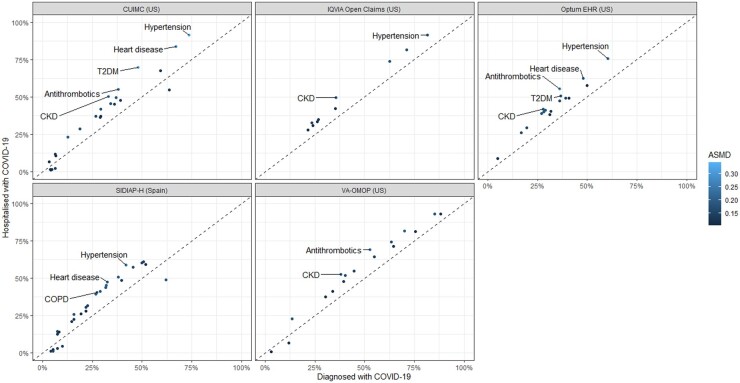
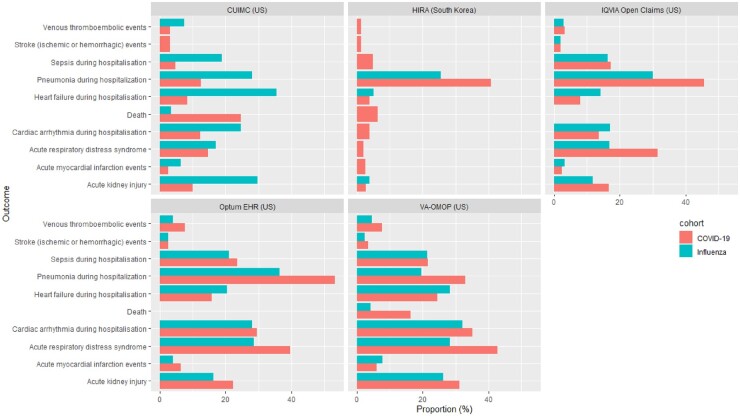
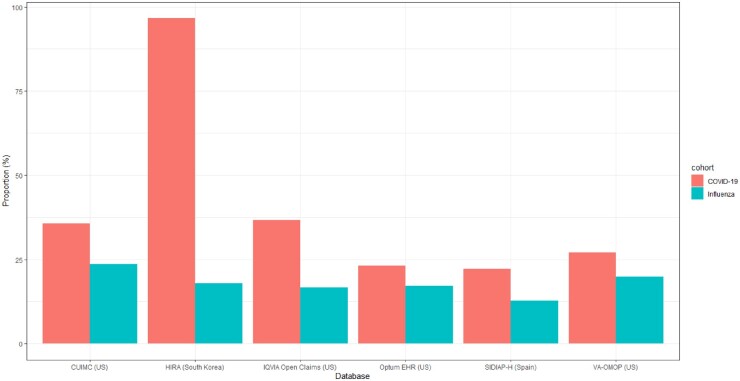
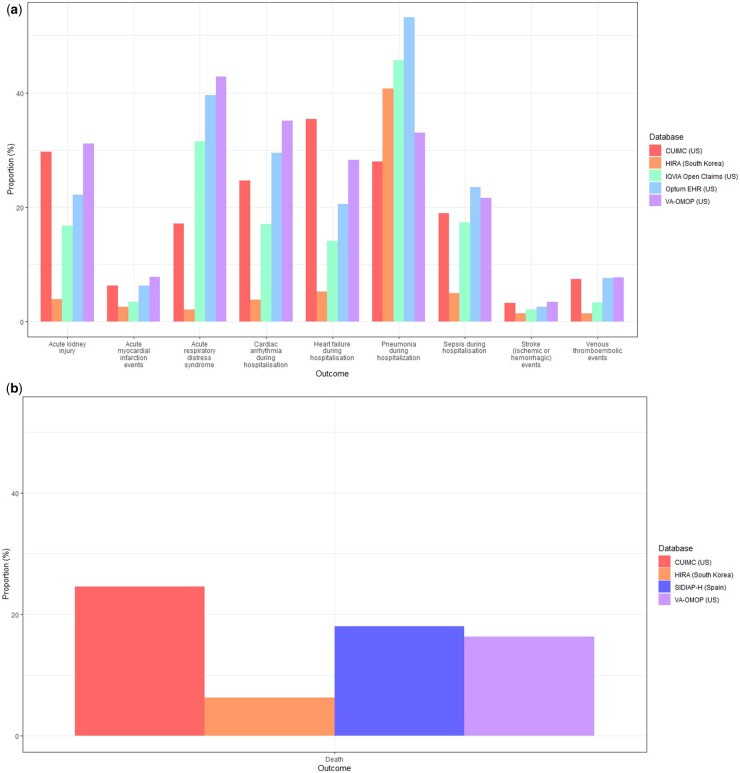
We studied 133 589 patients diagnosed and 48 418 hospitalized with COVID-19 with prevalent autoimmune diseases. Most patients were female, aged ≥50 years with previous comorbidities. The prevalence of hypertension (45.5-93.2%), chronic kidney disease (14.0-52.7%) and heart disease (29.0-83.8%) was higher in hospitalized vs diagnosed patients with COVID-19. Compared with 70 660 hospitalized with influenza, those admitted with COVID-19 had more respiratory complications including pneumonia and acute respiratory distress syndrome, and higher 30-day mortality (2.2-4.3% vs 6.32-24.6%).
Compared with influenza, COVID-19 is a more severe disease, leading to more complications and higher mortality.
患有自身免疫性疾病的患者被建议进行防护以避免感染 2019 年冠状病毒病(COVID-19),但缺乏有关其预后的信息。我们描述了在 COVID-19 流行期间住院的自身免疫性疾病患者的 30 天结局和死亡率,并比较了在类似季节性流感住院的患者中的结局。
利用哥伦比亚大学欧文医学中心(美国,Optum(美国),美国退伍军人事务部(美国),初级保健住院链接数据信息系统(西班牙)和 IQVIA Open Claims(美国)和健康保险和审查评估(韩国)的索赔数据)的电子健康记录数据进行了一项多国网络队列研究。所有在 2020 年 1 月至 6 月期间被诊断为 COVID-19 且有自身免疫性疾病既往史并住院的患者,以及在 2017-18 年期间因流感住院的类似患者均被纳入研究。结局是住院后 30 天内的死亡和并发症。
我们研究了 133589 例被诊断患有 COVID-19 且有自身免疫性疾病既往史的患者和 48418 例住院的患者。大多数患者为女性,年龄≥50 岁,伴有既往合并症。与 COVID-19 诊断患者相比,住院患者中高血压(45.5-93.2%)、慢性肾脏病(14.0-52.7%)和心脏病(29.0-83.8%)的患病率更高。与因流感住院的 70660 例患者相比,因 COVID-19 住院的患者发生肺炎和急性呼吸窘迫综合征等呼吸道并发症更多,30 天死亡率更高(2.2-4.3% vs 6.32-24.6%)。
与流感相比,COVID-19 是一种更严重的疾病,导致更多的并发症和更高的死亡率。