Department of Thoracic Surgery, Shengjing Hospital of China Medical University, Shenyang, China.
Department of Urology, Shengjing Hospital of China Medical University, No. 36, San Hao Street, Shenyang, 110004, Liaoning, China.
BMC Psychiatry. 2021 Mar 16;21(1):152. doi: 10.1186/s12888-021-03143-z.
To explore the prevalence of depressive symptoms and the associated risk factors in frontline nurses under COVID-19 pandemic.
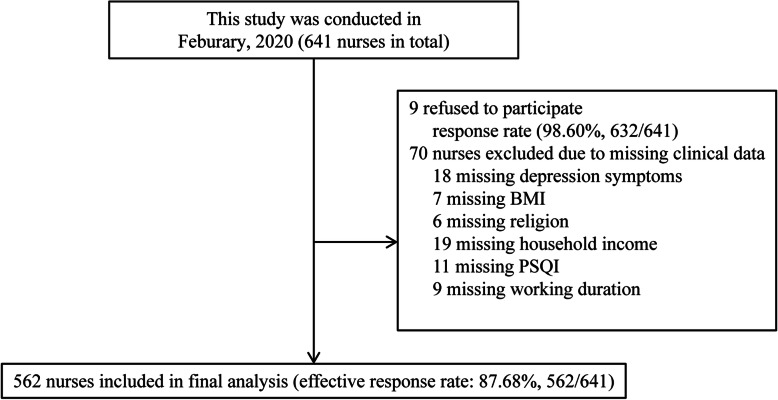
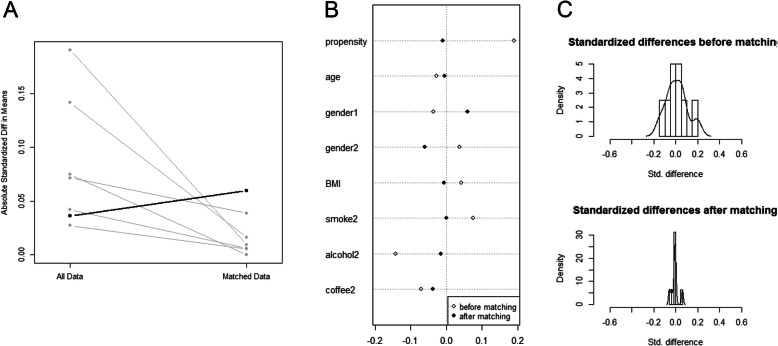
This cross-sectional study was conducted from February 20, 2020 to March 20, 2020 and involved 562 frontline nurses. The effective response rate was 87.68%. After propensity score matched, there were 498 participants left. Extensive characteristics, including demographics, dietary habits, life-related factors, work-related factors, and psychological factors were collected based on a self-reported questionnaire. Specific scales measured the levels of sleep quality, physical activity, depressive symptoms, perceived organization support and psychological capital. Adjusted odds ratios and 95% confidence intervals were determined by binary paired logistic regression.
Of the nurses enrolled in the study, 50.90% had depressive symptoms. Three independent risk factors were identified: poor sleep quality (OR = 1.608, 95% CI: 1.384-1.896), lower optimism of psychological capital (OR = 0.879, 95% CI: 0.805-0.960) and no visiting friend constantly (OR = 0.513, 95% CI: 0.286-0.920).
This study revealed a considerable high prevalence of depressive symptoms in frontline nurses during the COVID-19 outbreak, and identified three risk factors, which were poor sleep quality, lower optimism of psychological capital, and no visiting friend constantly. Protecting mental health of nurses is important for COVID-19 pandemic control and their wellbeing. These findings enrich the existing theoretical model of depression and demonstrated a critical need for additional strategies that could address the mental health in frontline nurses for policymakers.
为了探索新冠疫情下一线护士的抑郁症状况及其相关危险因素。
本横断面研究于 2020 年 2 月 20 日至 3 月 20 日进行,纳入 562 名一线护士。有效应答率为 87.68%。经过倾向评分匹配后,剩余 498 名参与者。根据自我报告问卷收集广泛的特征,包括人口统计学、饮食习惯、生活相关因素、工作相关因素和心理因素。特定量表测量睡眠质量、身体活动、抑郁症状、感知组织支持和心理资本水平。通过二项配对 logistic 回归确定调整后的比值比和 95%置信区间。
研究中护士的抑郁症状发生率为 50.90%。确定了三个独立的危险因素:睡眠质量差(OR=1.608,95%CI:1.384-1.896)、心理资本乐观程度较低(OR=0.879,95%CI:0.805-0.960)和没有经常探望朋友(OR=0.513,95%CI:0.286-0.920)。
本研究揭示了新冠疫情期间一线护士抑郁症状的高患病率,并确定了三个危险因素,即睡眠质量差、心理资本乐观程度较低和没有经常探望朋友。保护护士的心理健康对于新冠疫情控制和护士的幸福感非常重要。这些发现丰富了现有的抑郁理论模型,并表明决策者需要额外的策略来解决一线护士的心理健康问题。