Palladium Group, Washington, DC, USA.
Palladium Group, Bamako, Mali.
Glob Health Sci Pract. 2021 Mar 15;9(Suppl 1):S79-S97. doi: 10.9745/GHSP-D-20-00404.
In Mali, community health workers (CHWs) deliver essential community care (ECC) to rural populations. The dominance of external funding for the program threatens the sustainability of this critical workforce as donor financing decreases. This article summarizes results of analyses aimed at assisting Mali's decision makers and leaders in initiating a transition to a sustainable CHW program supported by domestic funding through strategic and rational investment.
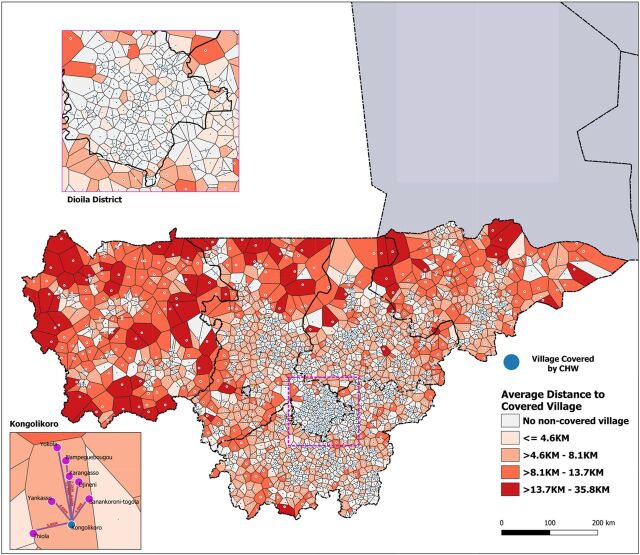
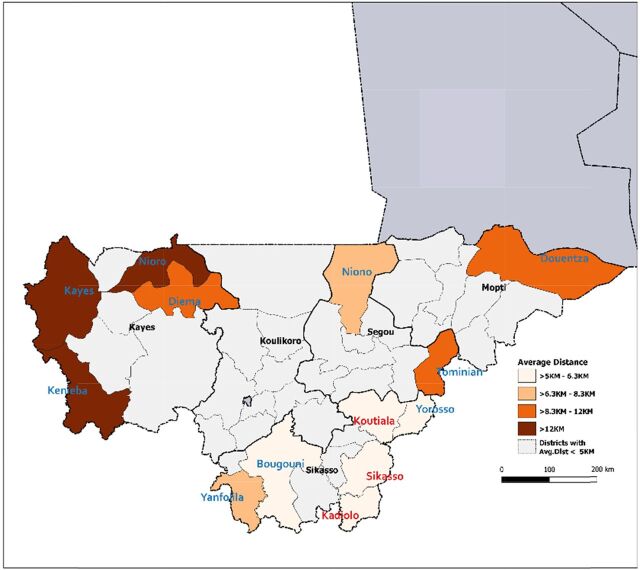
Data on ECC implementation norms, workforce, coverage, utilization, cost, and geospatial features were collected between 2016 and 2019. The data informed interlinked CHW financing analyses-situational, services costing, efficiency, and geospatial mapping. Analysis showed distribution of reported expenditures, estimates of required CHW funding, cost-saving options, and spatially visualized discrepancies between spending estimates and normative costs.
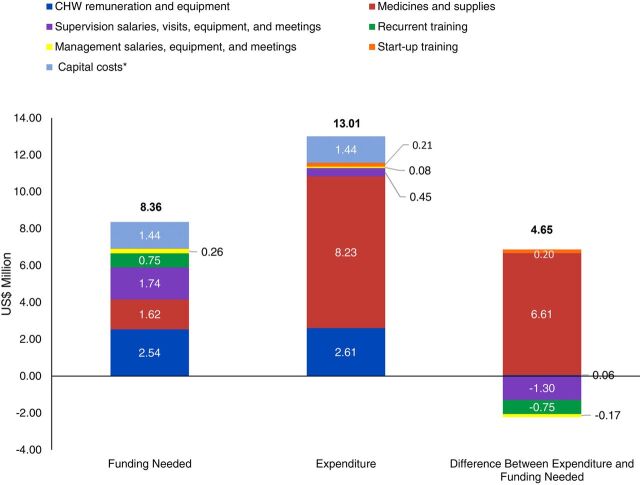
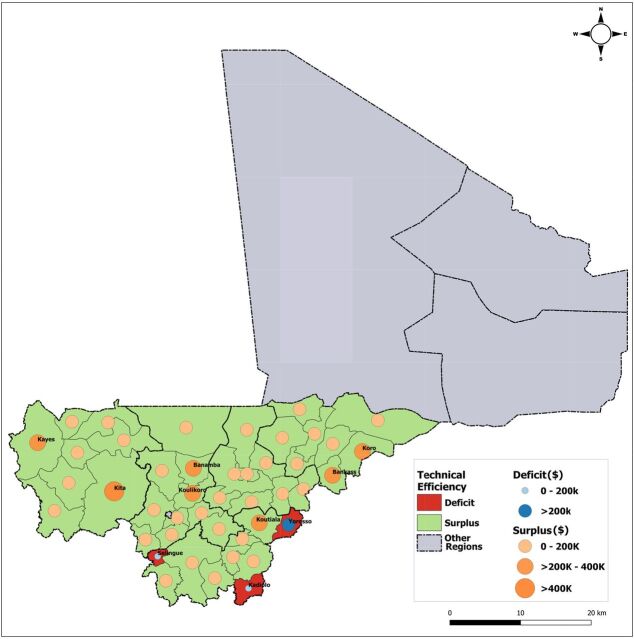
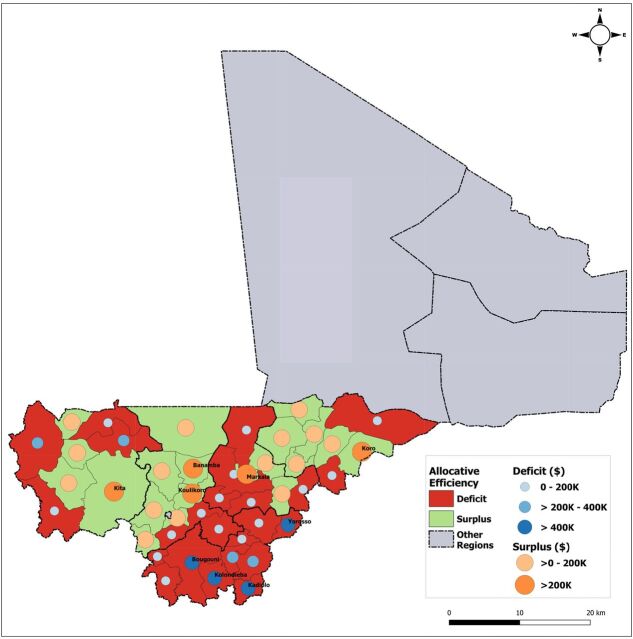
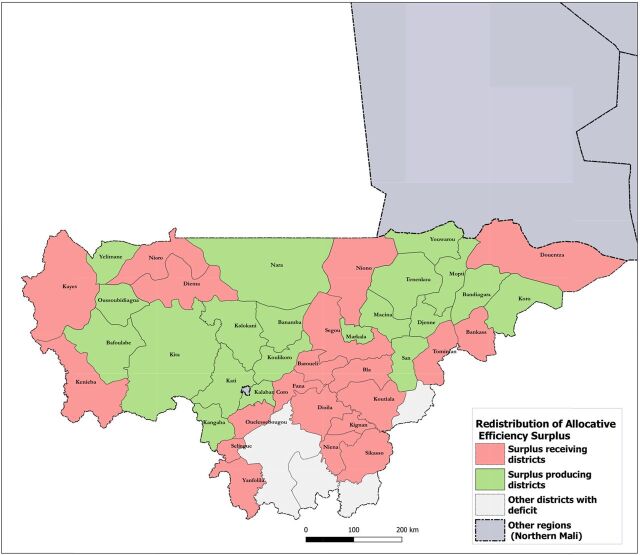
Thirteen financing sources contributed to CHW program expenditures, 88% of which were from international donors, for a package of 23 curative, preventive, and promotive interventions. In 2015, the CHW program spent US$13.01 million; an estimated US$8.36 million would have been needed to achieve the same service volume under standard care protocols. Medicines and start-up training had US$6.88 million more than needed; supervision, program management, and recurrent training components were underfunded by US$2.2 million. Cost-saving opportunities of US$6.16 million were identified in 41 of 44 districts. Funding reallocation opportunities (after meeting technical efficiency requirements) were identified in 20 of 44 districts (US$2.56 million). Use of geospatial targeting and mapping suggests district- and village-level reallocation options for theoretical funding surpluses.
CHW costs can be significantly reduced without sacrificing service technical quality. Spending can be geographically targeted to optimize service use by rural populations. Efficiency analyses provide evidence to build stronger engagement, support improved decision making, efficiently prioritize resources, and target investments for sustainable financing of CHW programs.
在马里,社区卫生工作者(CHW)为农村人口提供基本社区护理(ECC)。由于捐助者供资减少,该计划对外界资金的依赖严重威胁到这一关键劳动力的可持续性。本文总结了旨在协助马里决策者和领导人通过战略性和理性投资,用国内资金为 CHW 计划提供支持,从而实现可持续过渡的分析结果。
2016 年至 2019 年期间收集了 ECC 实施规范、劳动力、覆盖范围、利用率、成本和地理空间特征方面的数据。这些数据为相互关联的 CHW 融资分析提供了信息,包括现状分析、服务成本核算、效率分析和地理空间映射。分析显示了报告支出的分布情况、估计的 CHW 资金需求、成本节约方案以及支出估计与规范成本之间的空间差异。
13 个资金来源为 CHW 项目支出提供了资金,其中 88%来自国际捐助者,用于提供 23 项治疗、预防和促进性干预措施。2015 年,CHW 项目支出 1301 万美元;根据标准护理协议,要达到相同的服务量,估计需要 836 万美元。药品和启动培训的支出比实际需要多 688 万美元;监督、项目管理和经常性培训部分的资金不足 220 万美元。在 44 个区中的 41 个区确定了 616 万美元的成本节约机会。在 44 个区中的 20 个区(256 万美元)确定了资金重新分配机会(在满足技术效率要求之后)。使用地理空间定位和映射技术可以为农村人口提供更优化的服务利用,从而确定区和村庄一级的资金再分配方案。
在不牺牲服务技术质量的情况下,可以显著降低 CHW 成本。可以通过地理定位来优化农村人口对服务的利用。效率分析为建立更强的参与度、支持改进决策、有效优先分配资源以及针对 CHW 计划的可持续供资进行投资提供了证据。