Department of Infectious Diseases, Union Hospital, Tongji Medical College, Huazhong University of Science and Technology, Wuhan 430022, Hubei Province, China.
World J Gastroenterol. 2021 Mar 7;27(9):782-793. doi: 10.3748/wjg.v27.i9.782.
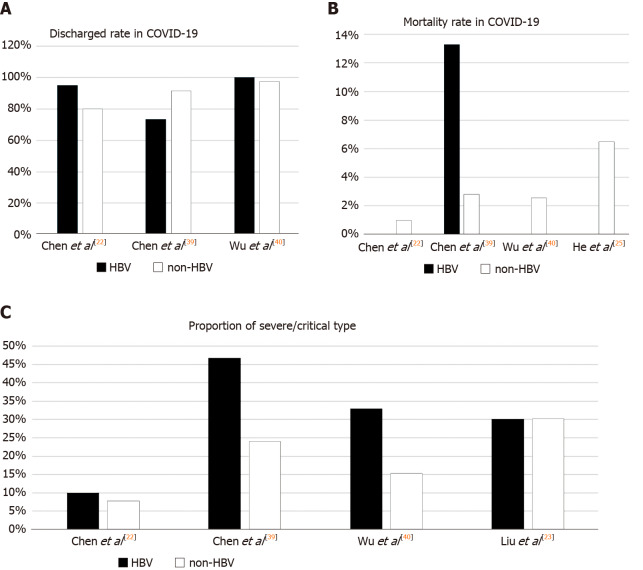
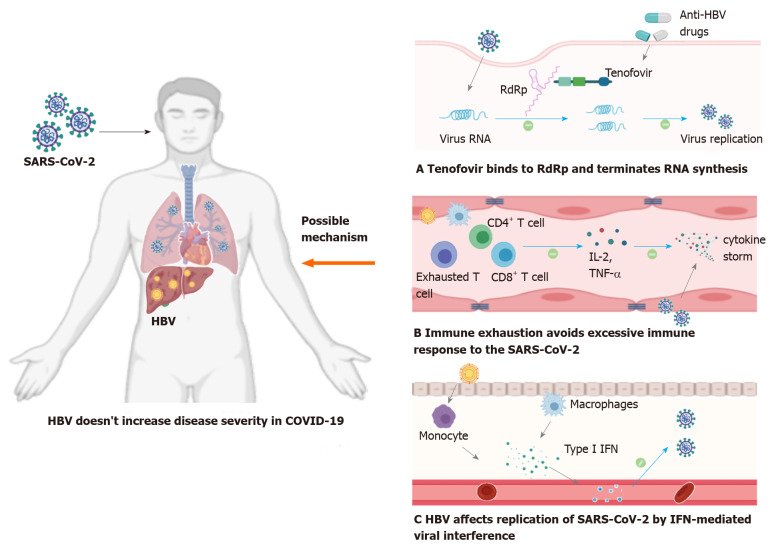
Coronavirus disease 2019 (COVID-19) has become a global pandemic and garnered international attention. The causative pathogen of COVID-19 is severe acute respiratory syndrome coronavirus 2 (SARS-CoV-2), a novel, highly contagious coronavirus. Numerous studies have reported that liver injury is quite common in patients with COVID-19. Hepatitis B has a worldwide distribution as well as in China. At present, hepatitis B virus (HBV) remains a leading cause of cirrhosis, liver failure, and hepatocellular carcinoma. Because both viruses challenge liver physiology, it raises questions as to how coinfection with HBV and SARS-CoV-2 affect disease progression and mortality. Is there an increased risk of COVID-19 in patients with HBV infection? In this review, we summarize the current reports of SARS-CoV-2 and HBV coinfection and elaborate the interaction of the two diseases. The emphasis was placed on evaluating the impact of HBV infection on disease severity and clinical outcomes in patients with COVID-19 and discussing the potential mechanism behind this effect.
新型冠状病毒肺炎(COVID-19)已成为全球性大流行病,引起了国际关注。COVID-19 的病原体是严重急性呼吸系统综合征冠状病毒 2(SARS-CoV-2),这是一种新型的、高传染性的冠状病毒。许多研究报告指出,COVID-19 患者中肝损伤较为常见。乙型肝炎在全球范围内以及在中国都有分布。目前,乙型肝炎病毒(HBV)仍然是导致肝硬化、肝功能衰竭和肝细胞癌的主要原因。由于这两种病毒都对肝脏生理功能造成挑战,因此人们不禁要问,HBV 与 SARS-CoV-2 的合并感染会如何影响疾病的进展和死亡率。HBV 感染者患 COVID-19 的风险是否会增加?在这篇综述中,我们总结了目前关于 SARS-CoV-2 和 HBV 合并感染的报告,并阐述了这两种疾病的相互作用。重点评估了 HBV 感染对 COVID-19 患者疾病严重程度和临床结局的影响,并讨论了这种影响背后的潜在机制。