Prax Nicoletta, Wagner Stefanie, Schardt Jakob, Neuhaus Klaus, Clavel Thomas, Fuchs Thilo M
Lehrstuhl für Mikrobielle Ökologie, TUM School of Life Sciences, Technische Universität München, Weihenstephaner Berg 3, 85354, Freising, Germany.
ZIEL - Institute for Food & Health, Technische Universität München, Weihenstephaner Berg 1, 85354, Freising, Germany.
Anim Microbiome. 2021 Mar 17;3(1):24. doi: 10.1186/s42523-021-00082-8.
Little is known about the complex interactions between the diet, the gut microbiota, and enteropathogens. Here, the impact of two specific diets on the composition of the mouse gut microbiota and on the transcriptional response of Salmonella Typhimurium (S. Typhimurium) was analyzed in an enteritis model.
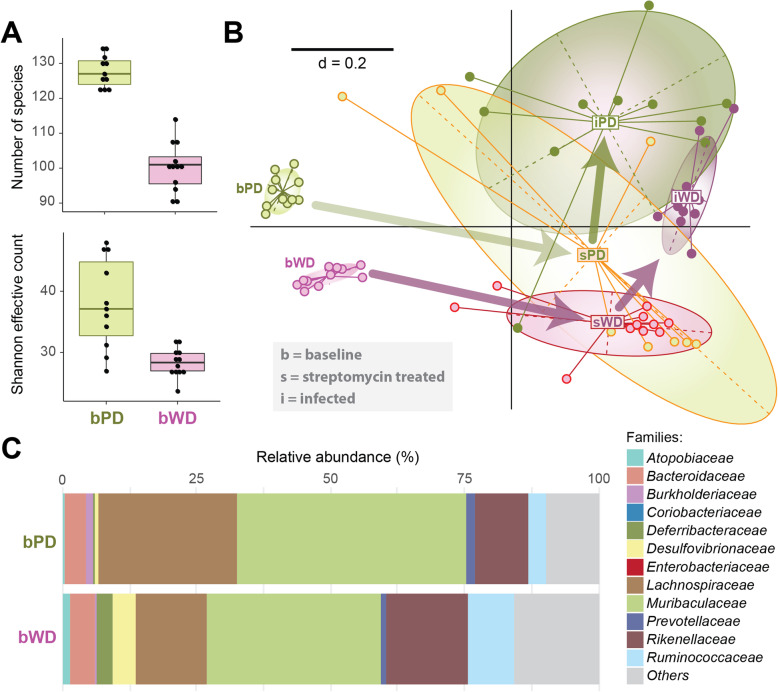
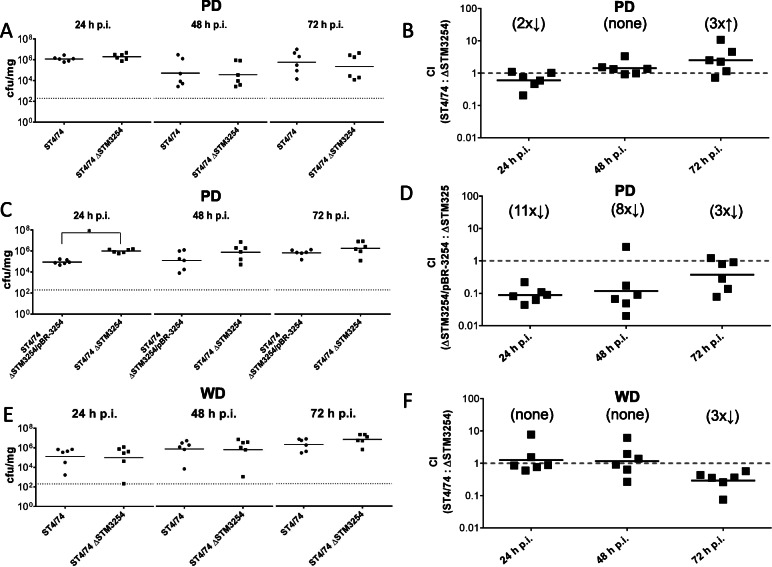
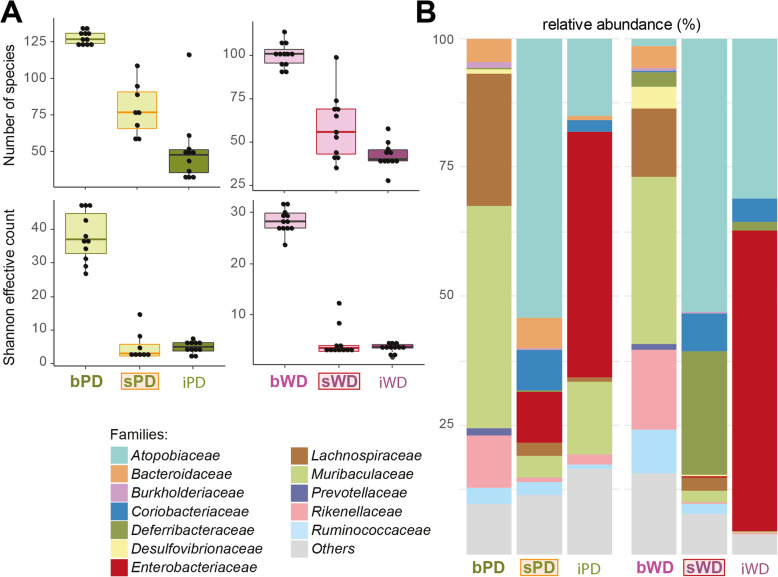
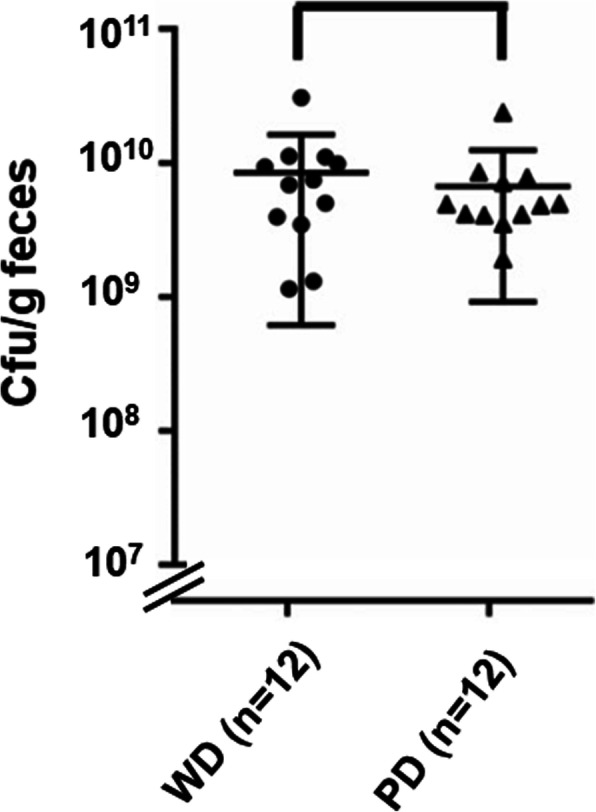
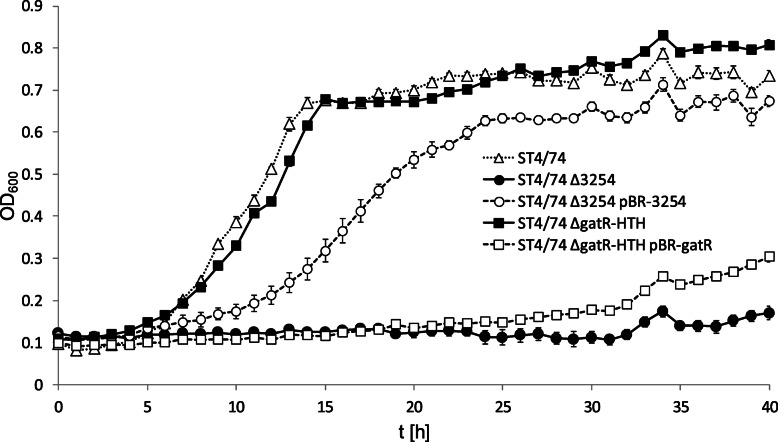
Mice were fed for two weeks a fibre-rich, plant-based diet (PD), or a Westernized diet (WD) rich in animal fat and proteins and in simple sugars, and then infected with an invasin-negative S. Typhimurium strain ST4/74 following streptomycin-treatment. Seventy-two hours post infection, fecal pathogen loads were equal in both diet groups, suggesting that neither of the diets had negatively influenced the ability of this ST4/74 strain to colonize and proliferate in the gut at this time point. To define its diet-dependent gene expression pattern, S. Typhimurium was immunomagnetically isolated from the gut content, and its transcriptome was analyzed. A total of 66 genes were more strongly expressed in mice fed the plant-based diet. The majority of these genes was involved in metabolic functions degrading substrates of fruits and plants. Four of them are part of the gat gene cluster responsible for the uptake and metabolism of galactitol and D-tagatose. In line with this finding, 16S rRNA gene amplicon analysis revealed higher relative abundance of bacterial families able to degrade fiber and nutritive carbohydrates in PD-fed mice in comparison with those nourished with a WD. Competitive mice infection experiments performed with strain ST4/74 and ST4/74 ΔSTM3254 lacking tagatose-1,6-biphosphate aldolase, which is essential for galactitol and tagatose utilization, did not reveal a growth advantage of strain ST4/74 in the gastrointestinal tract of mice fed plant-based diet as compared to the deletion mutant.
A Westernized diet and a plant-based diet evoke distinct transcriptional responses of S. Typhimurium during infection that allows the pathogen to adapt its metabolic activities to the diet-derived nutrients. This study therefore provides new insights into the dynamic interplay between nutrient availability, indigenous gut microbiota, and proliferation of S. Typhimurium.
关于饮食、肠道微生物群和肠道病原体之间的复杂相互作用,我们了解甚少。在此,我们在肠炎模型中分析了两种特定饮食对小鼠肠道微生物群组成以及鼠伤寒沙门氏菌(S. Typhimurium)转录反应的影响。
给小鼠喂食富含纤维的植物性饮食(PD)或富含动物脂肪、蛋白质和单糖的西式饮食(WD)两周,然后在链霉素处理后用侵袭素阴性的鼠伤寒沙门氏菌菌株ST4/74感染。感染后72小时,两个饮食组的粪便病原体载量相等,这表明在这个时间点,两种饮食均未对该ST4/74菌株在肠道中定殖和增殖的能力产生负面影响。为了确定其依赖饮食的基因表达模式,从肠道内容物中免疫磁珠分离出鼠伤寒沙门氏菌,并分析其转录组。共有66个基因在喂食植物性饮食的小鼠中表达更强。这些基因中的大多数参与降解水果和植物底物的代谢功能。其中四个是负责半乳糖醇和D-塔格糖摄取和代谢的gat基因簇的一部分。与此发现一致,16S rRNA基因扩增子分析显示,与喂食WD的小鼠相比,喂食PD的小鼠中能够降解纤维和营养性碳水化合物的细菌家族相对丰度更高。用缺乏对半乳糖醇和塔格糖利用至关重要的塔格糖-1,6-二磷酸醛缩酶的菌株ST4/74和ST4/74 ΔSTM3254进行的竞争性小鼠感染实验未显示,与缺失突变体相比,ST4/74菌株在喂食植物性饮食的小鼠胃肠道中有生长优势。
西式饮食和植物性饮食在感染期间引发了鼠伤寒沙门氏菌不同的转录反应,使病原体能够使其代谢活动适应饮食来源的营养物质。因此,本研究为营养可用性、肠道原生微生物群和鼠伤寒沙门氏菌增殖之间的动态相互作用提供了新的见解。