Brown Jessica A, Knollman-Porter Kelly, Hux Karen, Wallace Sarah E, Deville Camille
Department of Speech, Language, and Hearing Sciences, University of Arizona, Tucson, United States.
Department of Speech Pathology and Audiology, Miami University, Oxford, United States.
Aphasiology. 2021;35(2):200-221. doi: 10.1080/02687038.2020.1787728. Epub 2020 Jun 30.
Many people with aphasia have a strong desire to participate in reading activities despite persistent reading challenges. Digital reading devices and text-to-speech (TTS) technology are increasing in popularity and have the potential to help people with aphasia. Systematic investigation of modifiable TTS features provides a means of exploring this potential.
This study's aim was to evaluate the effect of digital highlighting synchronised with TTS auditory and written output on reading comprehension by people with aphasia and to determine their highlighting preferences.
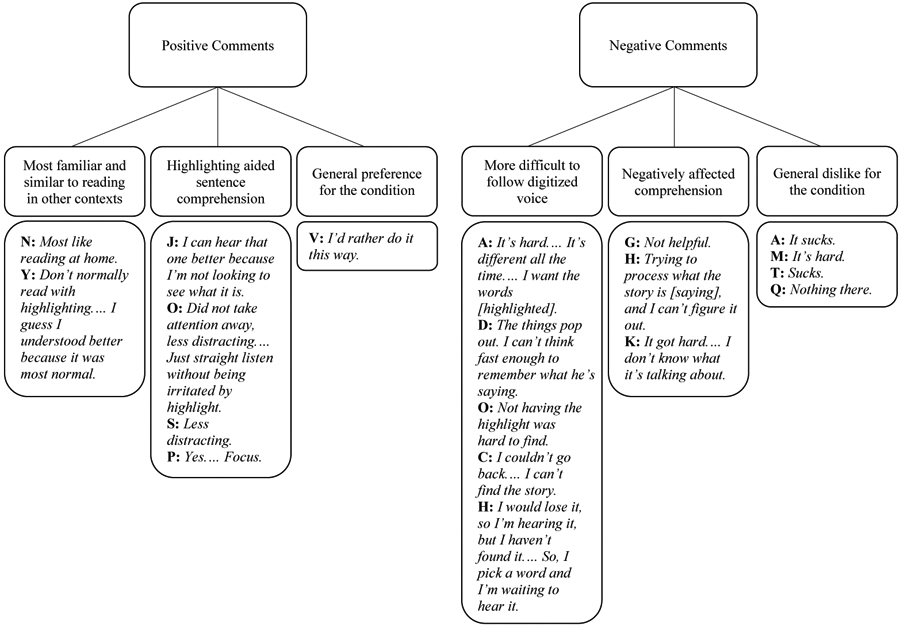
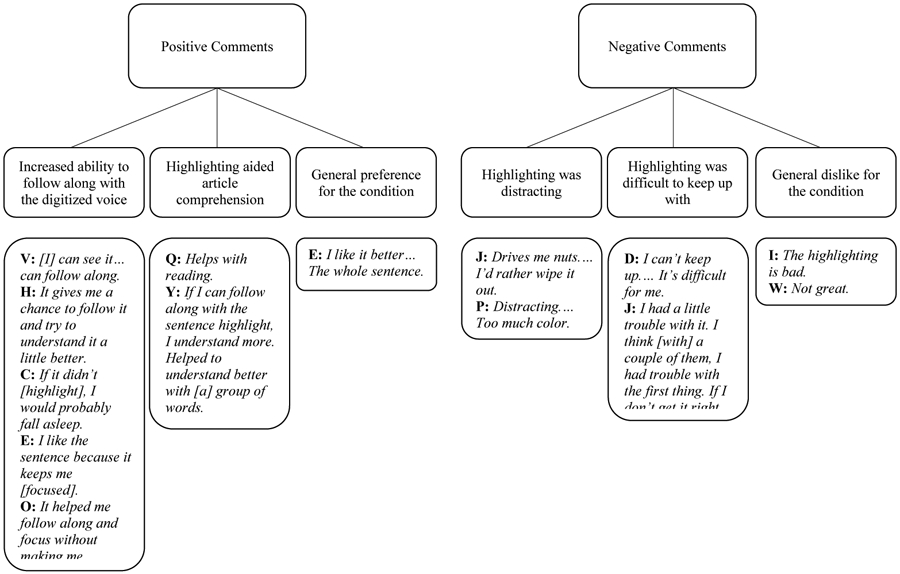
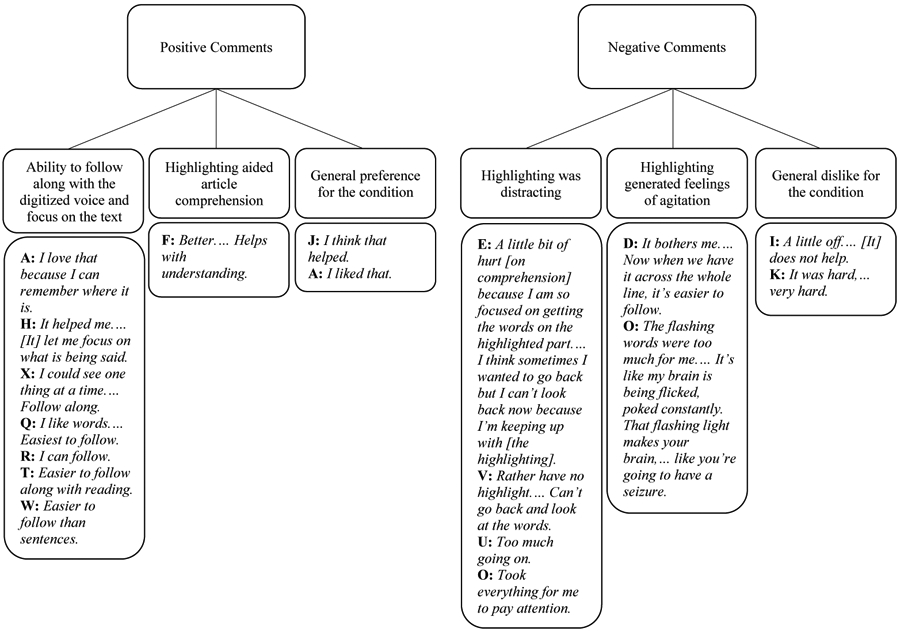
METHODS & PROCEDURES: This work was registered with clinicaltrials.gov and assigned the clinical trial registry number 01446r prior to initiation of data collection. Twenty-five adults with aphasia read and listened to passages presented in three synchronised highlighting conditions: sentence highlighting, single word highlighting, and no highlighting. Participants answered comprehension questions, selected most and least preferred conditions, and provided feedback explaining highlighting preferences.
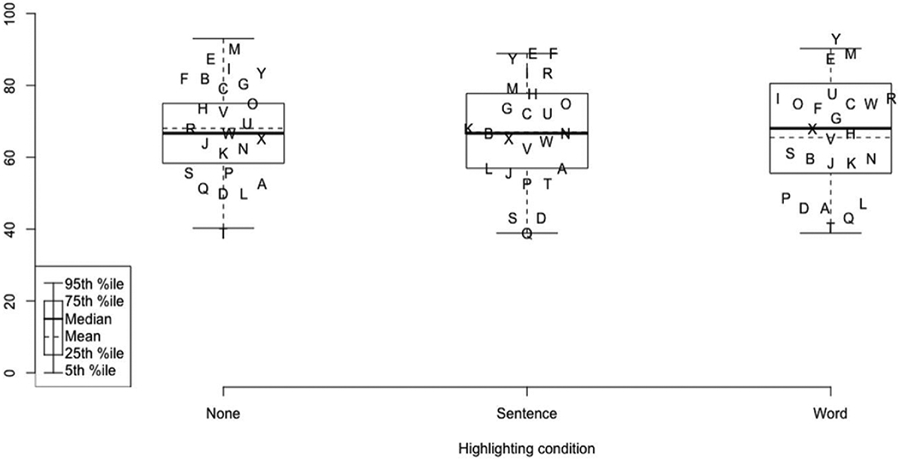
OUTCOME & RESULTS: Comprehension accuracy did not vary significantly across presentation conditions, but participants preferred either single word or sentence highlighting over no highlighting.
Neither word nor sentence highlighting benefitted or hindered comprehension by people with aphasia as a group, but individual differences may occur. Clinicians should attend to personal preferences when implementing digital highlighting as a reading support strategy.
尽管存在持续的阅读挑战,但许多失语症患者仍有强烈的参与阅读活动的愿望。数字阅读设备和文本转语音(TTS)技术越来越受欢迎,并且有潜力帮助失语症患者。对可修改的TTS功能进行系统研究提供了一种探索这种潜力的方法。
本研究的目的是评估与TTS听觉和书面输出同步的数字突出显示对失语症患者阅读理解的影响,并确定他们的突出显示偏好。
这项研究在clinicaltrials.gov上注册,并在开始数据收集之前被分配了临床试验注册号01446r。25名成年失语症患者阅读并听取了在三种同步突出显示条件下呈现的段落:句子突出显示、单个单词突出显示和无突出显示。参与者回答了理解问题,选择了最喜欢和最不喜欢的条件,并提供了解释突出显示偏好的反馈。
在不同的呈现条件下,理解准确率没有显著差异,但与无突出显示相比,参与者更喜欢单个单词或句子突出显示。
作为一个群体,单词或句子突出显示对失语症患者的理解既没有益处也没有阻碍,但可能存在个体差异。临床医生在将数字突出显示作为一种阅读支持策略实施时应关注个人偏好。