Faraza Sofia, Waldenmaier Julia, Dyrba Martin, Wolf Dominik, Fischer Florian U, Knaepen Kristel, Kollmann Bianca, Tüscher Oliver, Binder Harald, Mierau Andreas, Riedel David, Fellgiebel Andreas, Teipel Stefan
Department of Psychosomatic Medicine and Psychotherapy, Rostock University Medical Center, Rostock, Germany.
German Center for Neurodegenerative Diseases (DZNE), Rostock, Germany.
Front Aging Neurosci. 2021 Mar 1;13:592261. doi: 10.3389/fnagi.2021.592261. eCollection 2021.
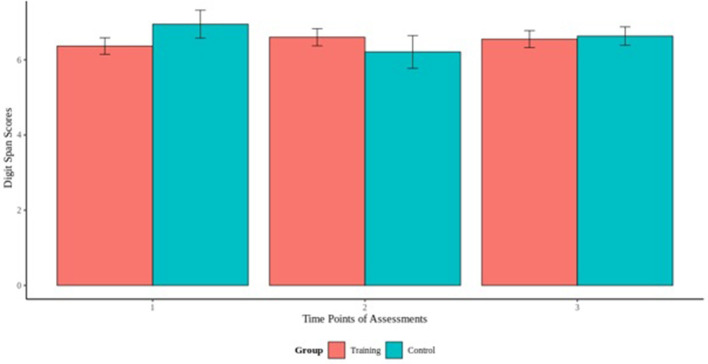
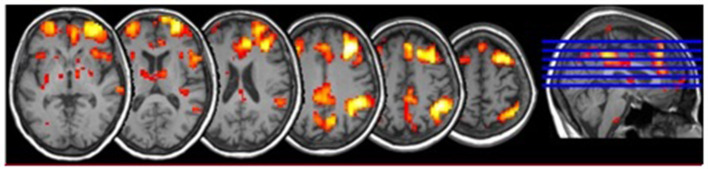
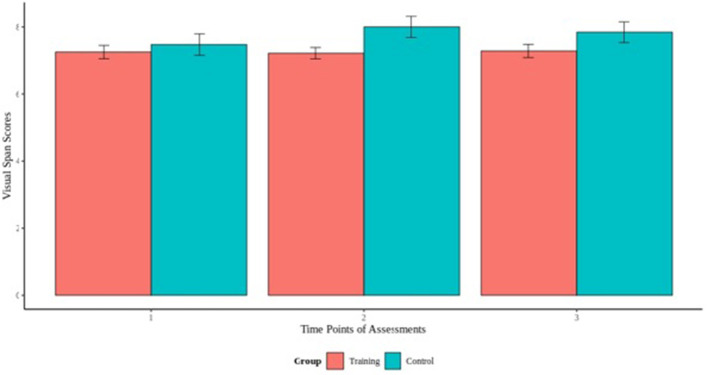
Normal aging is associated with working memory decline. A decrease in working memory performance is associated with age-related changes in functional activation patterns in the dorsolateral prefrontal cortex (DLPFC). Cognitive training can improve cognitive performance in healthy older adults. We implemented a cognitive training study to assess determinants of generalization of training gains to untrained tasks, a key indicator for the effectiveness of cognitive training. We aimed to investigate the association of resting-state functional connectivity (FC) of DLPFC with working memory performance improvement and cognitive gains after the training. A sample of 60 healthy older adults (mean age: 68 years) underwent a 4-week neuropsychological training, entailing a working memory task. Baseline resting-state functional MRI (rs-fMRI) images were acquired in order to investigate the FC of DLPFC. To evaluate training effects, participants underwent a neuropsychological assessment before and after the training. A second follow-up assessment was applied 12 weeks after the training. We used cognitive scores of digit span backward and visual block span backward tasks representing working memory function. The training group was divided into subjects who had and who did not have training gains, which was defined as a higher improvement in working memory tasks than the control group ( = 19). A high FC of DLPFC of the right hemisphere was significantly associated with training gains and performance improvement in the visuospatial task. The maintenance of cognitive gains was restricted to the time period directly after the training. The training group showed performance improvement in the digit span backward task. Functional activation patterns of the DLPFC were associated with the degree of working memory training gains and visuospatial performance improvement. Although improvement through cognitive training and acquisition of training gains are possible in aging, they remain limited.
正常衰老与工作记忆衰退相关。工作记忆表现的下降与背外侧前额叶皮质(DLPFC)功能激活模式的年龄相关变化有关。认知训练可以改善健康老年人的认知表现。我们开展了一项认知训练研究,以评估训练收益向未训练任务泛化的决定因素,这是认知训练有效性的关键指标。我们旨在研究训练后DLPFC的静息态功能连接(FC)与工作记忆表现改善及认知收益之间的关联。60名健康老年人(平均年龄:68岁)的样本接受了为期4周的神经心理学训练,其中包括一项工作记忆任务。采集了基线静息态功能磁共振成像(rs-fMRI)图像,以研究DLPFC的FC。为了评估训练效果,参与者在训练前后接受了神经心理学评估。训练12周后进行了第二次随访评估。我们使用代表工作记忆功能的数字倒背广度和视觉方块倒背广度任务的认知分数。训练组被分为有训练收益和无训练收益的受试者,训练收益被定义为在工作记忆任务中的改善程度高于对照组(=19)。右半球DLPFC的高FC与视觉空间任务中的训练收益和表现改善显著相关。认知收益的维持仅限于训练后的直接时间段。训练组在数字倒背广度任务中表现出改善。DLPFC的功能激活模式与工作记忆训练收益程度和视觉空间表现改善相关。尽管通过认知训练实现改善和获得训练收益在衰老过程中是可能的,但它们仍然有限。