Krassnig Renate, Hohenberger Gloria M, Schimmerl Paul, Schwarz Angelika, Pichler Wolfgang, Puchwein Paul, Wildburger Renate
AUVA Rehabilitation Clinic Tobelbad, Tobelbad, Austria.
Department of Orthopaedics and Trauma, Medical University of Graz, Graz, Austria.
ANZ J Surg. 2021 Apr;91(4):680-684. doi: 10.1111/ans.16694. Epub 2021 Mar 18.
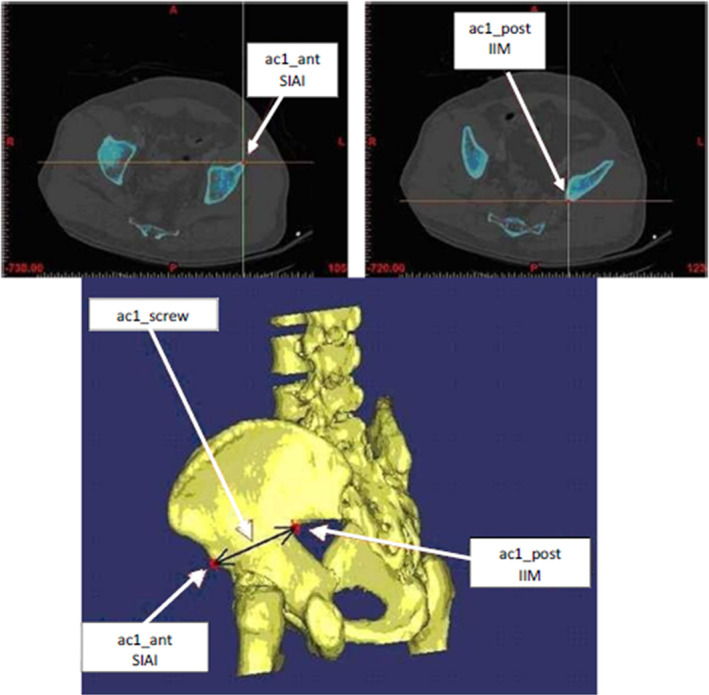
This study focuses on (i) the length of the intraosseous part of the supraacetabular pin using the insertion technique from the spina iliaca anterior inferior to the cortical part of the incisura ischiadica major, (ii) the angle of insertion of the supraacetabular pin in the transversal plane and (iii) gender-specific differences of the measured results.
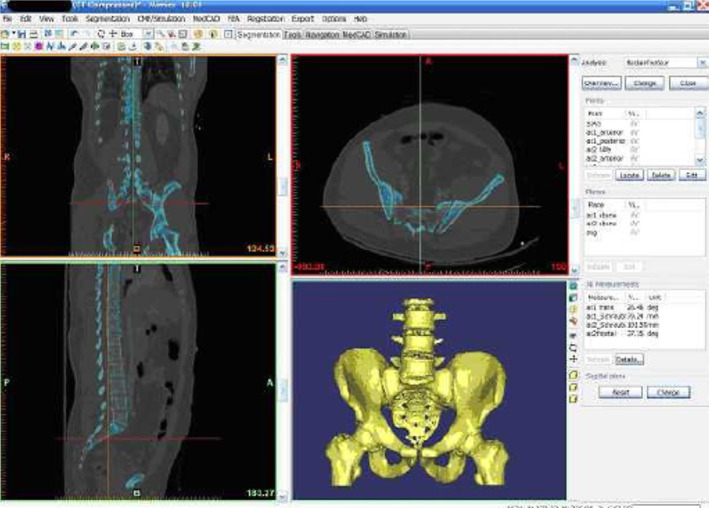
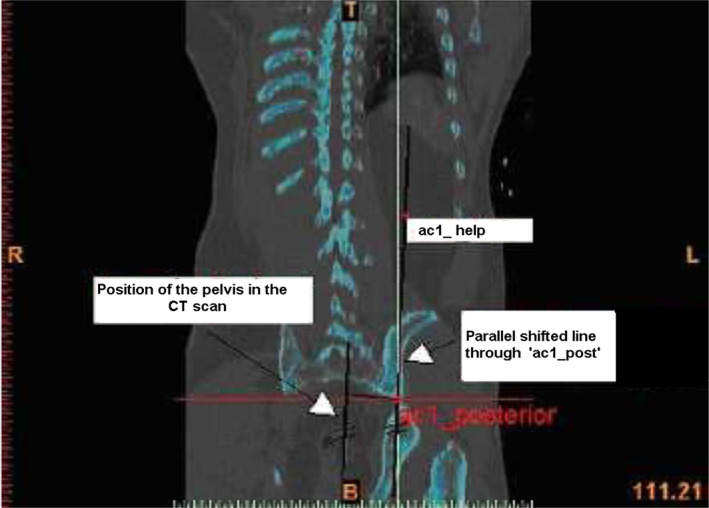
Images of uninjured pelves from 49 patients (64-line computed tomography scanner) were evaluated, and virtual external fixator pins were positioned using a three-dimensional reconstructions of computed tomography scans. The length of the pins and the insertion angle were investigated. Descriptive statistics were used, and gender-specific differences were calculated. A P-value of <0.05 was considered statistically significant.
The results showed significant differences between male and female pelves concerning both pin length and insertion angel. For male pelves, the mean screw length was 82.7 mm (SD 5.1; range 72.9-94.3). For females, this was statistically significantly shorter (P ≤ 0.001), with an average of 74.1 mm (SD 5.0; range 63.1-81.9). In the male subgroup, the insertion angle was a mean of 22.6° (SD 3.4; range 12.4-31.8), and the female pelves had an average angle of 19.7° (SD 4.0; range 11.7-24.5). These values differed statistically significantly (P = 0.0032).
Based on our measurements, we can confirm that both the length of the Schanz screws and the angle of insertion for the supraacetabular external fixator show a statistically significant difference between males and females.
本研究聚焦于(i)采用从髂前下棘至坐骨大切迹皮质部的插入技术时,髋臼上骨针在骨内部分的长度;(ii)髋臼上骨针在横断面的插入角度;以及(iii)测量结果的性别差异。
对49例患者未受伤骨盆的图像(64排计算机断层扫描仪)进行评估,通过计算机断层扫描的三维重建来定位虚拟外固定针。研究骨针长度和插入角度。采用描述性统计方法,并计算性别差异。P值<0.05被认为具有统计学意义。
结果显示,男性和女性骨盆在骨针长度和插入角度方面均存在显著差异。对于男性骨盆,平均螺钉长度为82.7毫米(标准差5.1;范围72.9 - 94.3)。对于女性,该长度在统计学上显著更短(P≤0.001),平均为74.1毫米(标准差5.0;范围63.1 - 81.9)。在男性亚组中,插入角度平均为22.6°(标准差3.4;范围12.4 - 31.8),而女性骨盆的平均角度为19.7°(标准差4.0;范围11.7 - 24.5)。这些值在统计学上有显著差异(P = 0.0032)。
基于我们的测量结果,我们可以确认,Schanz螺钉的长度以及髋臼上外固定器的插入角度在男性和女性之间均存在统计学上的显著差异。