Department of Ecology and Evolutionary Biology, Brown University, Providence, Rhode Island, United States of America.
Center for Computational Molecular Biology, Brown University, Providence, Rhode Island, United States of America.
PLoS Genet. 2021 Mar 18;17(3):e1008887. doi: 10.1371/journal.pgen.1008887. eCollection 2021 Mar.
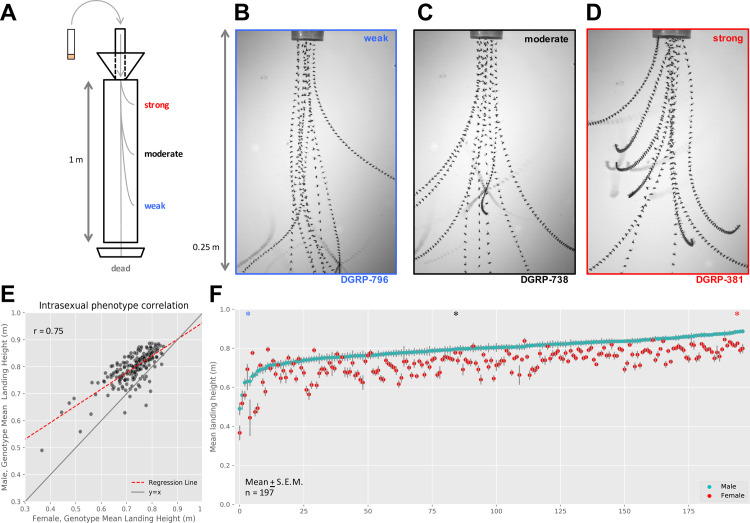
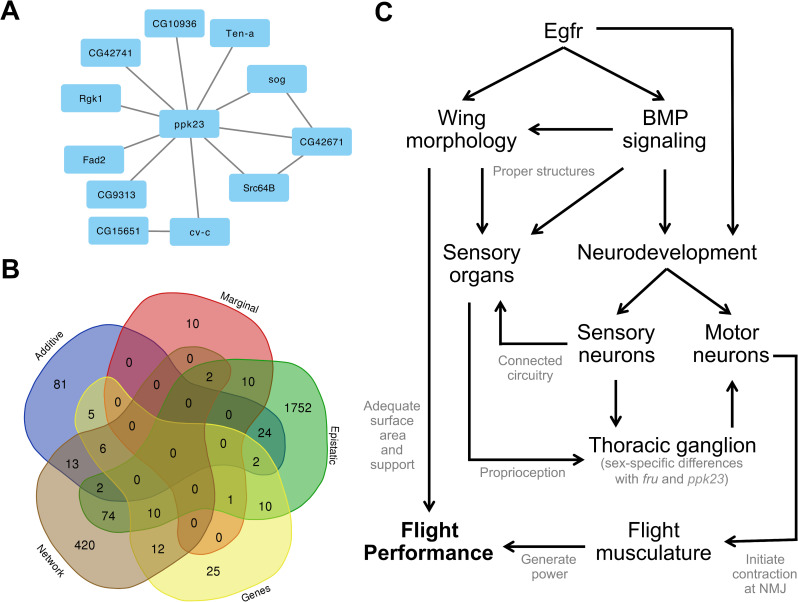
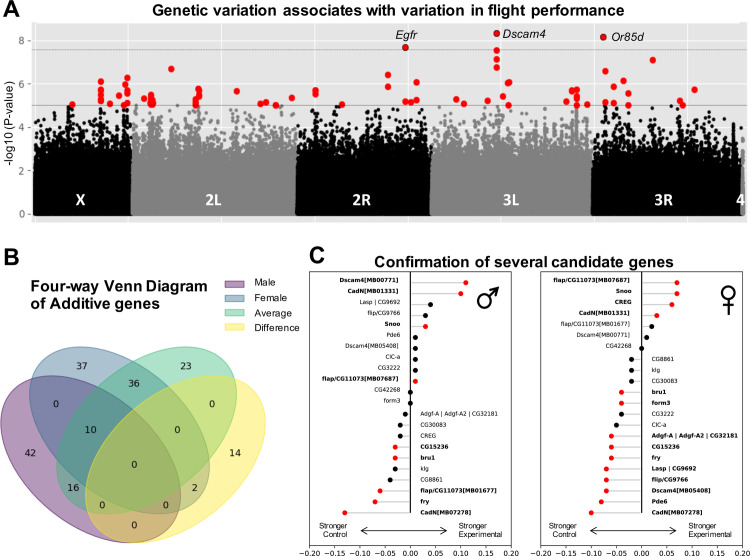
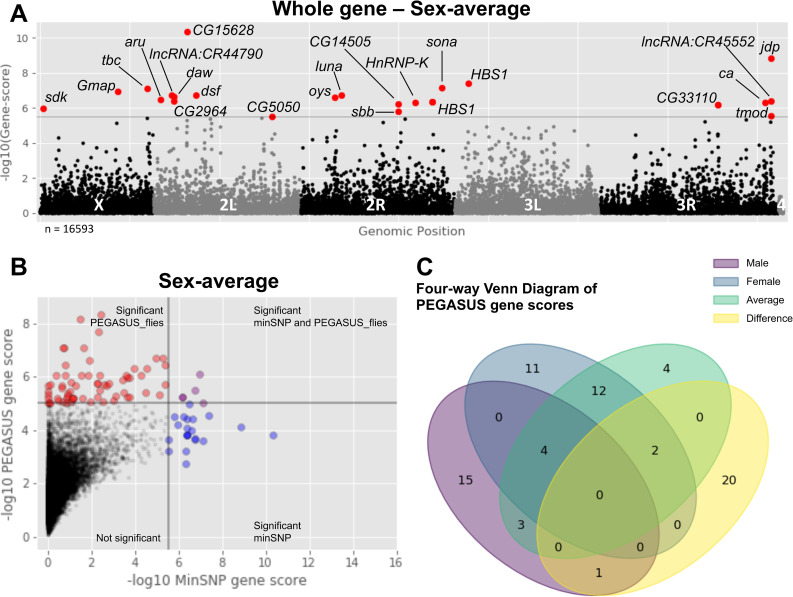
The winged insects of the order Diptera are colloquially named for their most recognizable phenotype: flight. These insects rely on flight for a number of important life history traits, such as dispersal, foraging, and courtship. Despite the importance of flight, relatively little is known about the genetic architecture of flight performance. Accordingly, we sought to uncover the genetic modifiers of flight using a measure of flies' reaction and response to an abrupt drop in a vertical flight column. We conducted a genome wide association study (GWAS) using 197 of the Drosophila Genetic Reference Panel (DGRP) lines, and identified a combination of additive and marginal variants, epistatic interactions, whole genes, and enrichment across interaction networks. Egfr, a highly pleiotropic developmental gene, was among the most significant additive variants identified. We functionally validated 13 of the additive candidate genes' (Adgf-A/Adgf-A2/CG32181, bru1, CadN, flapper (CG11073), CG15236, flippy (CG9766), CREG, Dscam4, form3, fry, Lasp/CG9692, Pde6, Snoo), and introduce a novel approach to whole gene significance screens: PEGASUS_flies. Additionally, we identified ppk23, an Acid Sensing Ion Channel (ASIC) homolog, as an important hub for epistatic interactions. We propose a model that suggests genetic modifiers of wing and muscle morphology, nervous system development and function, BMP signaling, sexually dimorphic neural wiring, and gene regulation are all important for the observed differences flight performance in a natural population. Additionally, these results represent a snapshot of the genetic modifiers affecting drop-response flight performance in Drosophila, with implications for other insects.
飞行。这些昆虫依靠飞行来实现许多重要的生活史特征,如扩散、觅食和求偶。尽管飞行非常重要,但人们对飞行性能的遗传结构知之甚少。因此,我们试图通过测量苍蝇对垂直飞行柱突然下降的反应和反应来发现飞行的遗传修饰因子。我们使用 197 个果蝇遗传参考面板(DGRP)品系进行了全基因组关联研究(GWAS),并确定了一系列加性和边缘变体、上位性相互作用、全基因以及跨相互作用网络的富集。表皮生长因子受体(Egfr)是一种高度多效性的发育基因,是鉴定出的最显著的加性变体之一。我们对 13 个加性候选基因(Adgf-A/Adgf-A2/CG32181、bru1、CadN、flapper(CG11073)、CG15236、flippy(CG9766)、CREG、Dscam4、form3、fry、Lasp/CG9692、Pde6、Snoo)进行了功能验证,并提出了一种新的全基因显著性筛选方法:PEGASUS_flies。此外,我们还确定了 ppk23,一种酸感应离子通道(ASIC)同源物,是上位性相互作用的重要枢纽。我们提出了一个模型,表明翅膀和肌肉形态、神经系统发育和功能、BMP 信号传导、性二型神经布线以及基因调控的遗传修饰因子对于自然种群中观察到的飞行性能差异都很重要。此外,这些结果代表了影响果蝇下落反应飞行性能的遗传修饰因子的一个快照,对其他昆虫具有启示意义。