Department of Biology, University of Naples Federico II, 80126, Naples, Italy.
Division of Biological Systems and Engineering, Lawrence Berkeley National Laboratory, Berkeley, CA, 94720, USA.
Microb Cell Fact. 2021 Mar 18;20(1):71. doi: 10.1186/s12934-021-01553-y.
The spore-forming lactic acid bacterium Bacillus coagulans MA-13 has been isolated from canned beans manufacturing and successfully employed for the sustainable production of lactic acid from lignocellulosic biomass. Among lactic acid bacteria, B. coagulans strains are generally recognized as safe (GRAS) for human consumption. Low-cost microbial production of industrially valuable products such as lactic acid and various enzymes devoted to the hydrolysis of oligosaccharides and lactose, is of great importance to the food industry. Specifically, α- and β-galactosidases are attractive for their ability to hydrolyze not-digestible galactosides present in the food matrix as well as in the human gastrointestinal tract.
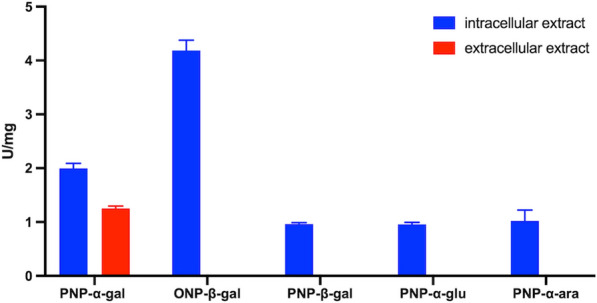
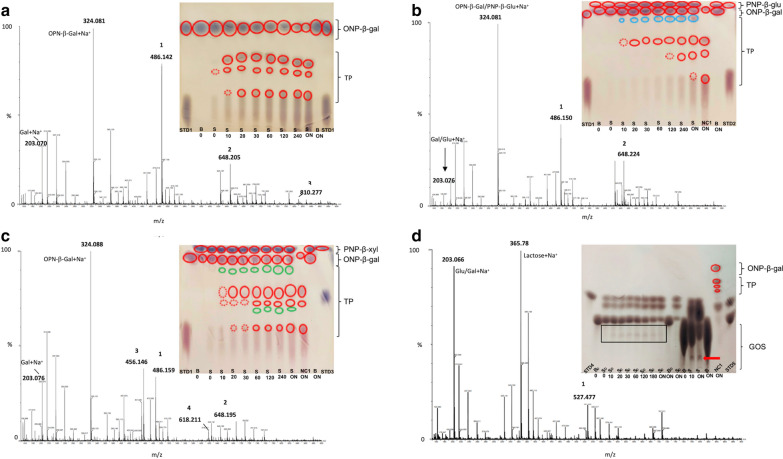
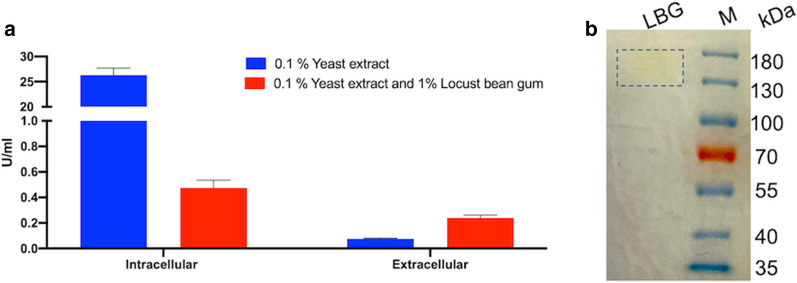
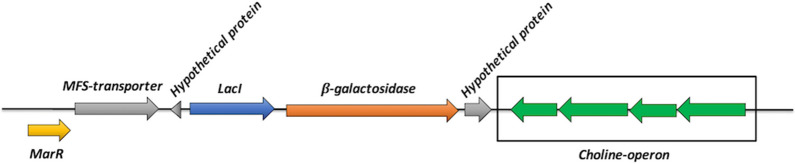
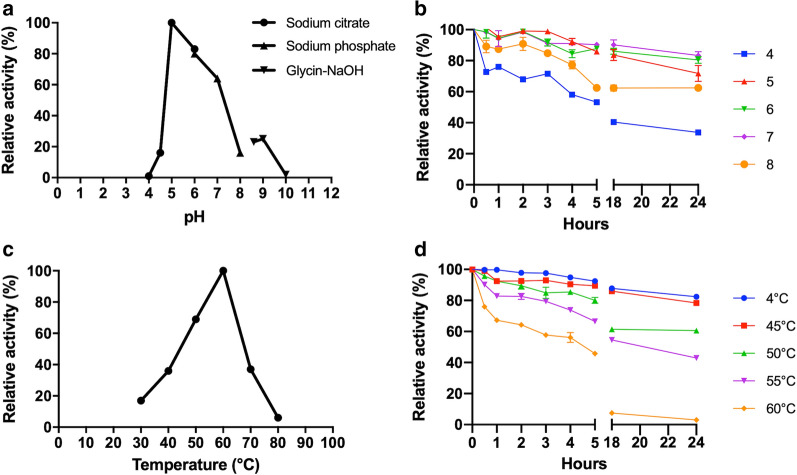
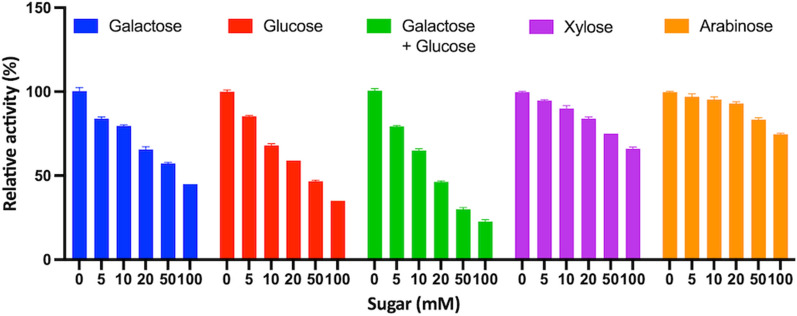
In this work we have explored the potential of B. coagulans MA-13 as a source of metabolites and enzymes to improve the digestibility and the nutritional value of food. A combination of mass spectrometry analysis with conventional biochemical approaches has been employed to unveil the intra- and extra- cellular glycosyl hydrolase (GH) repertoire of B. coagulans MA-13 under diverse growth conditions. The highest enzymatic activity was detected on β-1,4 and α-1,6-glycosidic linkages and the enzymes responsible for these activities were unambiguously identified as β-galactosidase (GH42) and α-galactosidase (GH36), respectively. Whilst the former has been found only in the cytosol, the latter is localized also extracellularly. The export of this enzyme may occur through a not yet identified secretion mechanism, since a typical signal peptide is missing in the α-galactosidase sequence. A full biochemical characterization of the recombinant β-galactosidase has been carried out and the ability of this enzyme to perform homo- and hetero-condensation reactions to produce galacto-oligosaccharides, has been demonstrated.
Probiotics which are safe for human use and are capable of producing high levels of both α-galactosidase and β-galactosidase are of great importance to the food industry. In this work we have proven the ability of B. coagulans MA-13 to over-produce these two enzymes thus paving the way for its potential use in treatment of gastrointestinal diseases.
产孢子的乳酸杆菌凝结芽孢杆菌 MA-13 已从罐头豆类制造中分离出来,并成功用于木质纤维素生物质的可持续乳酸生产。在乳酸菌中,凝结芽孢杆菌菌株通常被认为是可安全用于人类食用的(GRAS)。低成本微生物生产工业上有价值的产品,如乳酸和各种酶,专门用于水解低聚糖和乳糖,这对食品工业非常重要。具体而言,α-和β-半乳糖苷酶因其能够水解食品基质以及人类胃肠道中存在的不可消化的半乳糖苷而具有吸引力。
在这项工作中,我们探索了凝结芽孢杆菌 MA-13 作为代谢物和酶的来源的潜力,以提高食品的消化率和营养价值。我们采用质谱分析与常规生化方法相结合,揭示了凝结芽孢杆菌 MA-13 在不同生长条件下的细胞内和细胞外糖苷水解酶(GH)谱。在β-1,4 和α-1,6-糖苷键上检测到最高的酶活性,负责这些活性的酶分别明确鉴定为β-半乳糖苷酶(GH42)和α-半乳糖苷酶(GH36)。前者仅在细胞质中发现,而后者也定位于细胞外。这种酶的外排可能通过尚未确定的分泌机制发生,因为α-半乳糖苷酶序列中缺少典型的信号肽。对重组β-半乳糖苷酶进行了全面的生化特性分析,并证明了该酶能够进行同型和异型缩合反应,以产生半乳糖低聚糖。
对人类安全使用并能够产生高水平的α-半乳糖苷酶和β-半乳糖苷酶的益生菌对食品工业非常重要。在这项工作中,我们证明了凝结芽孢杆菌 MA-13 能够过度生产这两种酶的能力,从而为其在胃肠道疾病治疗中的潜在用途铺平了道路。