Gupta Soumya, Vemireddy Vidya, Singh Dhiraj K, Pingali Prabhu
Tata Cornell Institute for Agriculture and Nutrition, Cornell University, United States.
Indian Institute of Management Ahmedabad, India.
Glob Food Sec. 2021 Mar;28:100498. doi: 10.1016/j.gfs.2021.100498.
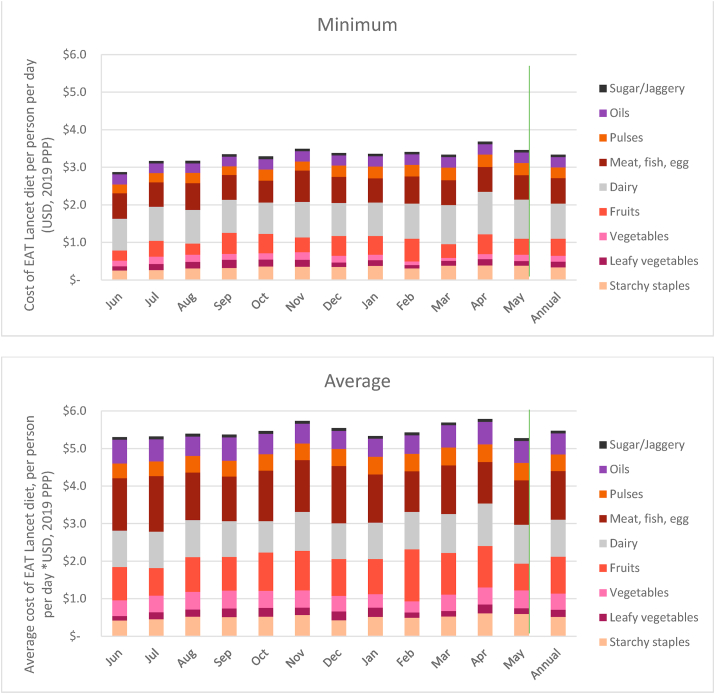
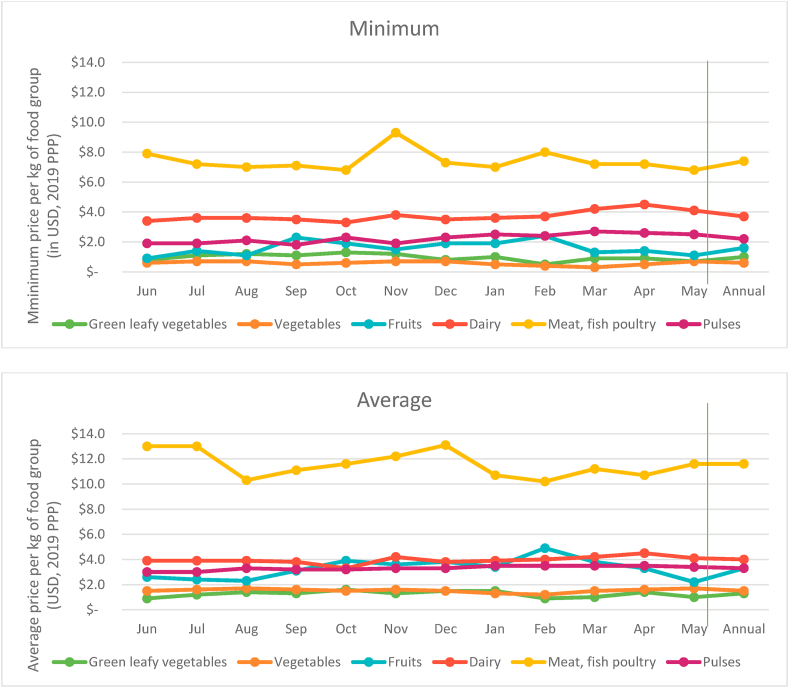
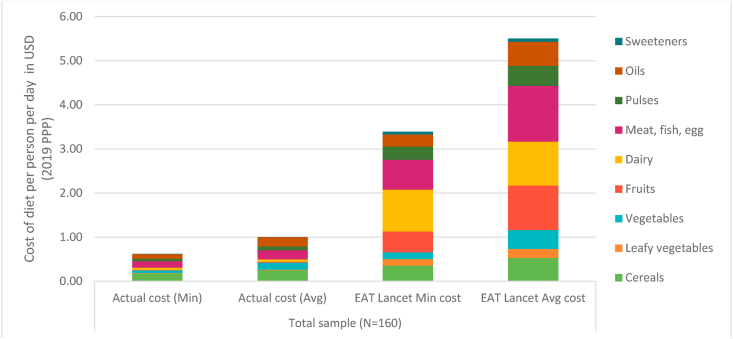
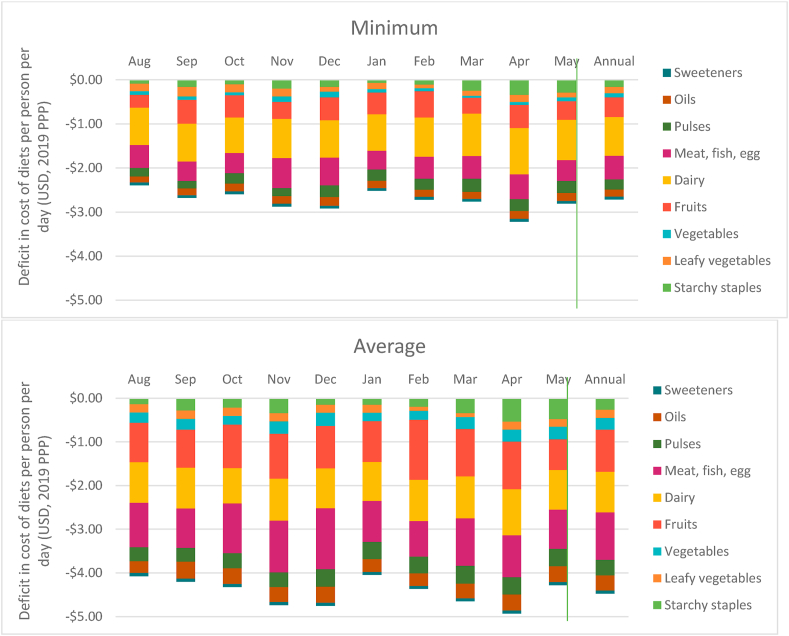
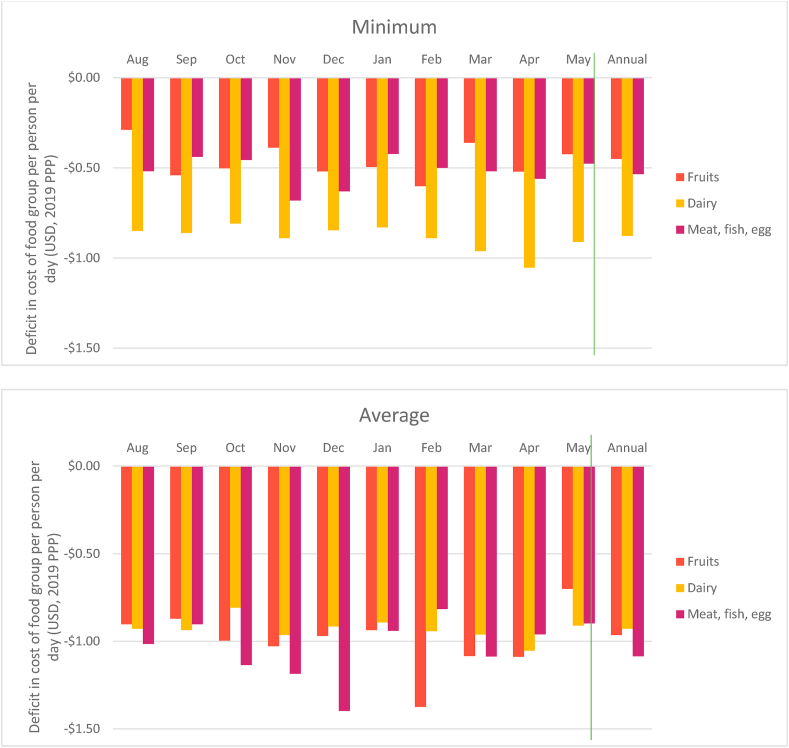
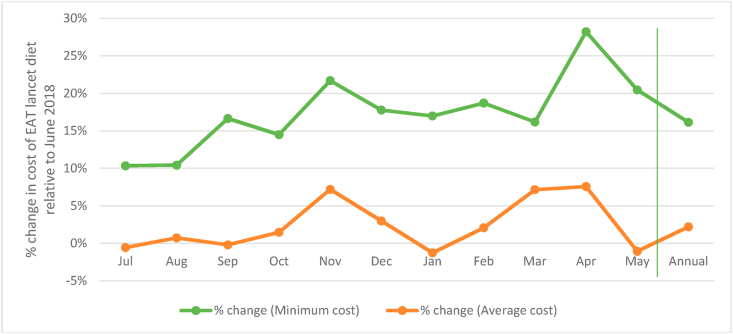
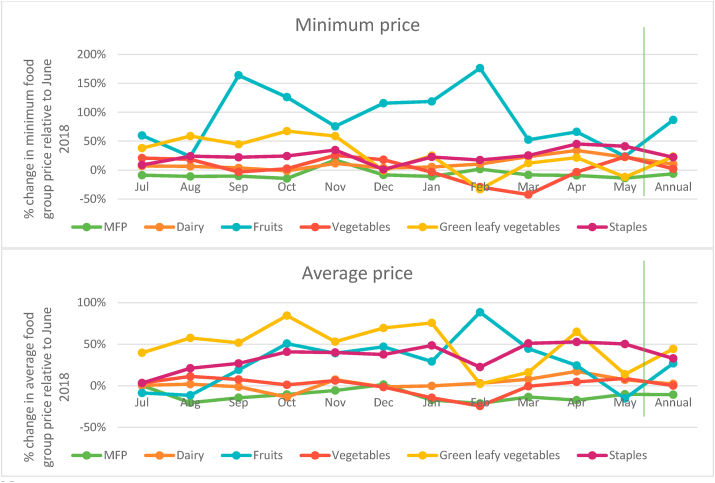
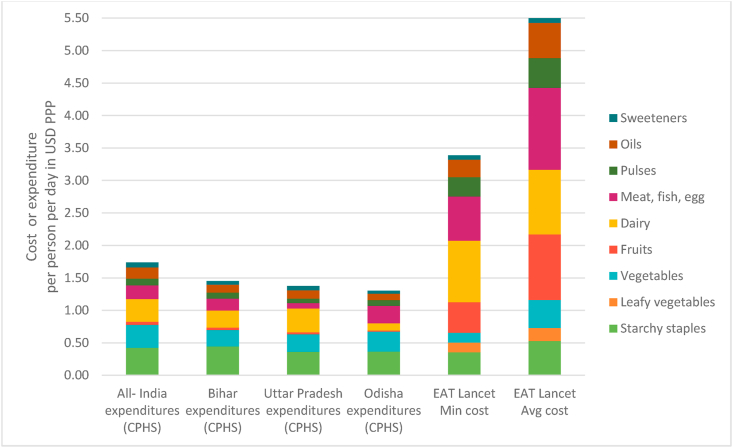
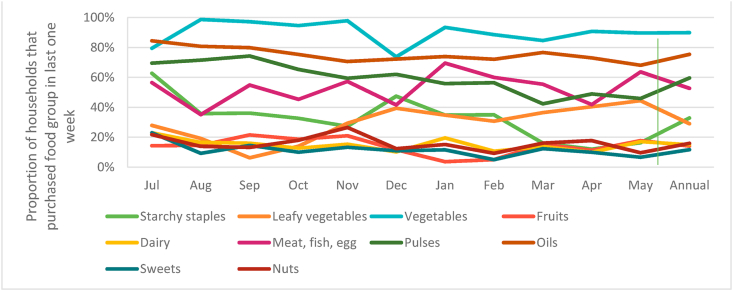
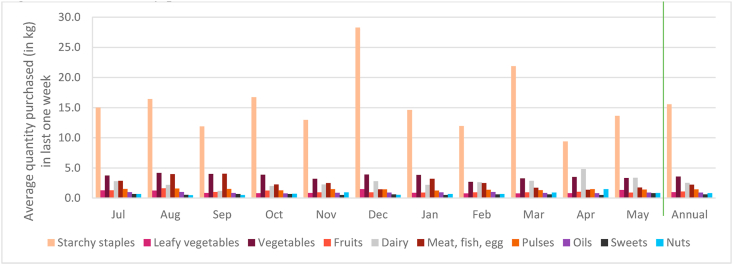
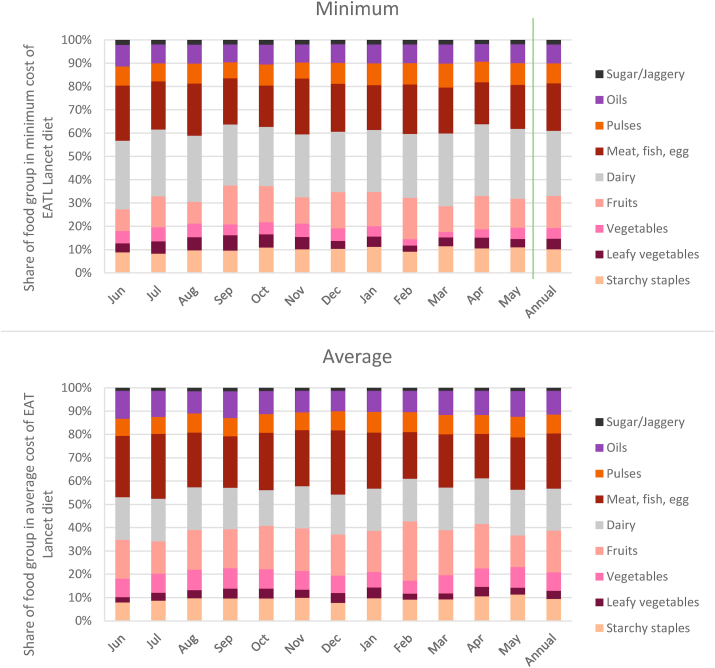
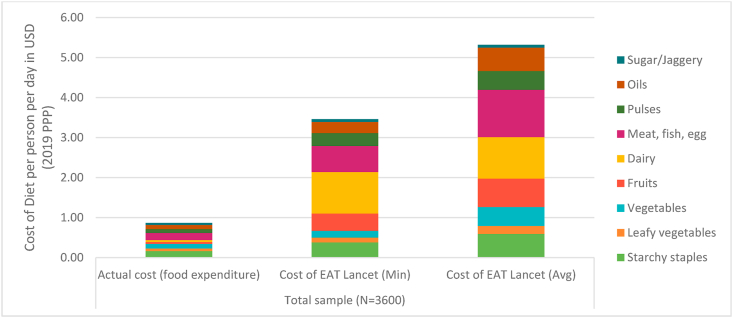
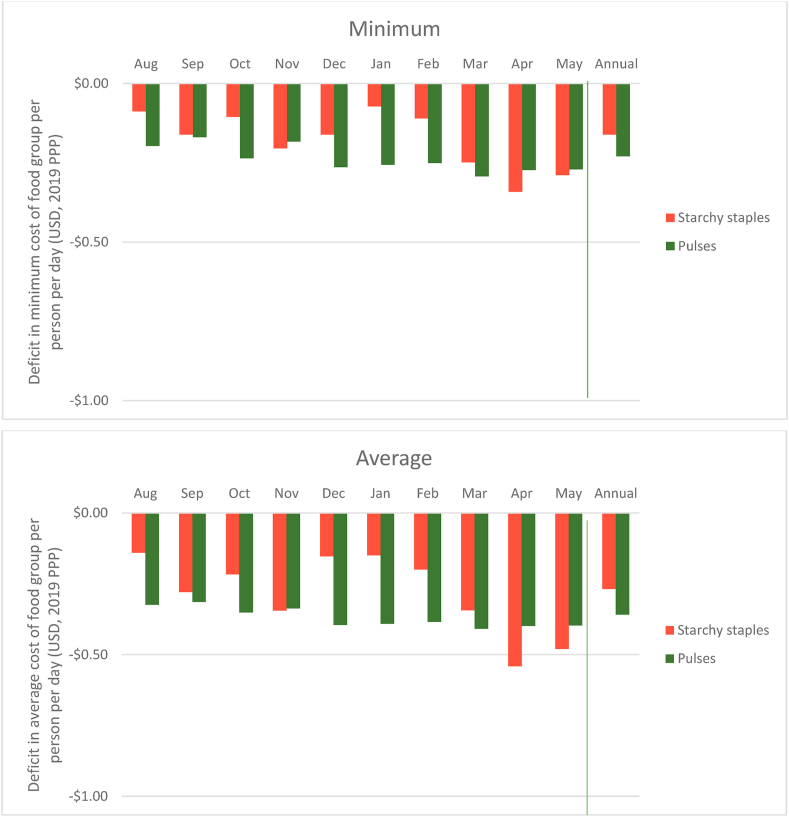
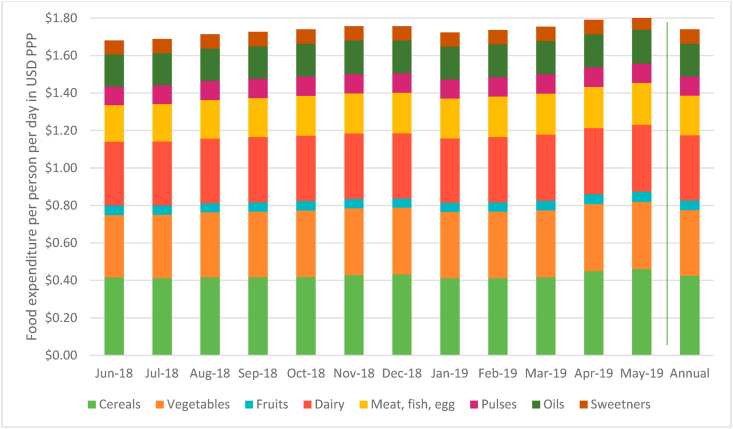
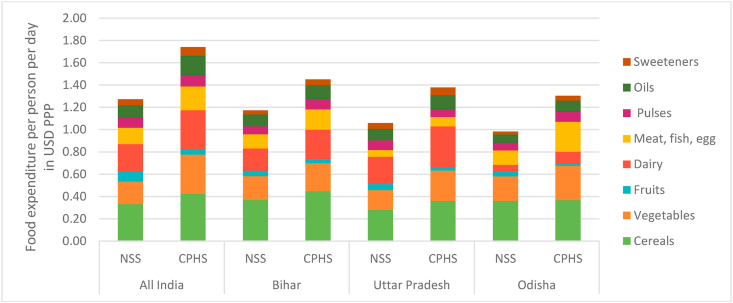
In this paper, we quantify the divergence in the cost of current diets as compared to EAT Lancet recommendations at the subnational-level in India. We use primary data on food prices and household food purchases, and secondary data on food expenditures for a period of 12 months in 2018-19. The cost of the EAT Lancet dietary recommendations for rural India ranges between $3.00- $5.00 per person per day. In contrast, actual dietary intake at present is valued at around $1.00 per person per day. In order to get to the EAT Lancet recommendations individuals will have to spend nearly $1.00 per person per day more on each of meat fish poultry, dairy foods and fruits. The deficit in current diets relative to recommendations is marked by seasonal variations driven by volatility in the underlying food prices. This paper extends the evidence base for the affordability of the EAT Lancet diet to a subnational-level in India, using the most recent data on prices and expenditures, over time. We highlight the need for tracking rural markets at the subnational level, over time for their nutritional quality and ability to provide affordable, nutritious diets to the poor. Crop diversification, investments in rural infrastructure and well-functioning markets can move rural India towards more nutrition sensitive food environments.
在本文中,我们对印度次国家层面当前饮食成本与《柳叶刀》饮食建议之间的差异进行了量化。我们使用了食品价格和家庭食品采购的原始数据,以及2018 - 19年为期12个月的食品支出二手数据。《柳叶刀》对印度农村地区的饮食建议成本为每人每天3.00 - 5.00美元。相比之下,目前实际饮食摄入量约为每人每天1.00美元。为了达到《柳叶刀》的建议,个人将不得不每人每天在肉类、鱼类、家禽、乳制品和水果上多花费近1.00美元。当前饮食与建议之间的差距因基本食品价格波动导致的季节性变化而显著。本文利用最新的价格和支出数据,随时间推移将《柳叶刀》饮食可承受性的证据基础扩展到印度的次国家层面。我们强调需要随时间推移在次国家层面跟踪农村市场,关注其营养质量以及为贫困人口提供负担得起的营养饮食的能力。作物多样化、对农村基础设施的投资以及运转良好的市场可以推动印度农村地区走向更具营养敏感性的食品环境。