Cancer Hospital of the University of Chinese Academy of Sciences (Zhejiang Cancer Hospital), No. 1 of East Banshan Road, Hangzhou, Zhejiang Province, China.
Institute of Basic Medicine and Cancer (IBMC), Chinese Academy of Sciences, Hangzhou, China.
Eur Radiol. 2021 Sep;31(9):7192-7201. doi: 10.1007/s00330-021-07797-x. Epub 2021 Mar 18.
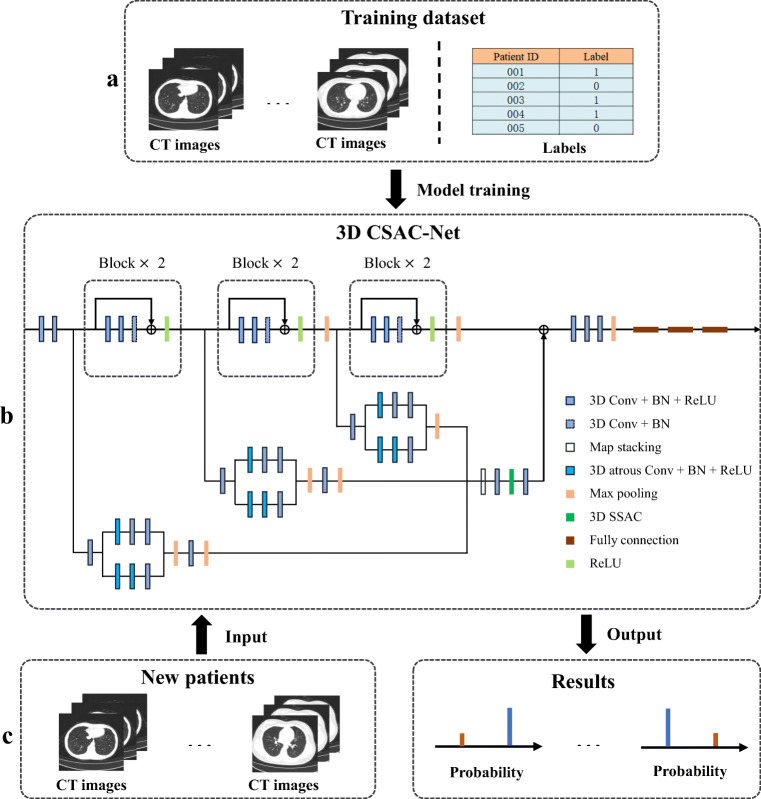
An artificial intelligence model was adopted to identify mild COVID-19 pneumonia from computed tomography (CT) volumes, and its diagnostic performance was then evaluated.
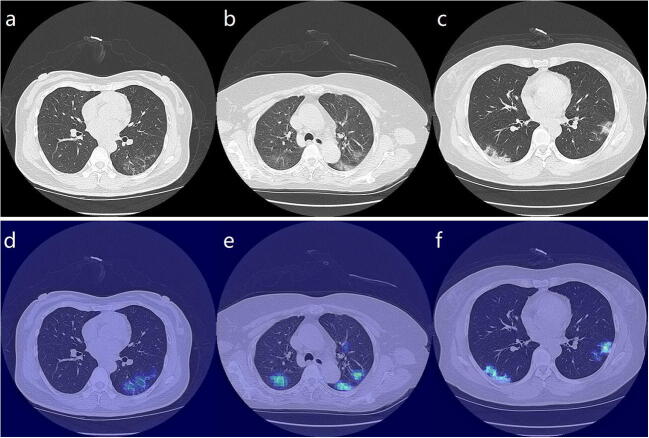
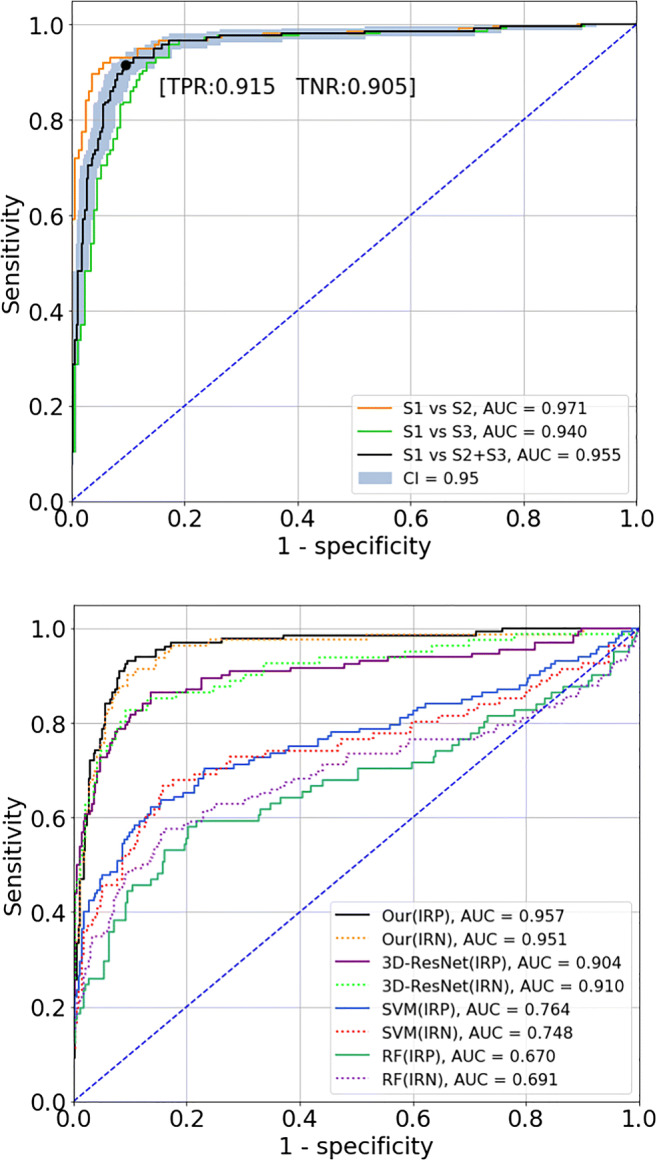
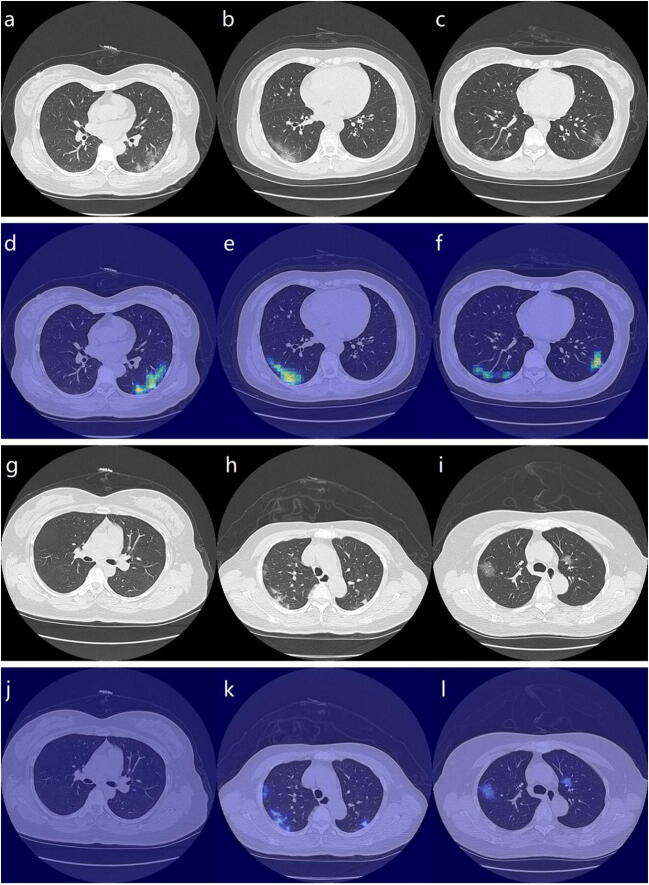
In this retrospective multicenter study, an atrous convolution-based deep learning model was established for the computer-assisted diagnosis of mild COVID-19 pneumonia. The dataset included 2087 chest CT exams collected from four hospitals between 1 January 2019 and 31 May 2020. The true positive rate, true negative rate, receiver operating characteristic curve, area under the curve (AUC) and convolutional feature map were used to evaluate the model.
The proposed deep learning model was trained on 1538 patients and tested on an independent testing cohort of 549 patients. The overall sensitivity was 91.5% (195/213; p < 0.001, 95% CI: 89.2-93.9%), the overall specificity was 90.5% (304/336; p < 0.001, 95% CI: 88.0-92.9%) and the general AUC value was 0.955 (p < 0.001).
A deep learning model can accurately detect COVID-19 and serve as an important supplement to the COVID-19 reverse transcription-polymerase chain reaction (RT-PCR) test.
• The implementation of a deep learning model to identify mild COVID-19 pneumonia was confirmed to be effective and feasible. • The strategy of using a binary code instead of the region of interest label to identify mild COVID-19 pneumonia was verified. • This AI model can assist in the early screening of COVID-19 without interfering with normal clinical examinations.
采用人工智能模型从计算机断层扫描(CT)容积中识别轻度 COVID-19 肺炎,并评估其诊断性能。
在这项回顾性多中心研究中,建立了一种基于多孔卷积的深度学习模型,用于计算机辅助诊断轻度 COVID-19 肺炎。该数据集包括 2019 年 1 月 1 日至 2020 年 5 月 31 日期间来自四家医院的 2087 例胸部 CT 检查。使用真阳性率、真阴性率、接收者操作特征曲线、曲线下面积(AUC)和卷积特征图来评估模型。
该深度学习模型在 1538 例患者中进行训练,并在 549 例独立测试队列中进行测试。总体敏感性为 91.5%(195/213;p<0.001,95%CI:89.2-93.9%),总体特异性为 90.5%(304/336;p<0.001,95%CI:88.0-92.9%),总体 AUC 值为 0.955(p<0.001)。
深度学习模型可以准确检测 COVID-19,是 COVID-19 逆转录-聚合酶链反应(RT-PCR)检测的重要补充。
证实实施深度学习模型识别轻度 COVID-19 肺炎是有效和可行的。
验证了使用二进制代码而不是感兴趣区域标签来识别轻度 COVID-19 肺炎的策略。
该 AI 模型可以在不干扰正常临床检查的情况下协助 COVID-19 的早期筛查。