Cancer Research Unit, VA Medical Center, Kansas City, MO, USA.
Department of Chemical Biochemical Environmental Engineering (CBEE, University of Maryland, Baltimore, MD, USA.
Pharmacol Res Perspect. 2021 Apr;9(2):e00753. doi: 10.1002/prp2.753.
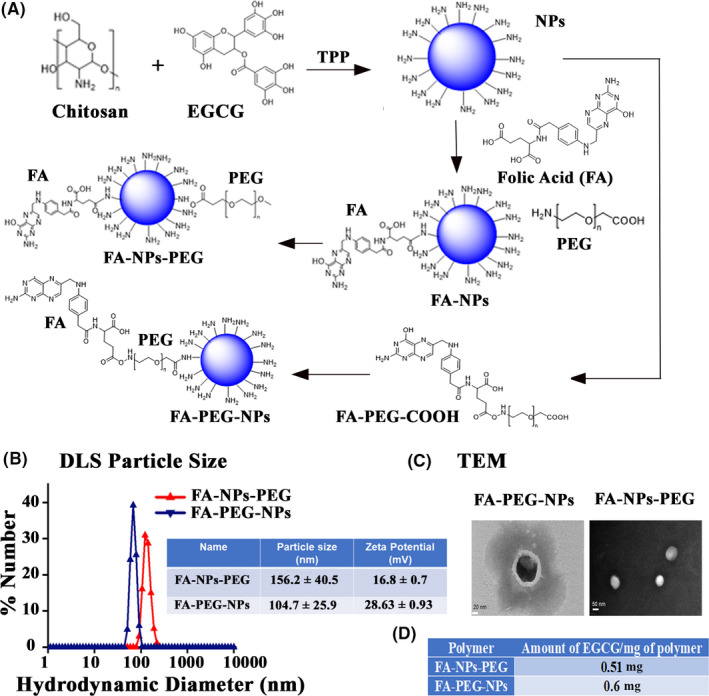
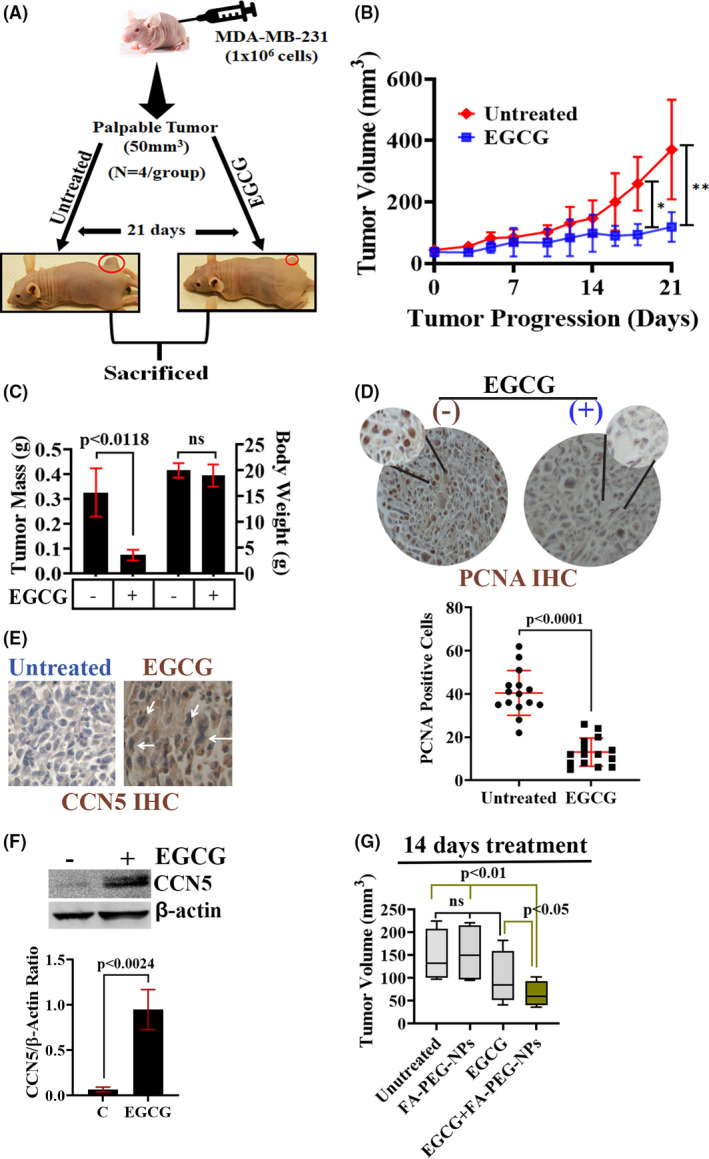
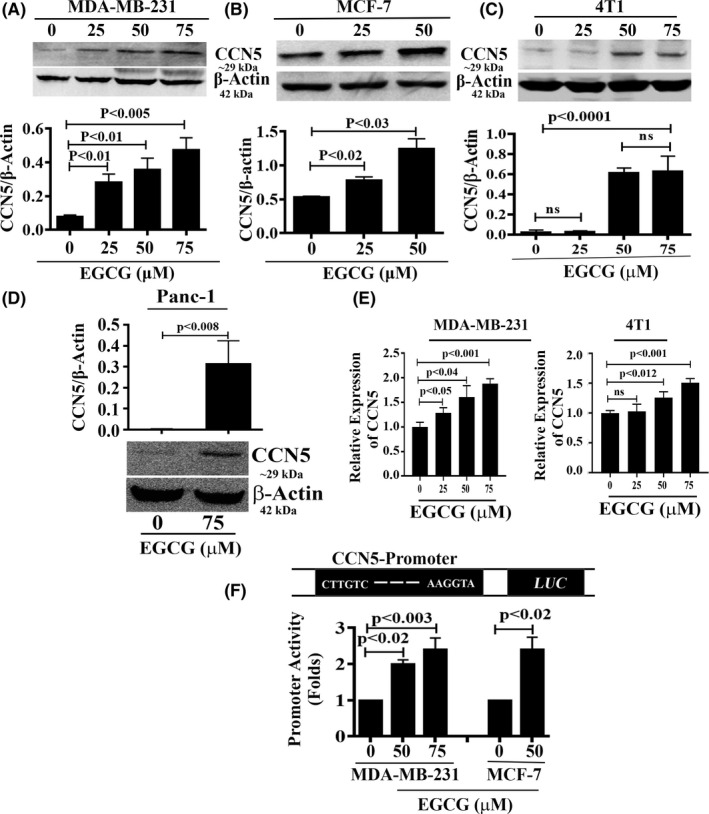
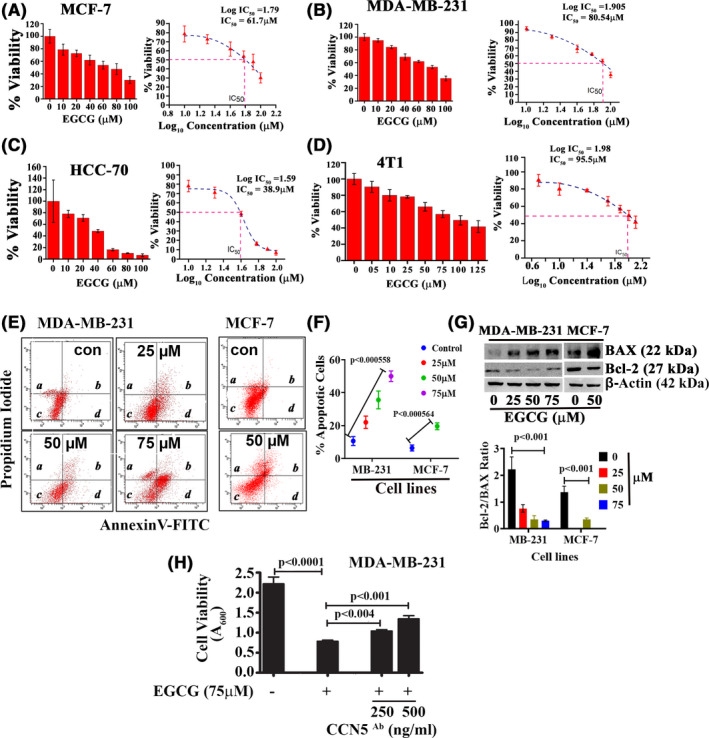
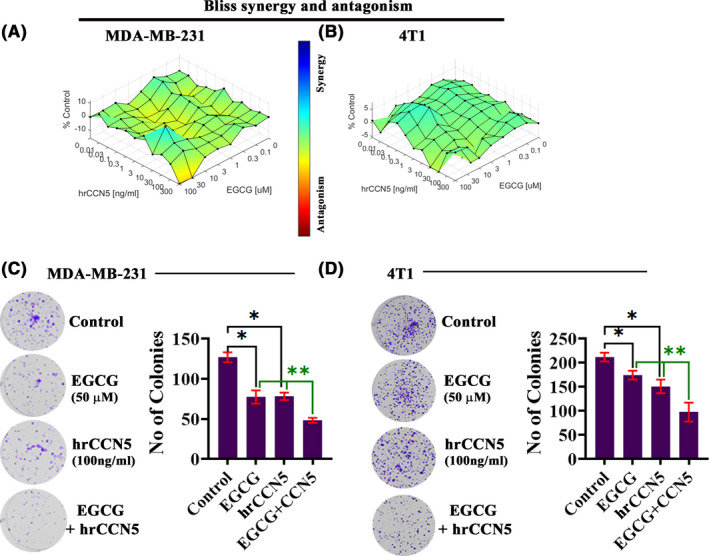
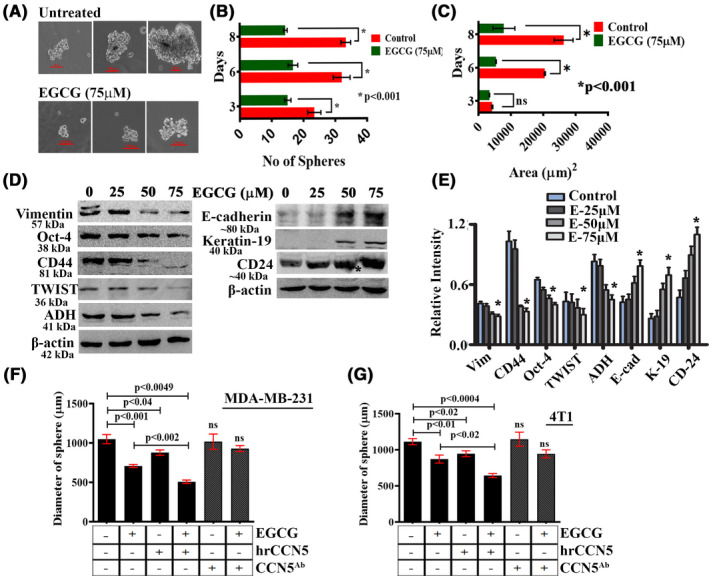
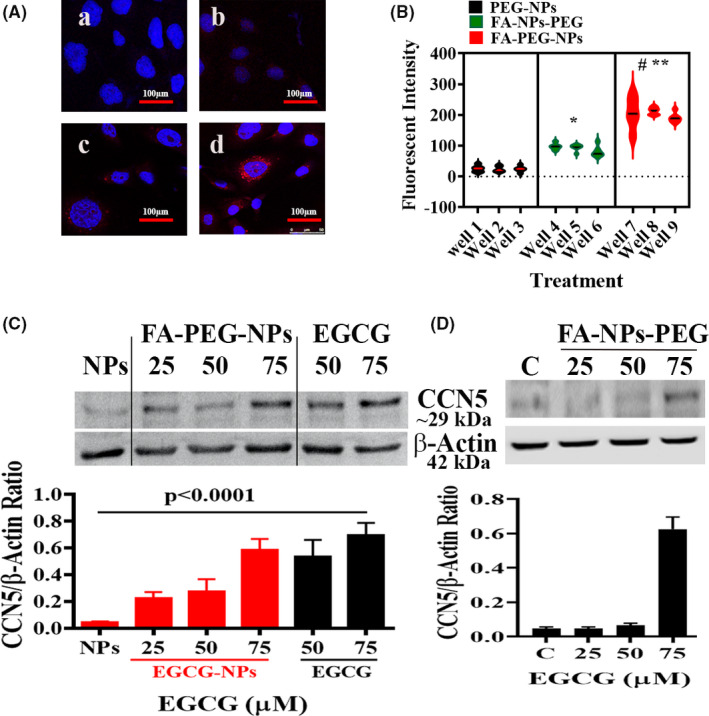
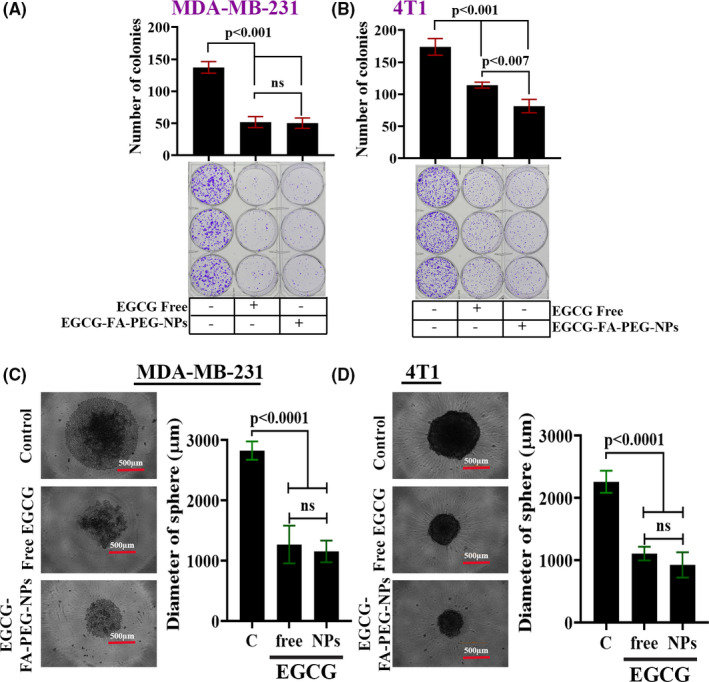
Epigallocatechin-3-gallate (EGCG) has been considered an anticancer agent despite conflicting and discrepant bioavailability views. EGCG impairs the viability and self-renewal capacity of triple-negative breast cancer (TNBC) cells and makes them sensitive to estrogen via activating ER-α. Surprisingly, the mechanism of EGCG's action on TNBC cells remains unclear. CCN5/WISP-2 is a gatekeeper gene that regulates viability, ER-α, and stemness in TNBC and other types of cancers. This study aimed to investigate whether EGCG (free or encapsulated in nanoparticles) interacts with the CCN5 protein by emphasizing its bioavailability and enhancing its anticancer effect. We demonstrate that EGCG activates CCN5 to inhibit in vitro cell viability through apoptosis, the sphere-forming ability via reversing TNBC cells' stemness, and suppressing tumor growth in vivo. Moreover, we found EGCG-loaded nanoparticles to be functionally more active and superior in their tumor-suppressing ability than free-EGCG. Together, these studies identify EGCG (free or encapsulated) as a novel activator of CCN5 in TNBC cells and hold promise as a future therapeutic option for TNBC with upregulated CCN5 expression.
表没食子儿茶素没食子酸酯 (EGCG) 被认为是一种抗癌剂,尽管其生物利用度的观点存在矛盾和差异。EGCG 通过激活 ER-α 来损害三阴性乳腺癌 (TNBC) 细胞的活力和自我更新能力,并使它们对雌激素敏感。令人惊讶的是,EGCG 对 TNBC 细胞作用的机制尚不清楚。CCN5/WISP-2 是一种调节 TNBC 和其他类型癌症中细胞活力、ER-α 和干细胞特性的关键基因。本研究旨在探讨 EGCG(游离或包封在纳米粒子中)是否通过强调其生物利用度和增强其抗癌作用与 CCN5 蛋白相互作用。我们证明 EGCG 通过凋亡激活 CCN5 来抑制体外细胞活力,通过逆转 TNBC 细胞的干细胞特性来抑制球体形成能力,并在体内抑制肿瘤生长。此外,我们发现载有 EGCG 的纳米粒子比游离 EGCG 具有更高的功能活性和更强的肿瘤抑制能力。总之,这些研究确定 EGCG(游离或包封)是 TNBC 细胞中 CCN5 的新型激活剂,并有望成为 CCN5 表达上调的 TNBC 的未来治疗选择。