Fan Qiong, Huang Ting, Sun Xiao, Yang Xiaoming, Wang Jing, Liu Yao, Ni Ting, Gu Shenglan, Li Yuhong, Wang Yudong
Department of Gynecological Oncology, The International Peace Maternity and Child Health Hospital, School of Medicine, Shanghai Jiao Tong University, Shanghai 200030, P.R. China.
Shanghai Key Clinical Department, Shanghai 200030, P.R. China.
Exp Ther Med. 2021 May;21(5):414. doi: 10.3892/etm.2021.9858. Epub 2021 Feb 25.
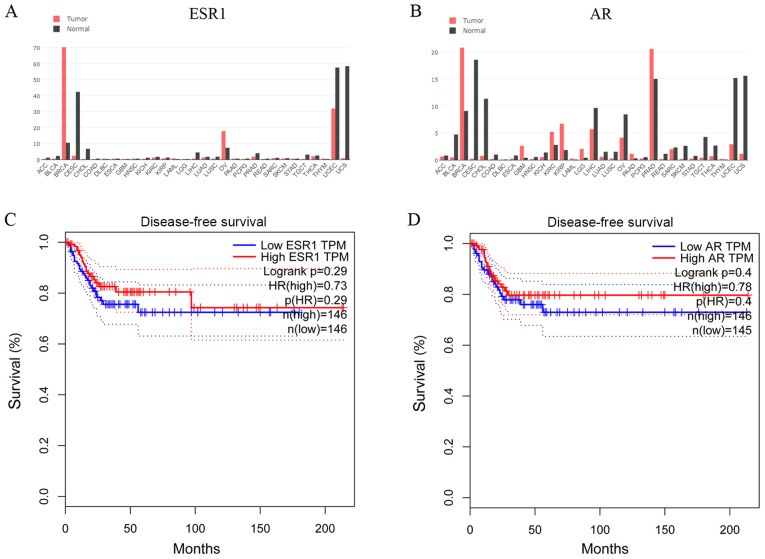
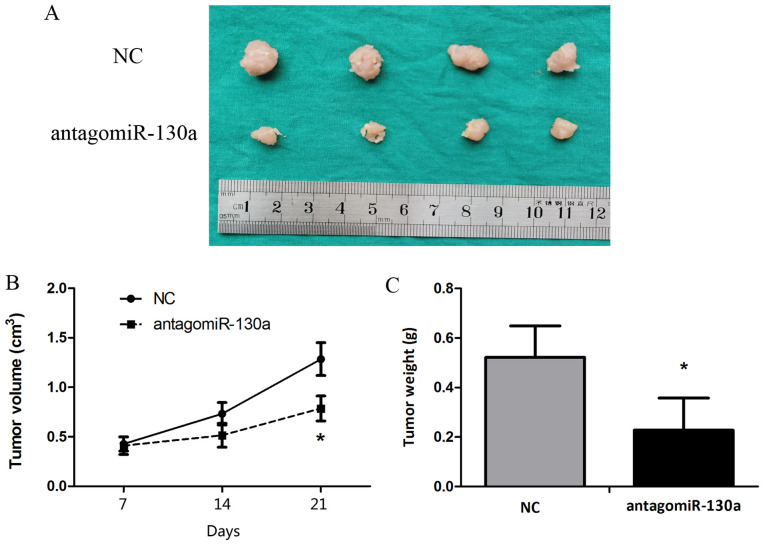
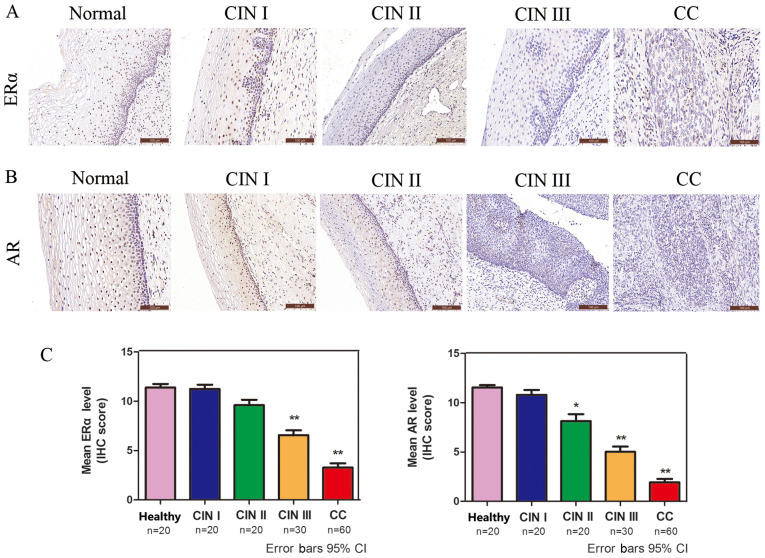
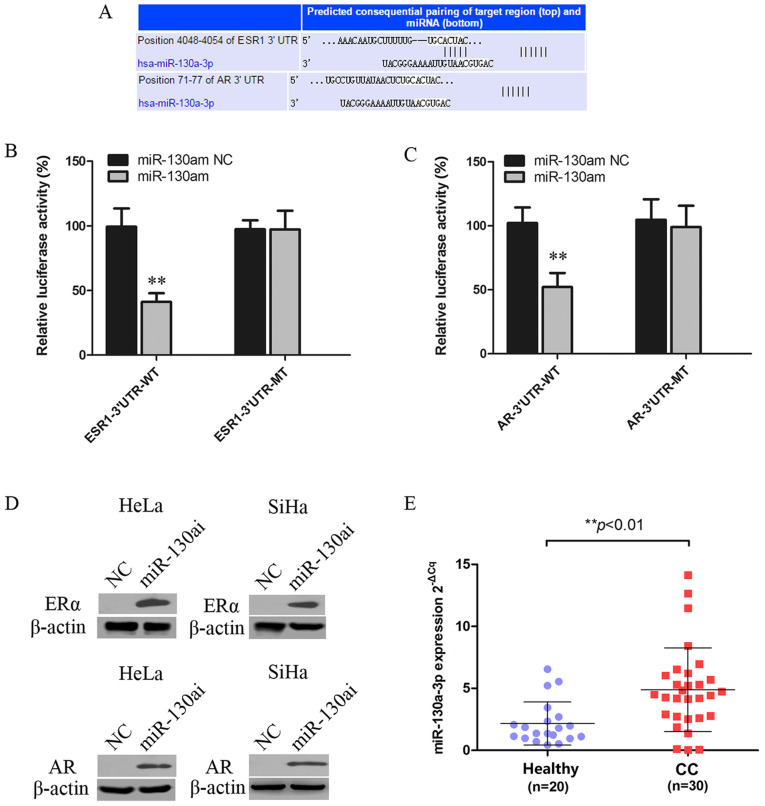
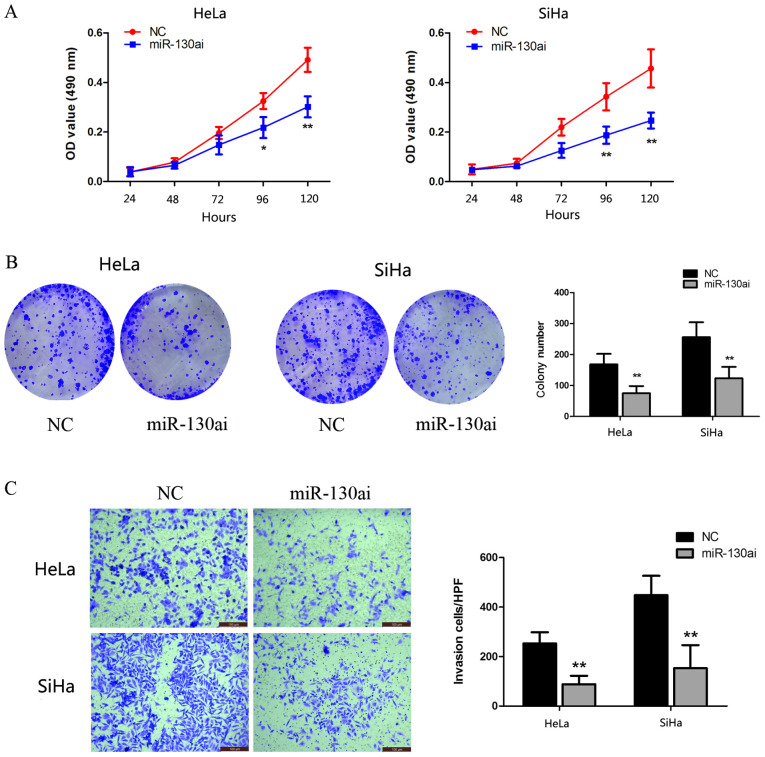
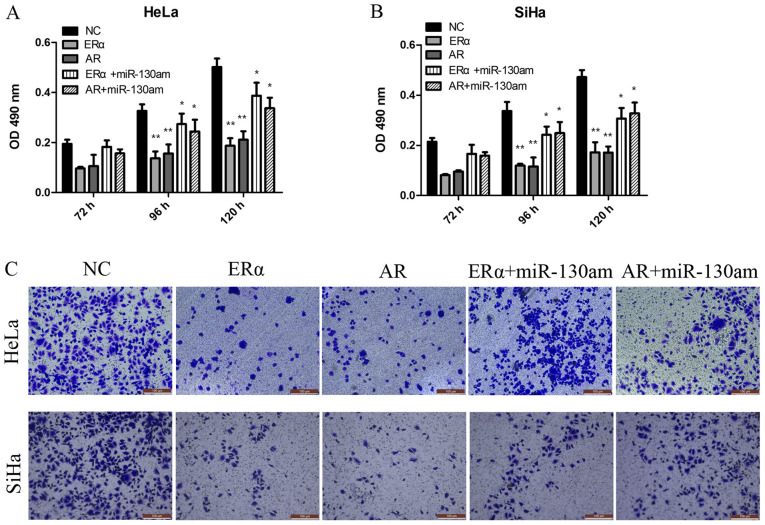
Cervical cancer is the most common gynecological cancer in women worldwide. Human papillomavirus (HPV) is required but not sufficient for developing cervical cancer. HPV E6 and E7 proteins are able to directly interact with certain nuclear receptors; however, whether steroid hormone receptors mediate cervical carcinogenesis is not completely understood. The present study demonstrated via immunohistochemistry that estrogen receptor α (ERα) and androgen receptor (AR) expression were decreased in a sequential manner from healthy cervical tissues to cervical intraepithelial neoplasia tissues and further to cervical cancer (CC) tissues, whereas microRNA (miR)-130a-3p expression levels were higher in CC tissues compared with healthy tissues. Both ERα and AR were direct targets of miR-130a-3p, as determined by performing luciferase reporter assays and western blotting. Functionally, compared with the corresponding control groups, miR-130a-3p knockdown, ERα overexpression and AR overexpression significantly inhibited CC cell proliferation and invasion, as demonstrated by the results obtained from the Cell Counting Kit-8 and Transwell assays In addition, antagomiR-130a decreased tumor size and weight compared with control antagomiR as determined via the xenograft tumor growth assay. Therefore, the results suggested that miR-130a-3p might contribute to tumor progression by suppressing ERα and AR, and serve as a promising candidate target for the treatment of patients with CC.
宫颈癌是全球女性中最常见的妇科癌症。人乳头瘤病毒(HPV)是引发宫颈癌的必要但不充分条件。HPV E6和E7蛋白能够直接与某些核受体相互作用;然而,类固醇激素受体是否介导宫颈癌发生尚未完全明确。本研究通过免疫组织化学表明,从健康宫颈组织到宫颈上皮内瘤变组织再到宫颈癌(CC)组织,雌激素受体α(ERα)和雄激素受体(AR)的表达呈依次降低趋势,而与健康组织相比,CC组织中微小RNA(miR)-130a-3p的表达水平更高。通过荧光素酶报告基因检测和蛋白质印迹法确定,ERα和AR均为miR-130a-3p的直接靶标。在功能上,与相应对照组相比,如细胞计数试剂盒-8和Transwell检测结果所示,miR-130a-3p敲低、ERα过表达和AR过表达均显著抑制CC细胞增殖和侵袭。此外,通过异种移植肿瘤生长试验确定,与对照抗miR相比,抗miR-130a减小了肿瘤大小和重量。因此,结果表明miR-130a-3p可能通过抑制ERα和AR促进肿瘤进展,并有望成为CC患者治疗的候选靶标。