Lehmann Mirko, Neumann Claudia, Wasserthal Sven, Schultz Johannes, Delis Achilles, Trautner Peter, Hurlemann René, Ettinger Ulrich
Department of Psychology, University of Bonn, Bonn, Germany.
Department of Anesthesiology and Intensive Care Medicine, University Hospital Bonn, Bonn, Germany.
Neurosci Conscious. 2021 Feb 10;2021(1):niaa028. doi: 10.1093/nc/niaa028. eCollection 2021.
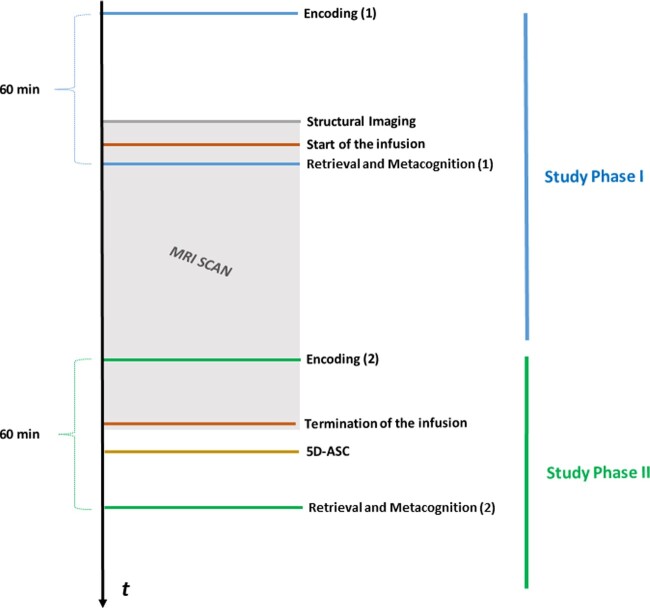
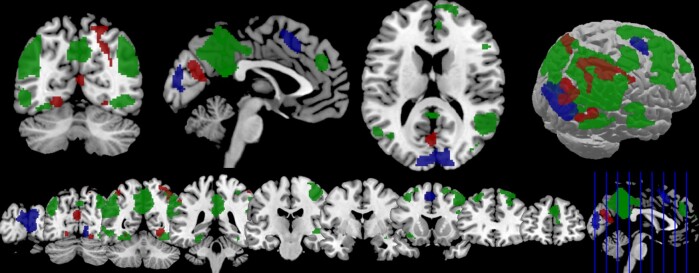
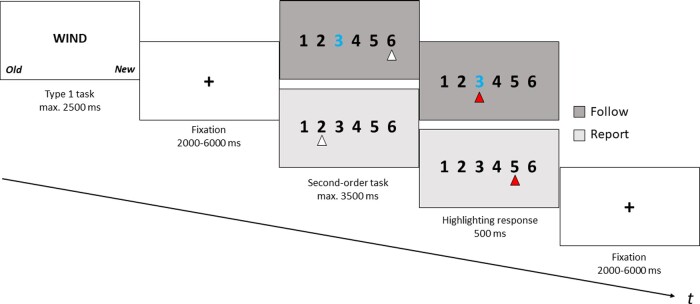
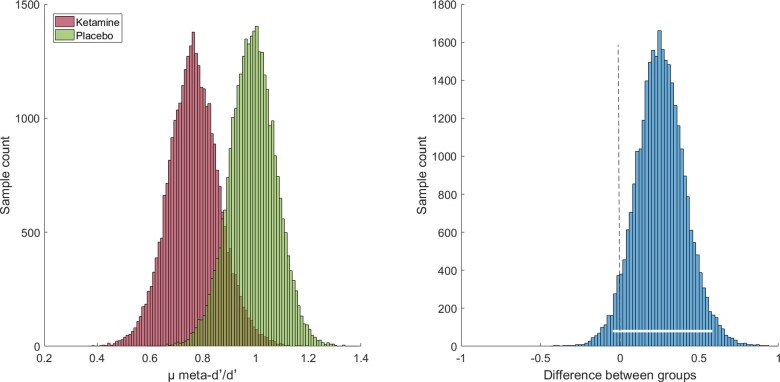
Only little research has been conducted on the pharmacological underpinnings of metacognition. Here, we tested the modulatory effects of a single intravenous dose (100 ng/ml) of the -methyl-D-aspartate-glutamate-receptor antagonist ketamine, a compound known to induce altered states of consciousness, on metacognition and its neural correlates. Fifty-three young, healthy adults completed two study phases of an episodic memory task involving both encoding and retrieval in a double-blind, placebo-controlled fMRI study. Trial-by-trial confidence ratings were collected during retrieval. Effects on the subjective state of consciousness were assessed using the 5D-ASC questionnaire. Confirming that the drug elicited a psychedelic state, there were effects of ketamine on all 5D-ASC scales. Acute ketamine administration during retrieval had deleterious effects on metacognitive sensitivity (meta-d') and led to larger metacognitive bias, with retrieval performance (d') and reaction times remaining unaffected. However, there was no ketamine effect on metacognitive efficiency (meta-d'/d'). Measures of the BOLD signal revealed that ketamine compared to placebo elicited higher activation of posterior cortical brain areas, including superior and inferior parietal lobe, calcarine gyrus, and lingual gyrus, albeit not specific to metacognitive confidence ratings. Ketamine administered during encoding did not significantly affect performance or brain activation. Overall, our findings suggest that ketamine impacts metacognition, leading to significantly larger metacognitive bias and deterioration of metacognitive sensitivity as well as unspecific activation increases in posterior hot zone areas of the neural correlates of consciousness.
关于元认知的药理学基础,仅有少量研究。在此,我们测试了单次静脉注射剂量(100 ng/ml)的N-甲基-D-天冬氨酸-谷氨酸受体拮抗剂氯胺酮(一种已知可诱导意识状态改变的化合物)对元认知及其神经关联的调节作用。在一项双盲、安慰剂对照的功能磁共振成像研究中,53名年轻健康成年人完成了一个情景记忆任务的两个研究阶段,该任务涉及编码和检索。在检索过程中逐次试验收集信心评级。使用5D-ASC问卷评估对意识主观状态的影响。确认该药物引发了一种迷幻状态,氯胺酮对所有5D-ASC量表均有影响。在检索期间急性给予氯胺酮对元认知敏感性(元d')有有害影响,并导致更大的元认知偏差,而检索表现(d')和反应时间未受影响。然而,氯胺酮对元认知效率(元d'/d')没有影响。脑血氧水平依赖(BOLD)信号测量显示,与安慰剂相比,氯胺酮引发了后皮质脑区更高的激活,包括顶叶上、下叶、距状回和舌回,尽管并非特定于元认知信心评级。在编码期间给予氯胺酮对表现或脑激活没有显著影响。总体而言,我们的研究结果表明,氯胺酮会影响元认知,导致元认知偏差显著增大、元认知敏感性下降,以及意识神经关联的后热区区域出现非特异性激活增加。