Yong Xin, Mao Lejiao, Shen Xiaofei, Zhang Zhen, Billadeau Daniel D, Jia Da
Key Laboratory of Birth Defects and Related Diseases of Women and Children, Department of Paediatrics, West China Second University Hospital, State Key Laboratory of Biotherapy, Sichuan University, Chengdu, China.
Hospital of Chengdu University of Traditional Chinese Medicine, Chengdu, China.
Front Cell Dev Biol. 2021 Mar 4;9:648024. doi: 10.3389/fcell.2021.648024. eCollection 2021.
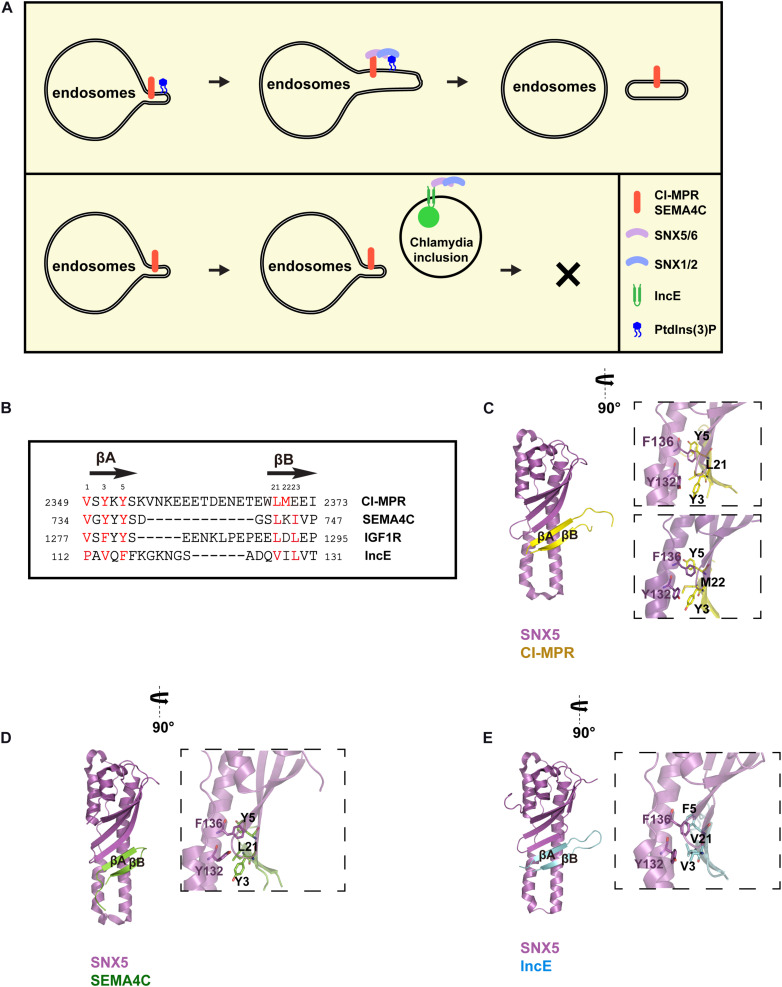
Endosomes are essential cellular stations where endocytic and secretory trafficking routes converge. Proteins transiting at endosomes can be degraded via lysosome, or recycled to the plasma membrane, trans-Golgi network (TGN), or other cellular destinations. Pathways regulating endosomal recycling are tightly regulated in order to preserve organelle identity, to maintain lipid homeostasis, and to support other essential cellular functions. Recent studies have revealed that both pathogenic bacteria and viruses subvert host endosomal recycling pathways for their survival and replication. Several host factors that are frequently targeted by pathogens are being identified, including retromer, TBC1D5, SNX-BARs, and the WASH complex. In this review, we will focus on the recent advances in understanding how intracellular bacteria, human papillomavirus (HPV), and severe acute respiratory syndrome coronavirus 2 (SARS-CoV-2) hijack host endosomal recycling pathways. This exciting work not only reveals distinct mechanisms employed by pathogens to manipulate host signaling pathways, but also deepens our understanding of the molecular intricacies regulating endosomal receptor trafficking.
内体是细胞内的重要场所,内吞和分泌运输途径在此交汇。在内体中转运的蛋白质可通过溶酶体降解,或循环至质膜、反式高尔基体网络(TGN)或其他细胞目的地。调节内体循环的途径受到严格调控,以维持细胞器特性、保持脂质稳态并支持其他重要的细胞功能。最近的研究表明,致病细菌和病毒都会破坏宿主的内体循环途径以实现生存和复制。一些经常被病原体靶向的宿主因子正在被识别出来,包括逆转录复合物、TBC1D5、SNX-BARs和WASH复合物。在这篇综述中,我们将聚焦于近期在理解细胞内细菌、人乳头瘤病毒(HPV)和严重急性呼吸综合征冠状病毒2(SARS-CoV-2)如何劫持宿主内体循环途径方面取得的进展。这项激动人心的工作不仅揭示了病原体操纵宿主信号通路所采用的独特机制,还加深了我们对调节内体受体运输的分子复杂性的理解。