Zhou Yawen, Li Huige, Xia Ning
Department of Pharmacology, Johannes Gutenberg University Medical Center, Mainz, Germany.
Front Cardiovasc Med. 2021 Mar 4;8:650214. doi: 10.3389/fcvm.2021.650214. eCollection 2021.
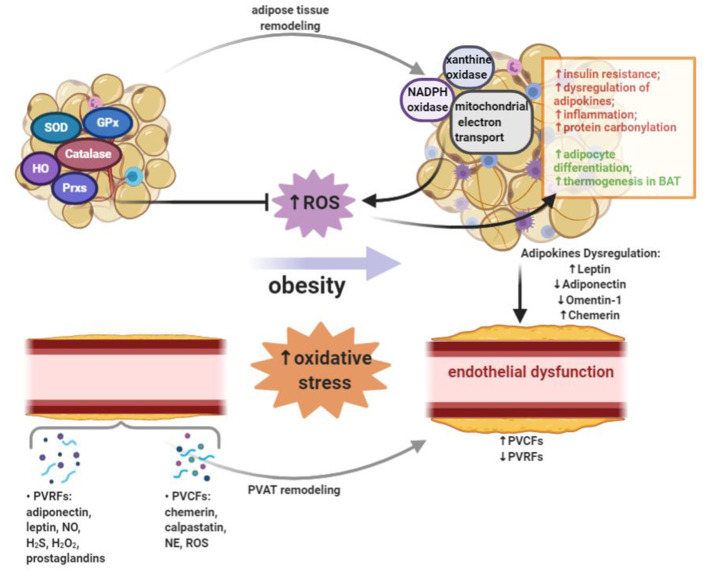
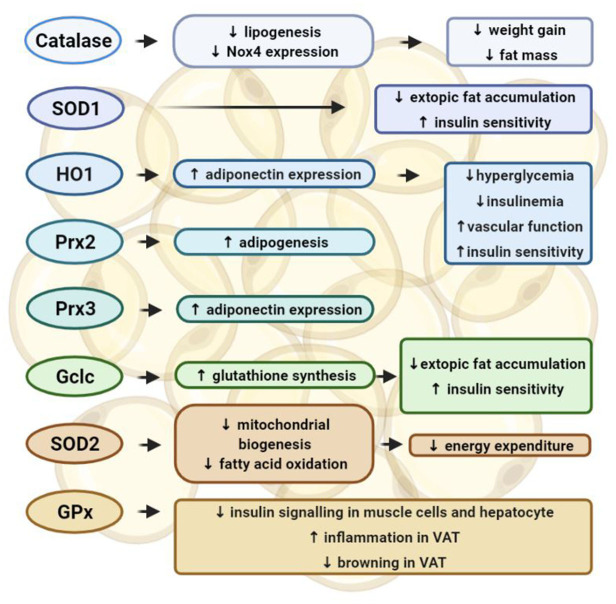
Cardiovascular diseases (CVDs) rank the leading cause of morbidity and mortality globally. Obesity and its related metabolic syndrome are well-established risk factors for CVDs. Therefore, understanding the pathophysiological role of adipose tissues is of great importance in maintaining cardiovascular health. Oxidative stress, characterized by excessive formation of reactive oxygen species, is a common cellular stress shared by obesity and CVDs. While plenty of literatures have illustrated the vascular oxidative stress, very few have discussed the impact of oxidative stress in adipose tissues. Adipose tissues can communicate with vascular systems, in an endocrine and paracrine manner, through secreting several adipocytokines, which is largely dysregulated in obesity. The aim of this review is to summarize current understanding of the relationship between oxidative stress in obesity and vascular endothelial dysfunction. In this review, we briefly describe the possible causes of oxidative stress in obesity, and the impact of obesity-induced oxidative stress on adipose tissue function. We also summarize the crosstalk between adipose tissue and vasculature mediated by adipocytokines in vascular oxidative stress. In addition, we highlight the potential target mediating adipose tissue oxidative stress.
心血管疾病(CVDs)是全球发病和死亡的主要原因。肥胖及其相关的代谢综合征是公认的心血管疾病风险因素。因此,了解脂肪组织的病理生理作用对于维持心血管健康至关重要。以活性氧过度形成为特征的氧化应激是肥胖和心血管疾病共有的常见细胞应激。虽然大量文献阐述了血管氧化应激,但很少有文献讨论氧化应激对脂肪组织的影响。脂肪组织可以通过分泌多种脂肪细胞因子,以内分泌和旁分泌的方式与血管系统进行交流,而这在肥胖状态下大多失调。本综述的目的是总结目前对肥胖中的氧化应激与血管内皮功能障碍之间关系的认识。在本综述中,我们简要描述了肥胖中氧化应激的可能原因,以及肥胖诱导的氧化应激对脂肪组织功能的影响。我们还总结了在血管氧化应激中由脂肪细胞因子介导的脂肪组织与脉管系统之间的相互作用。此外,我们强调了介导脂肪组织氧化应激的潜在靶点。