Department of Orthopedics, Fushun Mining Bureau General Hospital of Liaoning Health Industry Group (The Seventh Affiliated Hospital of China Medical University), Fushun, Liaoning 113008, China.
Department of Rehabilitation, Shanghai Putuo People's Hospital, Shanghai 200060, China.
Biomed Res Int. 2021 Mar 6;2021:5692039. doi: 10.1155/2021/5692039. eCollection 2021.
Bone trauma is a clinical condition that afflicts the majority of the world's population. For the management of bone trauma, the underlying mechanisms of the drugs effective for bone healing are deemed necessary. Radix (ABR) is a popular alternative medicine recommended in the treatment of bone trauma and injury, yet its mechanism of action persists to be vague. This study was conducted for the evaluation of the mode of action of ABR through network pharmacology in treating bone trauma.
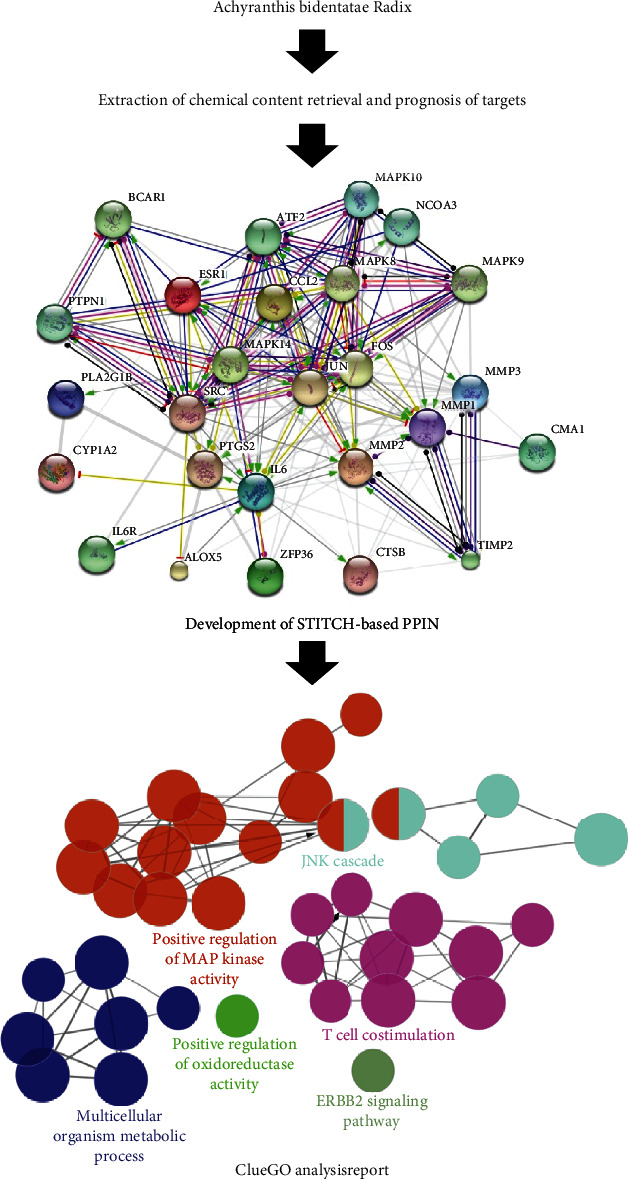
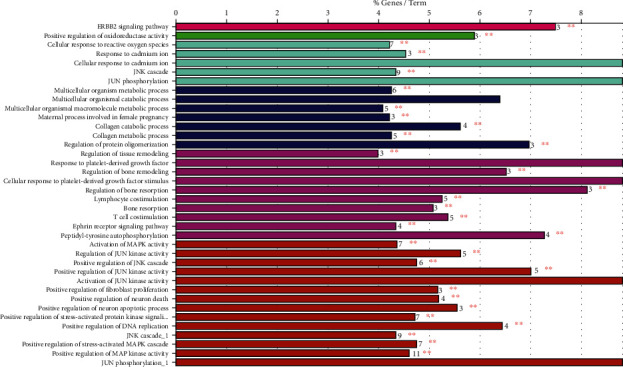
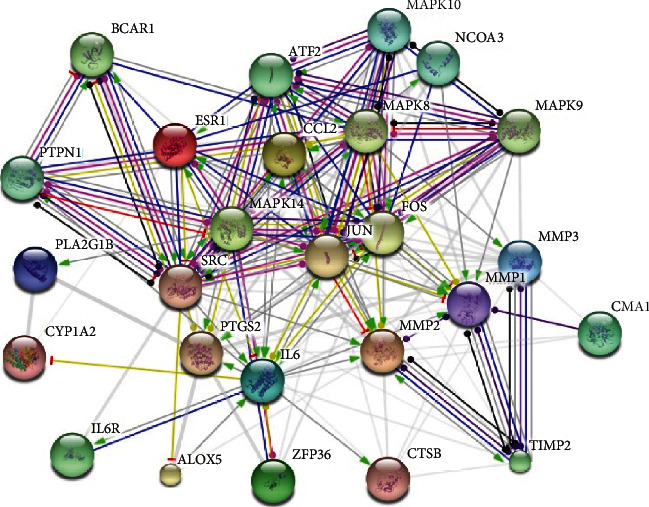
An extensive survey of published works led to the development of a drug-target database, after which multiple protein targets for bone trauma were discerned. The protein-protein interaction network was developed by utilizing the STITCH database and gene ontology (GO) enrichment analysis using Cytoscape and ClueGO. Moreover, docking studies were performed for revealing the affinity of various ingredients with IL6.
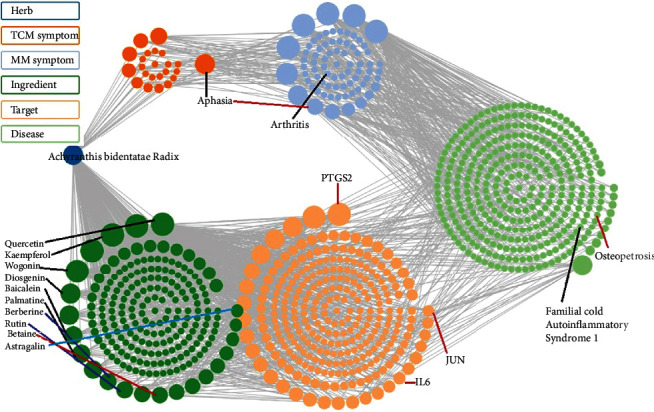
The extensive literature survey yielded the presence of 176 components in ABR, and 151 potential targets were acquired. Scrutinization of these targets revealed that 21 potential targets were found to be associated with bone trauma. Out of which, some remarkable targets such as IL6, MAPK14, MAPK8, SRC, PTGS2, and MMP2 were observed to be associated in the functional interaction of ABR. According to docking results, several ingredients of ABR such as Baicalien, Copistine, Epiberberine, Kaempferol, and Palmatine have the lowest docking scores (range between -6 and -7).
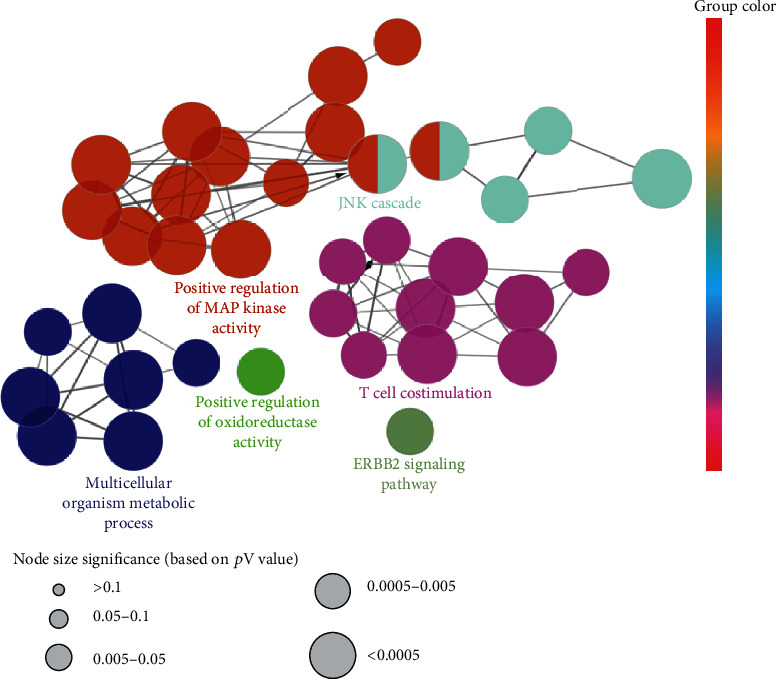
The results of the study elucidated that ABR can positively be utilized for the management of bone trauma, which can be mediated by multiple molecular mechanisms such as ERBB2 signaling pathway, positive regulation of oxidoreductase activity, JNK cascade pathway, multicellular organism metabolic process, T cell costimulation, and the positive regulation of MAPK activity. The findings also suggest that several ingredients of ABR such as Baicalien, Copistine, Epiberberine, Kaempferol, and Palmatine have good affinity with IL6, suggesting the promising potential of ABR in treating bone trauma, likely through IL6.
骨创伤是一种影响世界大多数人口的临床病症。对于骨创伤的管理,人们认为有必要了解药物对骨愈合有效的潜在机制。白芍(ABR)是一种在治疗骨创伤和损伤方面被推荐的常用替代药物,但它的作用机制仍然不清楚。本研究旨在通过网络药理学评估 ABR 治疗骨创伤的作用模式。
通过广泛搜索已发表的文献,建立了一个药物-靶点数据库,然后确定了多个与骨创伤相关的蛋白质靶点。利用 STITCH 数据库和 Cytoscape 中的基因本体(GO)富集分析,构建了蛋白质-蛋白质相互作用网络。此外,还进行了对接研究,以揭示各种成分与 IL6 的亲和力。
广泛的文献调查显示 ABR 中含有 176 种成分,获得了 151 个潜在靶点。对这些靶点进行分析后发现,有 21 个潜在靶点与骨创伤有关。其中,一些显著的靶点,如 IL6、MAPK14、MAPK8、SRC、PTGS2 和 MMP2,被观察到与 ABR 的功能相互作用有关。根据对接结果,ABR 的几种成分,如黄芩素、柯皮定、小檗碱、山奈酚和巴马汀,具有最低的对接分数(范围在-6 到-7 之间)。
该研究结果表明,ABR 可积极用于治疗骨创伤,其作用机制可能涉及 ERBB2 信号通路、氧化还原酶活性的正调控、JNK 级联途径、多细胞生物体代谢过程、T 细胞共刺激和 MAPK 活性的正调控等多种分子机制。研究结果还表明,ABR 的几种成分,如黄芩素、柯皮定、小檗碱、山奈酚和巴马汀,与 IL6 具有良好的亲和力,这表明 ABR 在治疗骨创伤方面具有很大的潜力,可能是通过 IL6 发挥作用的。