Zhou Wei, Li Qianming, Ma Ruixiang, Huang Wei, Zhang Xianzuo, Liu Yingsheng, Xu Ze, Zhang Linlin, Li Meng, Zhu Chen
Department of Orthopedics, The First Affiliated Hospital of University of Science and Technology of China, 17, Lu Jiang Road, Hefei 230001, People's Republic of China.
ACS Omega. 2021 Mar 4;6(10):6861-6870. doi: 10.1021/acsomega.0c06057. eCollection 2021 Mar 16.
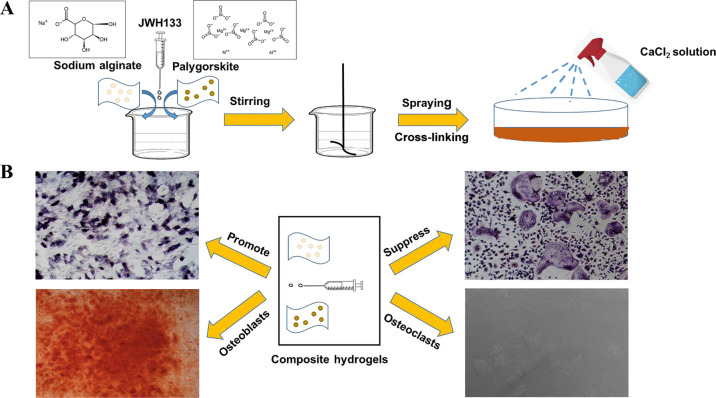
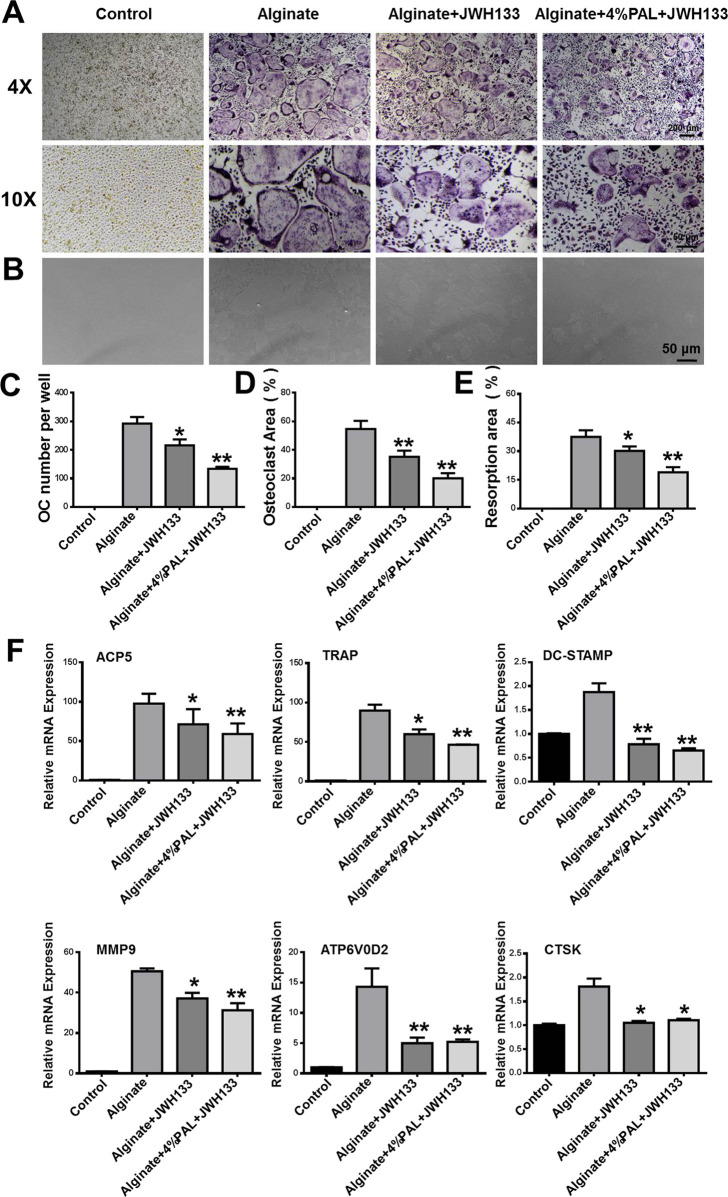
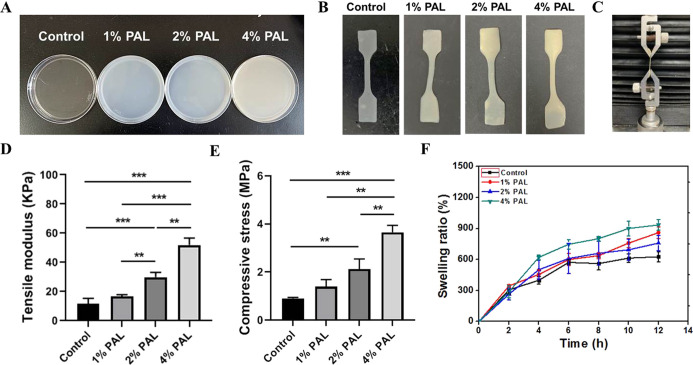
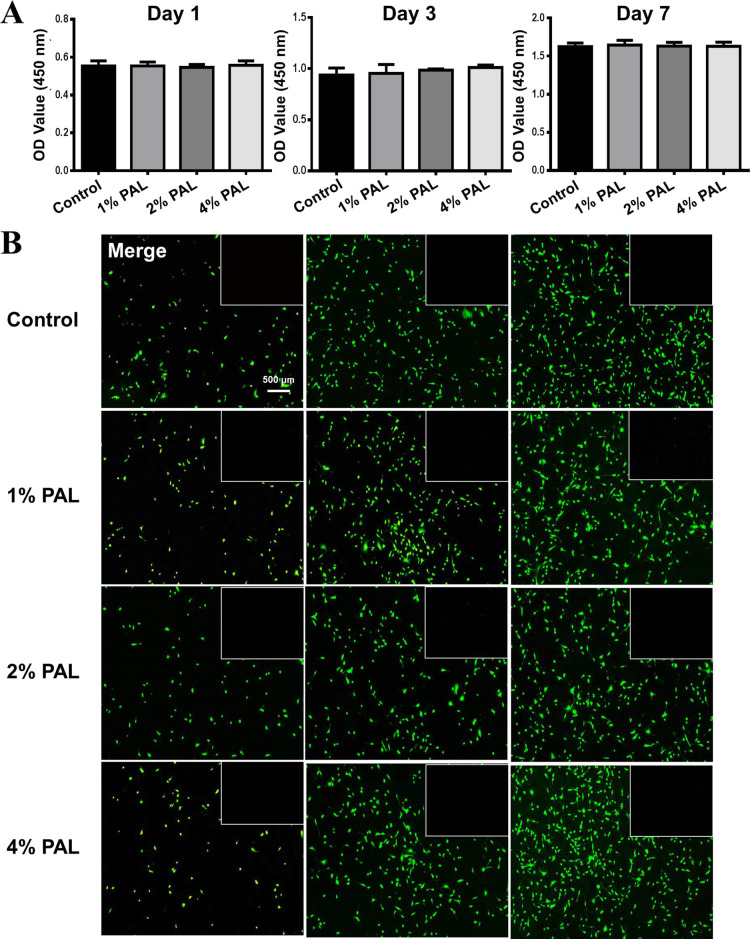
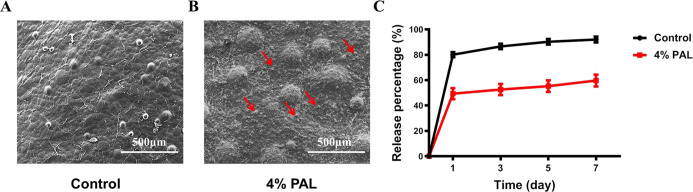
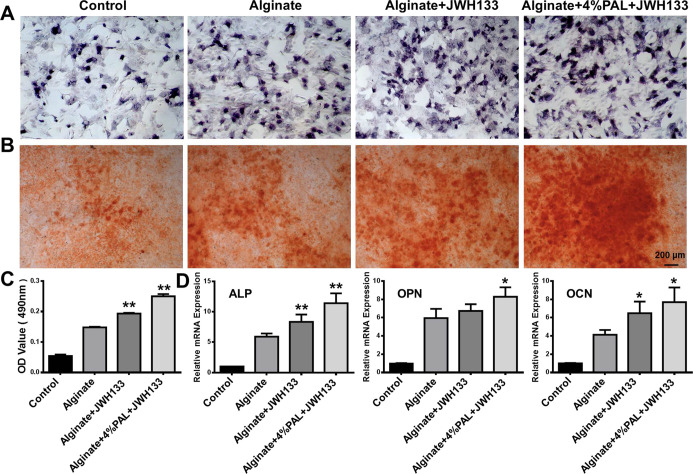
Alginate hydrogels have been widely used as excellent scaffold materials for implantation in biological systems because of their good biocompatibility. However, it is difficult to repair bone defects with these materials because of their poor mechanical properties. The aim of the present study was to fabricate a novel degradable alginate/palygorskite (PAL) composite hydrogel with good mechanical properties and investigate its potential for application in bone defect repair. The modified alginate-based hydrogel with increasing PAL content exhibited better mechanical properties than the original alginate hydrogel. In addition, the resulting composite hydrogel was thoroughly characterized by scanning electron microscopy (SEM). With increasing PAL content, the swelling ratio of the hydrogel increased in PBS (pH = 7.4). cytocompatibility was evaluated using bone marrow-derived mesenchymal stem cells (BMSCs) to confirm that the developed composite hydrogel was cytocompatible after 1, 3, and 7 days. All these results suggest that the developed composite hydrogel has great potential for bone tissue engineering applications. JWH133 is a selective agonist of cannabinoid receptor type 2 (CB2), which exerts dual anti-inflammatory and anti-osteoclastogenic effects. We co-cultured BMSCs with composite hydrogels loaded with JWH133, and analysis of proliferation and osteogenic differentiation indicated that the composite hydrogel loaded with JWH133 may enhance the osteogenic differentiation of rat BMSCs. Furthermore, we found that the composite hydrogel loaded with JWH133 inhibited osteoclast formation and the mRNA expression of osteoclast-specific markers. In summary, the developed composite hydrogel has a high drug-loading capacity, good biocompatibility, and strong potential as a drug carrier for treating osteoporosis by promoting osteoblast and inhibiting osteoclast formation and function.
由于具有良好的生物相容性,海藻酸盐水凝胶已被广泛用作植入生物系统的优良支架材料。然而,由于其机械性能较差,使用这些材料修复骨缺损很困难。本研究的目的是制备一种具有良好机械性能的新型可降解海藻酸盐/坡缕石(PAL)复合水凝胶,并研究其在骨缺损修复中的应用潜力。随着PAL含量增加,改性海藻酸盐水凝胶比原始海藻酸盐水凝胶表现出更好的机械性能。此外,通过扫描电子显微镜(SEM)对所得复合水凝胶进行了全面表征。随着PAL含量增加,水凝胶在PBS(pH = 7.4)中的溶胀率增加。使用骨髓间充质干细胞(BMSC)评估细胞相容性,以确认所开发的复合水凝胶在1、3和7天后具有细胞相容性。所有这些结果表明,所开发的复合水凝胶在骨组织工程应用中具有巨大潜力。JWH133是大麻素2型受体(CB2)的选择性激动剂,具有双重抗炎和抗破骨细胞生成作用。我们将BMSC与负载JWH133的复合水凝胶共培养,增殖和骨生成分化分析表明,负载JWH133的复合水凝胶可能增强大鼠BMSC的骨生成分化。此外,我们发现负载JWH133的复合水凝胶抑制破骨细胞形成和破骨细胞特异性标志物的mRNA表达。总之,所开发的复合水凝胶具有高载药能力、良好的生物相容性,并且作为通过促进成骨细胞和抑制破骨细胞形成及功能来治疗骨质疏松症的药物载体具有强大潜力。