Pereira Tiago, Abbasi Maryam, Ribeiro Bernardete, Arrais Joel P
Department of Informatics Engineering, Centre for Informatics and Systems of the University of Coimbra, University of Coimbra, Pinhal de Marrocos, Coimbra, Portugal.
J Cheminform. 2021 Mar 9;13(1):21. doi: 10.1186/s13321-021-00498-z.
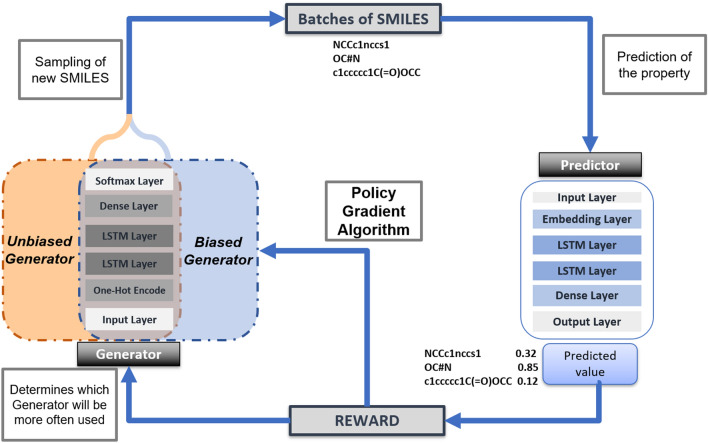
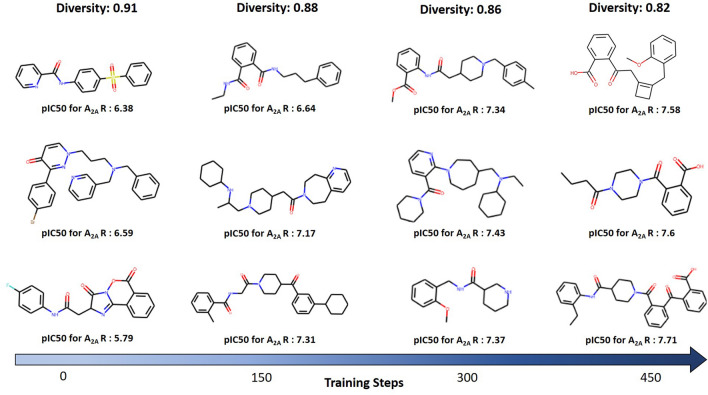
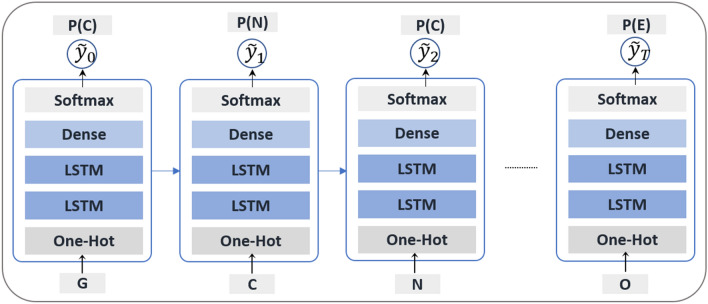
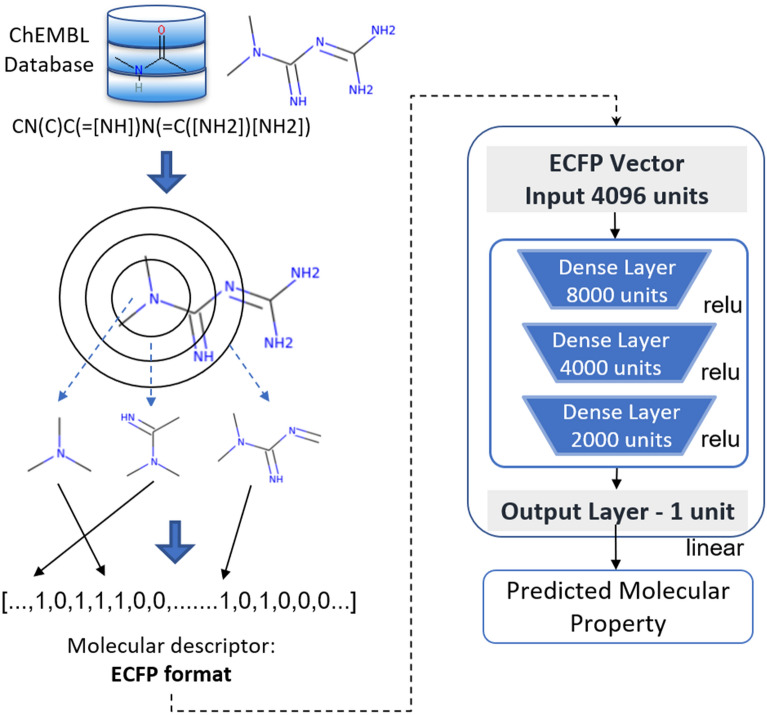
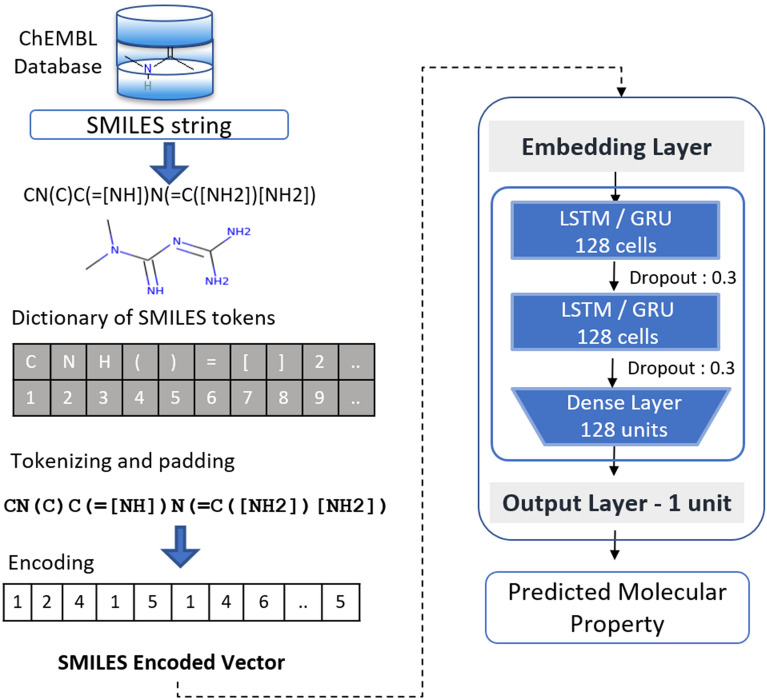
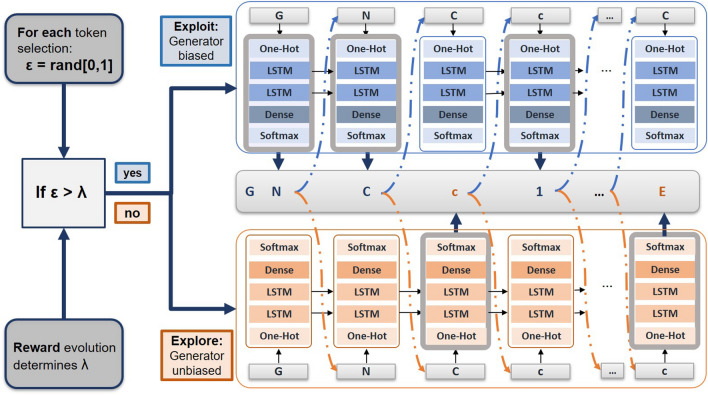
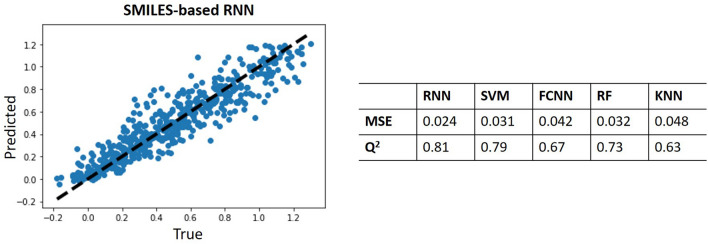
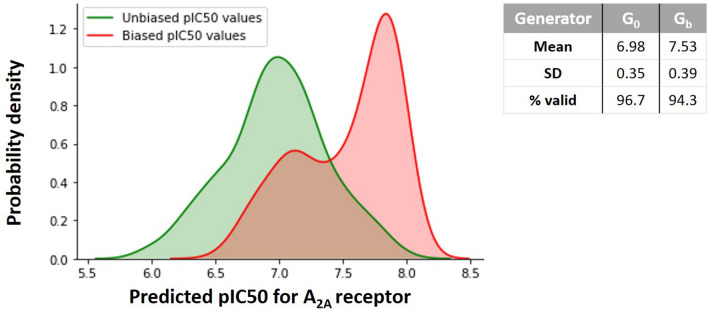
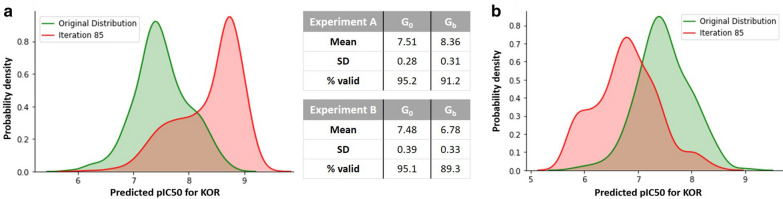
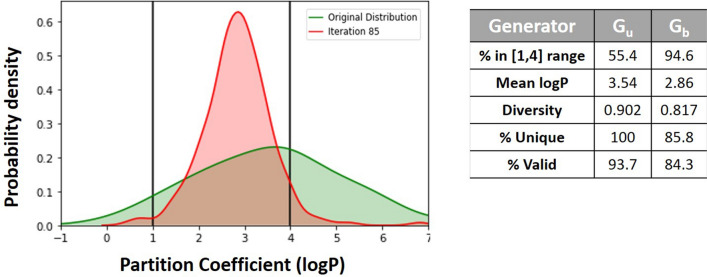
In this work, we explore the potential of deep learning to streamline the process of identifying new potential drugs through the computational generation of molecules with interesting biological properties. Two deep neural networks compose our targeted generation framework: the Generator, which is trained to learn the building rules of valid molecules employing SMILES strings notation, and the Predictor which evaluates the newly generated compounds by predicting their affinity for the desired target. Then, the Generator is optimized through Reinforcement Learning to produce molecules with bespoken properties. The innovation of this approach is the exploratory strategy applied during the reinforcement training process that seeks to add novelty to the generated compounds. This training strategy employs two Generators interchangeably to sample new SMILES: the initially trained model that will remain fixed and a copy of the previous one that will be updated during the training to uncover the most promising molecules. The evolution of the reward assigned by the Predictor determines how often each one is employed to select the next token of the molecule. This strategy establishes a compromise between the need to acquire more information about the chemical space and the need to sample new molecules, with the experience gained so far. To demonstrate the effectiveness of the method, the Generator is trained to design molecules with an optimized coefficient of partition and also high inhibitory power against the Adenosine [Formula: see text] and [Formula: see text] opioid receptors. The results reveal that the model can effectively adjust the newly generated molecules towards the wanted direction. More importantly, it was possible to find promising sets of unique and diverse molecules, which was the main purpose of the newly implemented strategy.
在这项工作中,我们探索了深度学习的潜力,通过计算生成具有有趣生物学特性的分子,来简化识别新潜在药物的过程。我们的目标生成框架由两个深度神经网络组成:生成器,它经过训练以学习使用SMILES字符串表示法的有效分子的构建规则;预测器,它通过预测新生成化合物对所需靶点的亲和力来评估这些化合物。然后,通过强化学习对生成器进行优化,以生成具有特定性质的分子。这种方法的创新之处在于在强化训练过程中应用的探索策略,该策略旨在为生成的化合物增添新颖性。这种训练策略交替使用两个生成器来采样新的SMILES:初始训练的模型将保持不变,以及前一个模型的副本,该副本将在训练过程中更新,以发现最有前景的分子。预测器分配的奖励的演变决定了每个生成器用于选择分子的下一个令牌的频率。这种策略在获取更多关于化学空间信息的需求与采样新分子的需求之间,以及与迄今为止获得的经验之间达成了妥协。为了证明该方法的有效性,对生成器进行训练,以设计具有优化分配系数且对腺苷[公式:见正文]和[公式:见正文]阿片受体具有高抑制能力的分子。结果表明,该模型可以有效地将新生成的分子朝着期望的方向调整。更重要的是,有可能找到一组有前景的独特且多样的分子,这是新实施策略的主要目的。