Liu Huitao, Zhang Jingjing, Xu Xingxing, Lu Sheng, Yang Danlu, Xie Changnan, Jia Mengxian, Zhang Wenbin, Jin Lingting, Wang Xiwu, Shen Xiya, Li Fayi, Wang Wangfei, Bao Xiaomei, Li Sijia, Zhu Minyu, Wang Wei, Wang Ying, Huang Zhihui, Teng Honglin
Department of Orthopedics (Spine Surgery), The First Affiliated Hospital of Wenzhou Medical University, Wenzhou 325000, Zhejiang, China.
Department of Orthopedics, Taizhou Hospital of Zhejiang Province, Linhai 317000, Zhejiang, China.
Theranostics. 2021 Feb 20;11(9):4187-4206. doi: 10.7150/thno.49054. eCollection 2021.
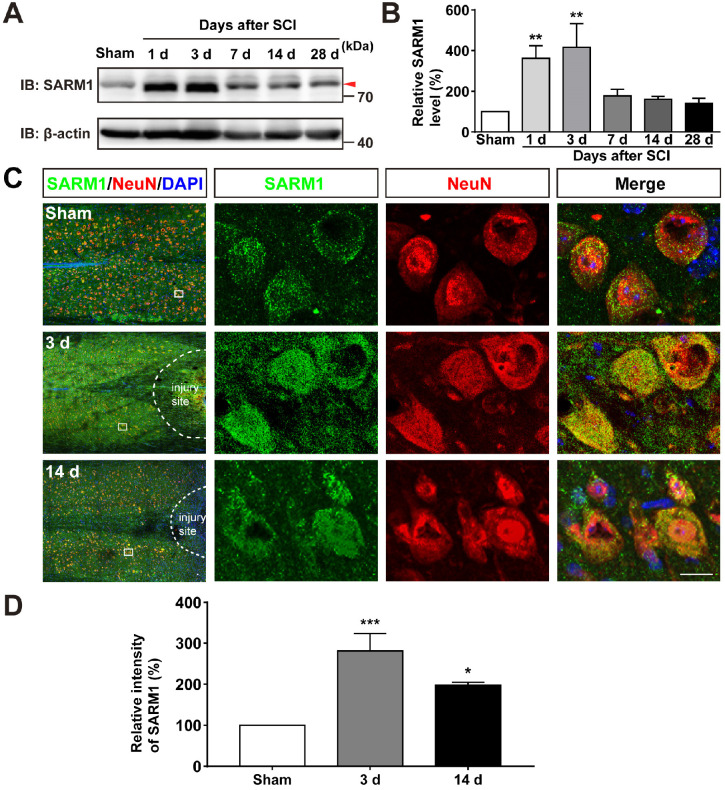
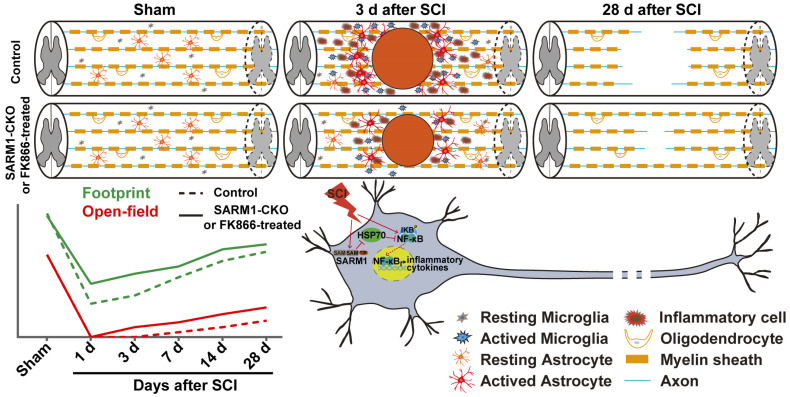
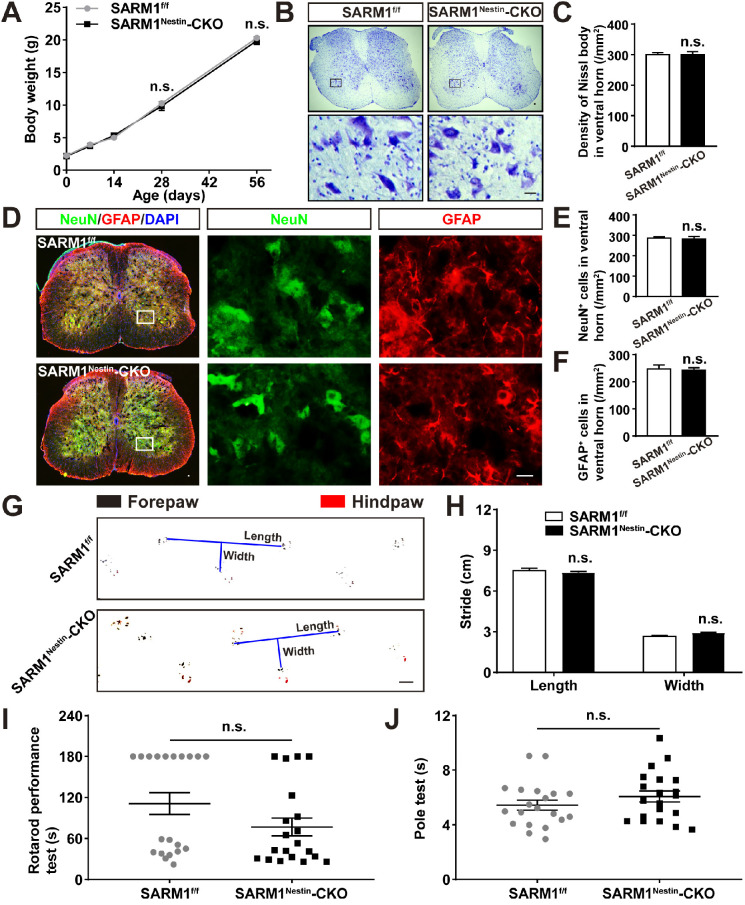
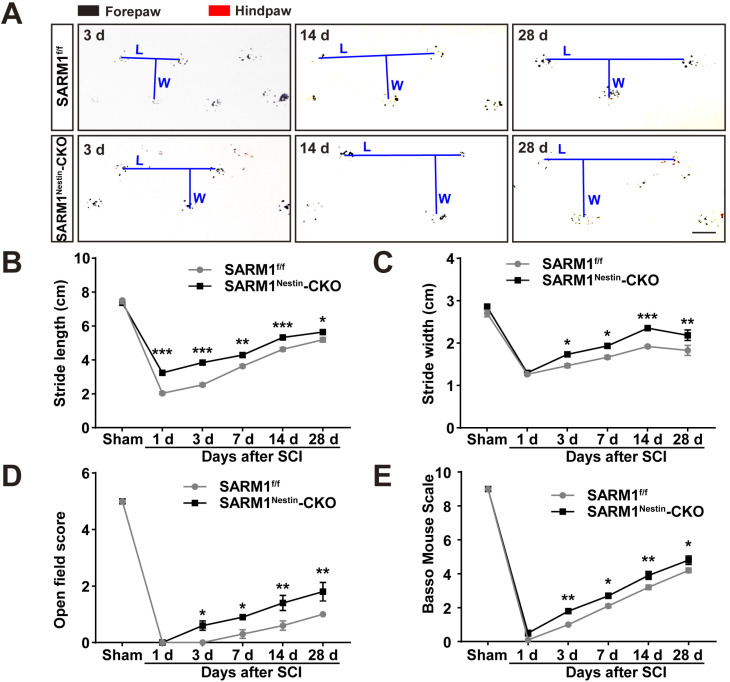
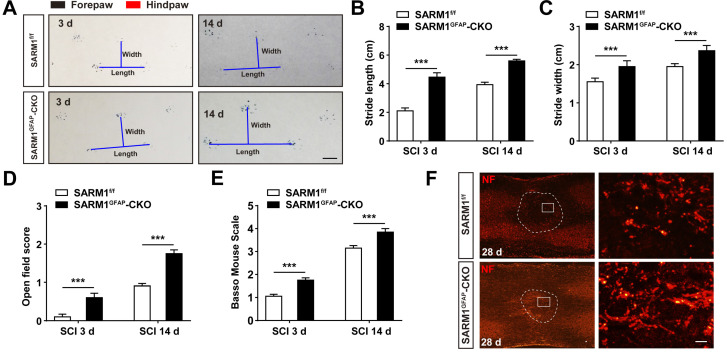
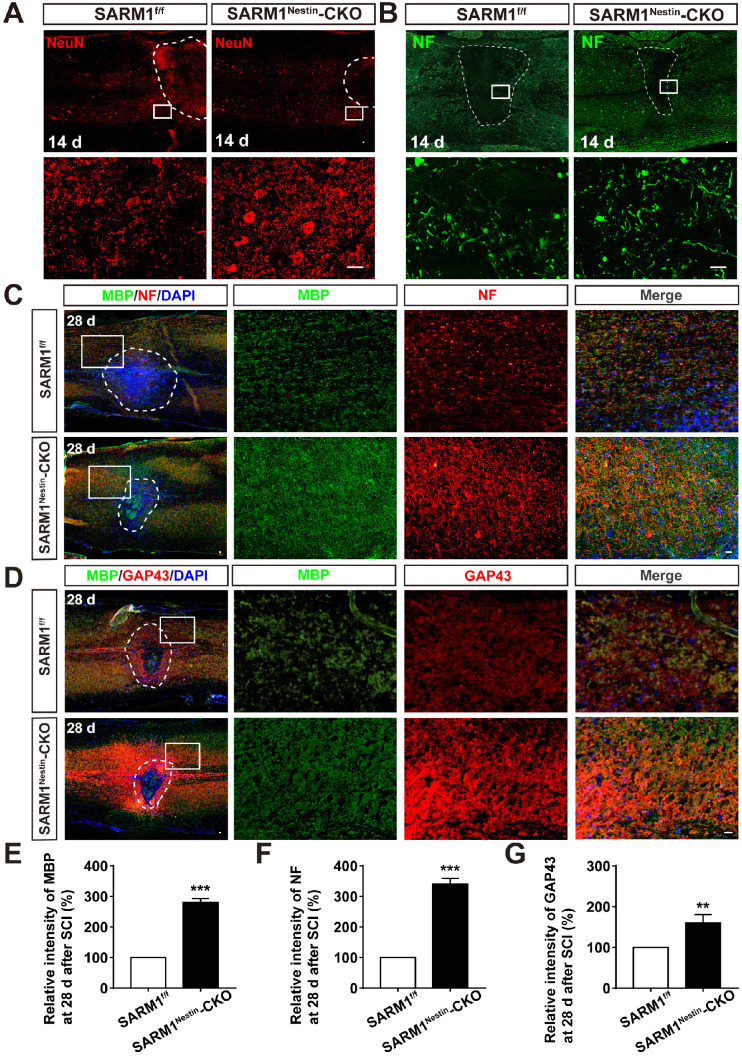
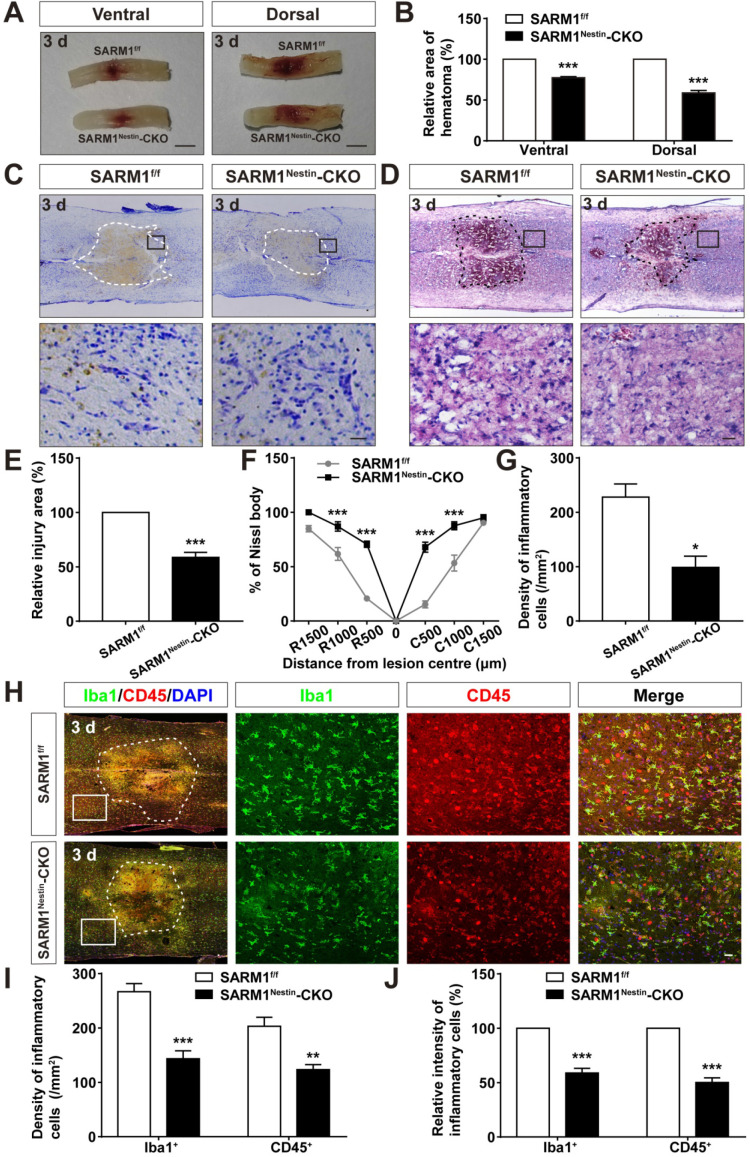
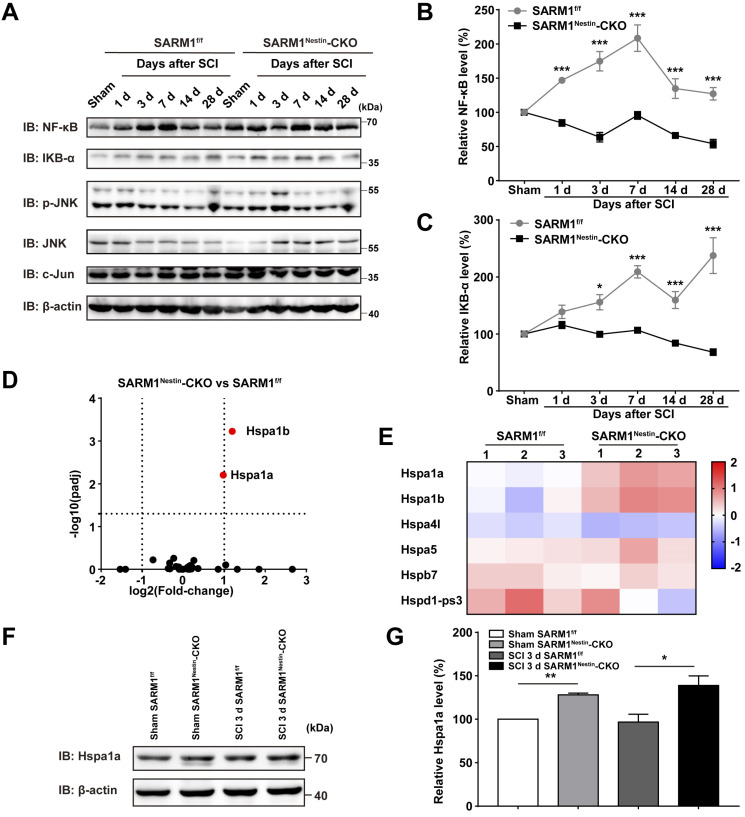
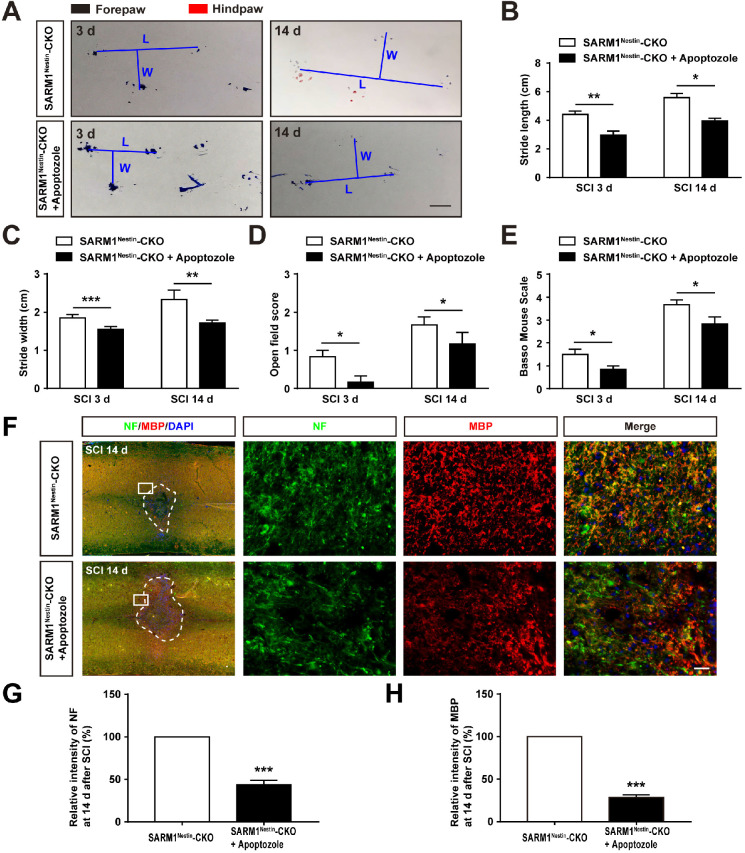
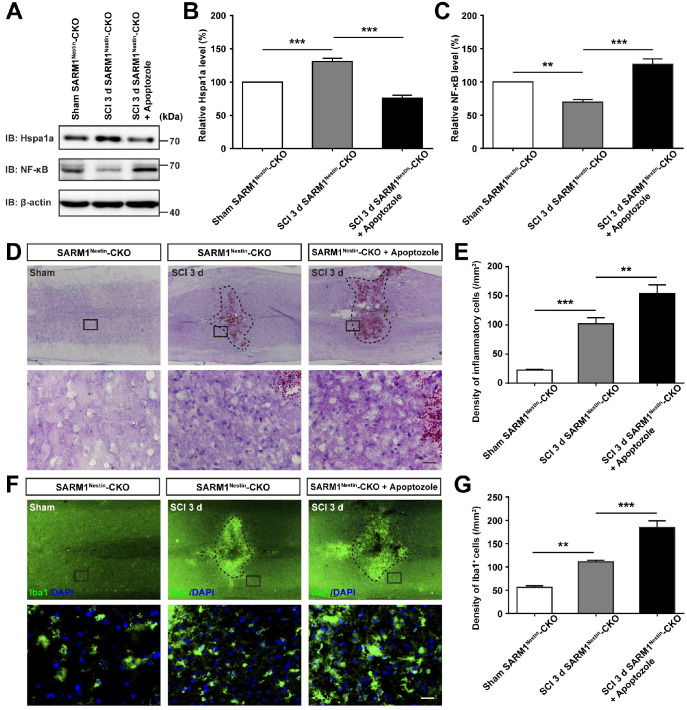
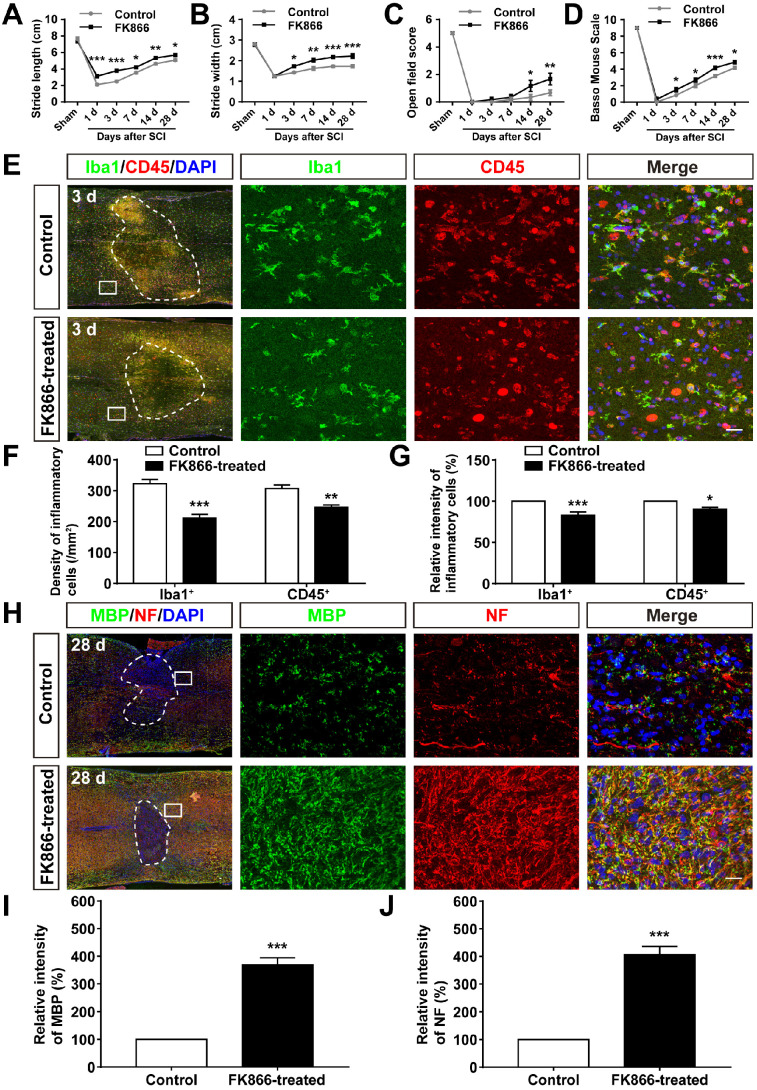
Axonal degeneration is a common pathological feature in many acute and chronic neurological diseases such as spinal cord injury (SCI). SARM1 (sterile alpha and TIR motif-containing 1), the fifth TLR (Toll-like receptor) adaptor, has diverse functions in the immune and nervous systems, and recently has been identified as a key mediator of Wallerian degeneration (WD). However, the detailed functions of SARM1 after SCI still remain unclear. Modified Allen's method was used to establish a contusion model of SCI in mice. Furthermore, to address the function of SARM1 after SCI, conditional knockout (CKO) mice in the central nervous system (CNS), SARM1-CKO mice, and SARM1-CKO mice were successfully generated by Nestin-Cre and GFAP-Cre transgenic mice crossed with SARM1 mice, respectively. Immunostaining, Hematoxylin-Eosin (HE) staining, Nissl staining and behavioral test assays such as footprint and Basso Mouse Scale (BMS) scoring were used to examine the roles of SARM1 pathway in SCI based on these conditional knockout mice. Drugs such as FK866, an inhibitor of SARM1, and apoptozole, an inhibitor of heat shock protein 70 (HSP70), were used to further explore the molecular mechanism of SARM1 in neural regeneration after SCI. We found that SARM1 was upregulated in neurons and astrocytes at early stage after SCI. SARM1-CKO and SARM1-CKO mice displayed normal development of the spinal cords and motor function. Interestingly, conditional deletion of SARM1 in neurons and astrocytes promoted the functional recovery of behavior performance after SCI. Mechanistically, conditional deletion of SARM1 in neurons and astrocytes promoted neuronal regeneration at intermediate phase after SCI, and reduced neuroinflammation at SCI early phase through downregulation of NF-κB signaling after SCI, which may be due to upregulation of HSP70. Finally, FK866, an inhibitor of SARM1, reduced the neuroinflammation and promoted the neuronal regeneration after SCI. Our results indicate that SARM1-mediated prodegenerative pathway and neuroinflammation promotes the pathological progress of SCI and anti-SARM1 therapeutics are viable and promising approaches for preserving neuronal function after SCI.
轴突退变是许多急慢性神经疾病(如脊髓损伤,SCI)常见的病理特征。含无菌α和TIR结构域蛋白1(SARM1)是第五种Toll样受体(TLR)衔接蛋白,在免疫和神经系统中具有多种功能,最近被确定为沃勒变性(WD)的关键介质。然而,SCI后SARM1的具体功能仍不清楚。采用改良的Allen法建立小鼠SCI挫伤模型。此外,为了研究SCI后SARM1的功能,分别通过Nestin-Cre和GFAP-Cre转基因小鼠与SARM1小鼠杂交,成功构建了中枢神经系统(CNS)条件性敲除(CKO)小鼠,即SARM1-CKO小鼠和SARM1-CKO小鼠。基于这些条件性敲除小鼠,利用免疫染色、苏木精-伊红(HE)染色、尼氏染色以及足迹和巴索小鼠评分(BMS)等行为学检测方法,研究SARM1通路在SCI中的作用。使用SARM1抑制剂FK866和热休克蛋白70(HSP70)抑制剂阿朴托唑等药物,进一步探讨SARM1在SCI后神经再生中的分子机制。我们发现,SCI早期神经元和星形胶质细胞中SARM1表达上调。SARM1-CKO和SARM1-CKO小鼠脊髓发育和运动功能正常。有趣的是,神经元和星形胶质细胞中SARM1的条件性缺失促进了SCI后行为表现的功能恢复。机制上,神经元和星形胶质细胞中SARM1的条件性缺失促进了SCI中期的神经元再生,并通过下调SCI后的NF-κB信号通路,减少了SCI早期的神经炎症,这可能是由于HSP70上调所致。最后,SARM1抑制剂FK866减少了SCI后的神经炎症,促进了神经元再生。我们的结果表明,SARM1介导的促退变通路和神经炎症促进了SCI的病理进程,抗SARM1治疗是SCI后保留神经元功能的可行且有前景的方法。