Department of Ophthalmology, Wroclaw Medical University, Wroclaw, Poland.
Department of Biomedical Engineering, Faculty of Fundamental Problems of Technology, Wroclaw University of Science and Technology, Wroclaw, Poland.
PLoS One. 2021 Mar 23;16(3):e0248851. doi: 10.1371/journal.pone.0248851. eCollection 2021.
To evaluate association between ocular blood flow biomarkers and lamina cribrosa parameters in normotensive glaucoma suspects compared to glaucoma patients and healthy controls.
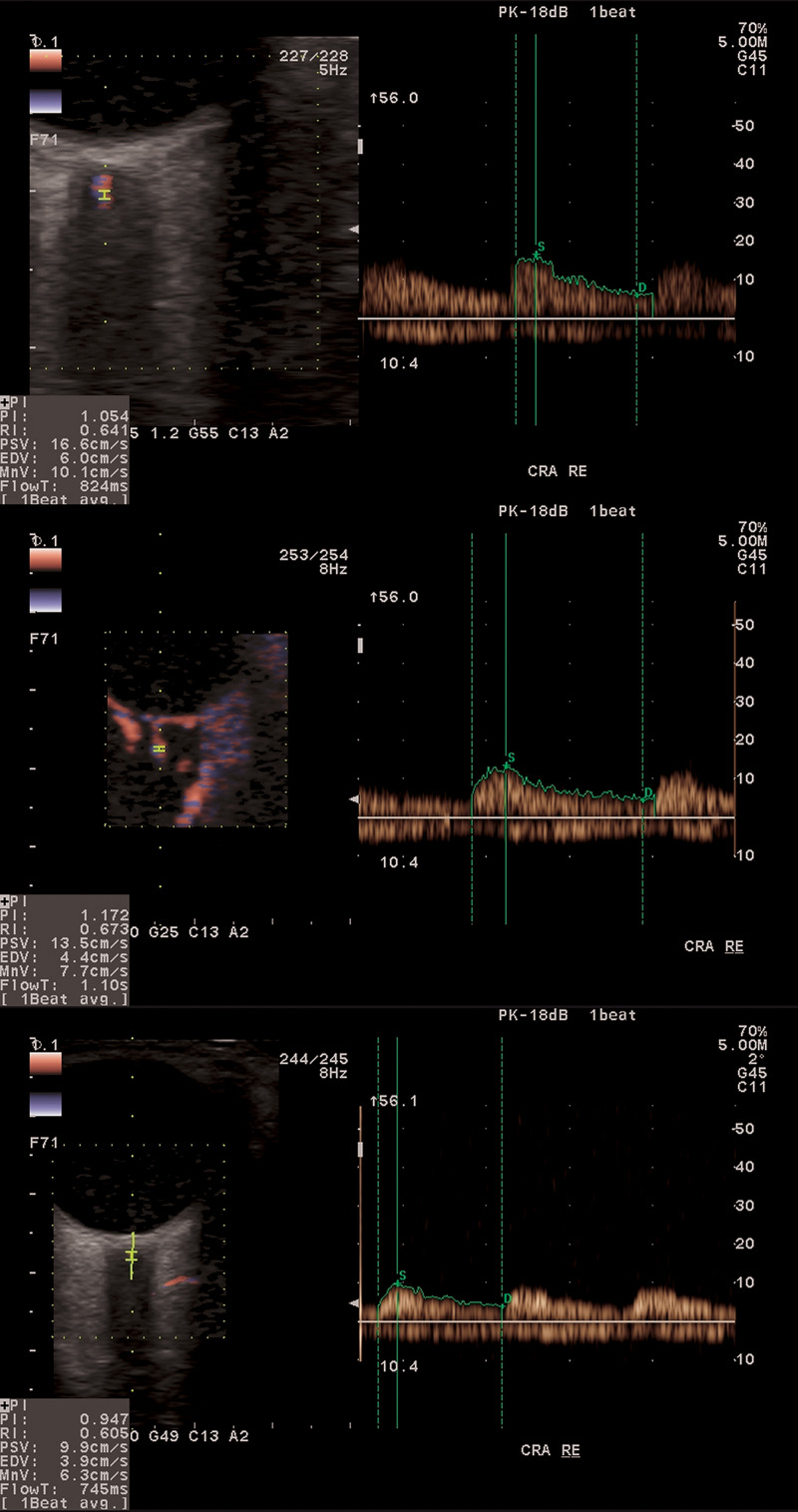
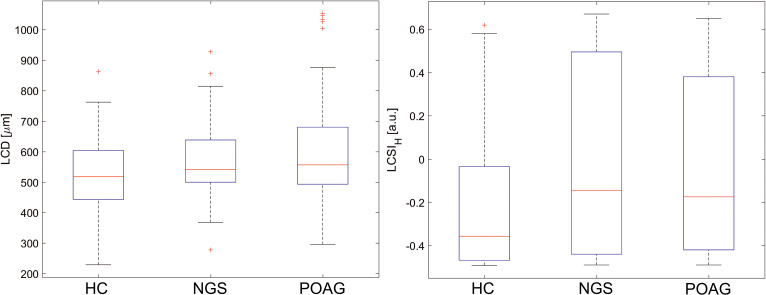
A total of 211 subjects (72 normotensive glaucoma suspects, 70 with primary open-angle glaucoma and 69 controls) were included. Ocular blood flow biomarkers in ophthalmic artery, central retinal artery, as well as in nasal and temporal short posterior ciliary arteries were measured using colour Doppler imaging. Lamina cribrosa position was assessed by measuring its depth, deflection depth, lamina cribrosa shape index and its horizontal equivalent (LCSIH) on B-scan images obtained using optical coherence tomography.
Ocular blood flow biomarkers in glaucoma patients were statistically significantly reduced when compared to healthy controls in peak systolic velocity (PSV) (P = 0.001 in ophthalmic artery and P<0.001 in central retinal artery) and mean flow velocity (Vm) (P = 0.008 in ophthalmic artery and P = 0.008 in central retinal artery), but not statistically significantly different to that of glaucoma suspects except for PSV in central retinal artery (P = 0.011). Statistically significant correlations corrected for age, central corneal thickness and intraocular pressure were found in glaucoma patients between LCSIH and end diastolic velocity of central retinal artery (P = 0.011), and of nasal short posterior ciliary artery (P = 0.028), and between LCSIH and Vm of central retinal artery (P = 0.011) and of nasal short posterior ciliary artery (P = 0.007). No significant correlations were observed between these parameters in glaucoma suspects and healthy controls.
Impaired ocular blood flow associated with the deformation of lamina cribrosa was found in glaucoma patients, whereas glaucoma suspects had similar lamina cribrosa shape to glaucoma patients but that deformation was not associated with ocular blood flow biomarkers.
评估正常眼压性青光眼患者与开角型青光眼患者和健康对照者的眼血流生物标志物与筛板参数之间的相关性。
共纳入 211 名受试者(72 名正常眼压性青光眼患者、70 名开角型青光眼患者和 69 名健康对照者)。使用彩色多普勒成像测量眼动脉、视网膜中央动脉以及鼻侧和颞侧短睫状后动脉的血流生物标志物。使用光学相干断层扫描获得 B 扫描图像,评估筛板位置,测量其深度、凹陷深度、筛板形状指数及其水平等效值(LCSIH)。
与健康对照组相比,青光眼患者的眼血流生物标志物在收缩期峰值速度(PSV)(眼动脉 P = 0.001,视网膜中央动脉 P<0.001)和平均流速(Vm)(眼动脉 P = 0.008,视网膜中央动脉 P = 0.008)方面均显著降低,但与青光眼患者无统计学差异,除视网膜中央动脉 PSV 外(P = 0.011)。在青光眼患者中,LCSIH 与视网膜中央动脉的舒张末期速度(P = 0.011)和鼻侧短睫状后动脉(P = 0.028),以及与视网膜中央动脉的 Vm(P = 0.011)和鼻侧短睫状后动脉(P = 0.007)之间存在统计学显著相关性,校正年龄、中央角膜厚度和眼内压后相关性仍具有统计学意义。在青光眼患者和健康对照者中,这些参数之间均无显著相关性。
在青光眼患者中发现了与筛板变形相关的眼部血流受损,而青光眼患者的筛板形状与青光眼患者相似,但这种变形与眼部血流生物标志物无关。