Cambridge Research Center, AbbVie, Cambridge, Massachusetts, United States of America.
PLoS One. 2021 Mar 23;16(3):e0248889. doi: 10.1371/journal.pone.0248889. eCollection 2021.
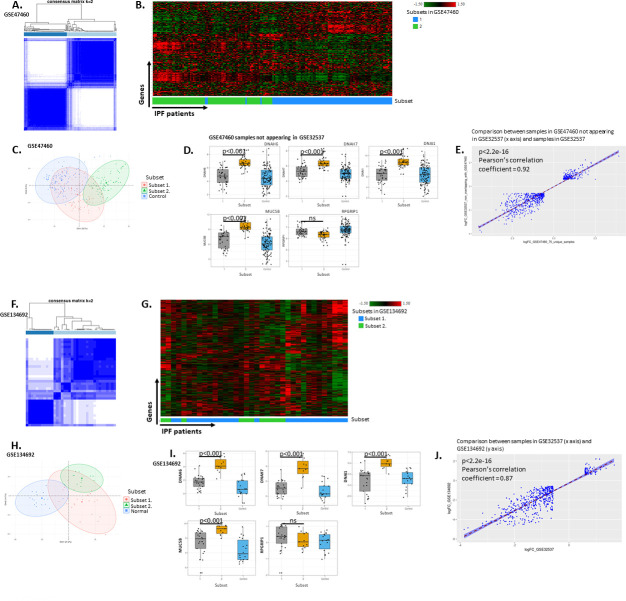
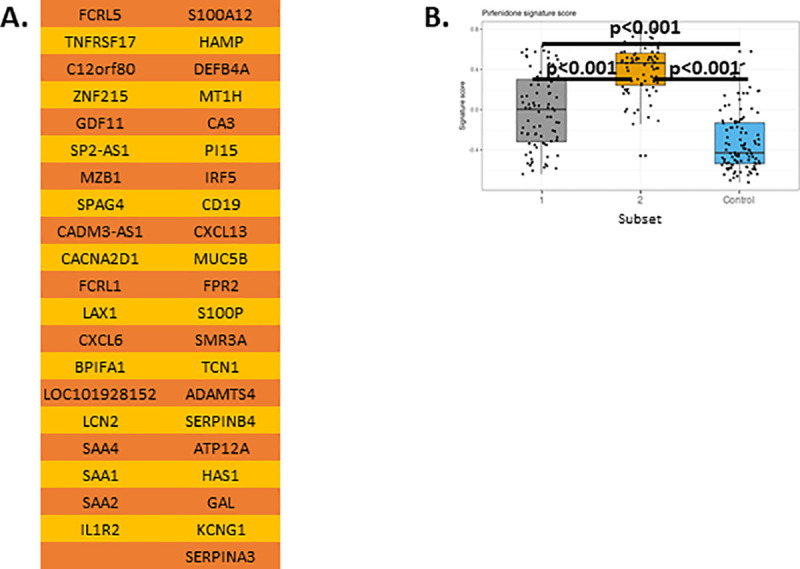
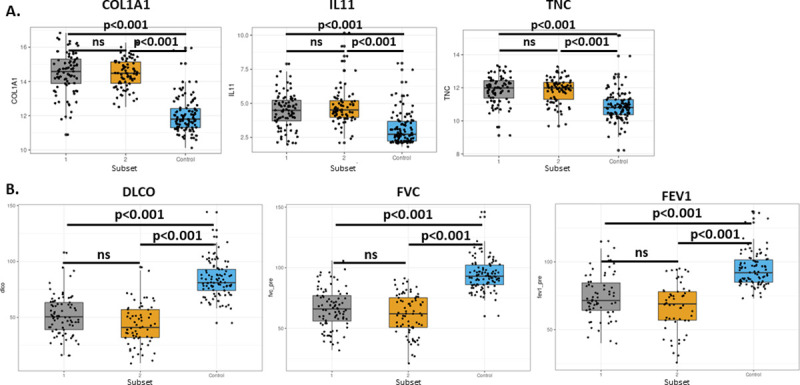
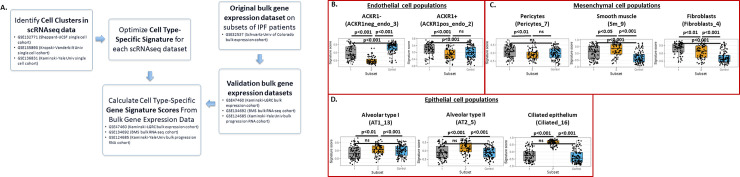
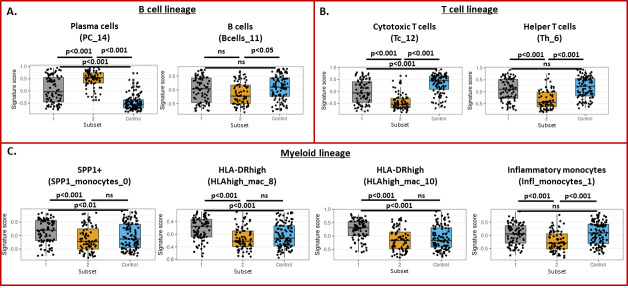
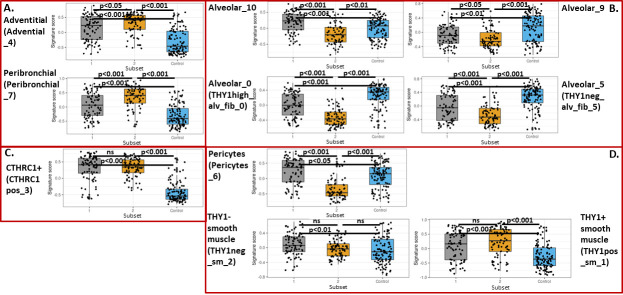
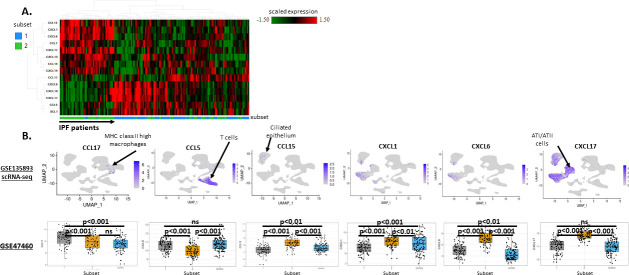
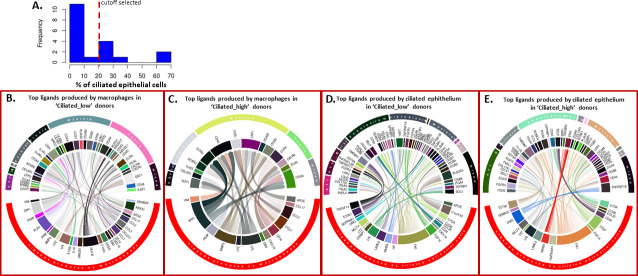
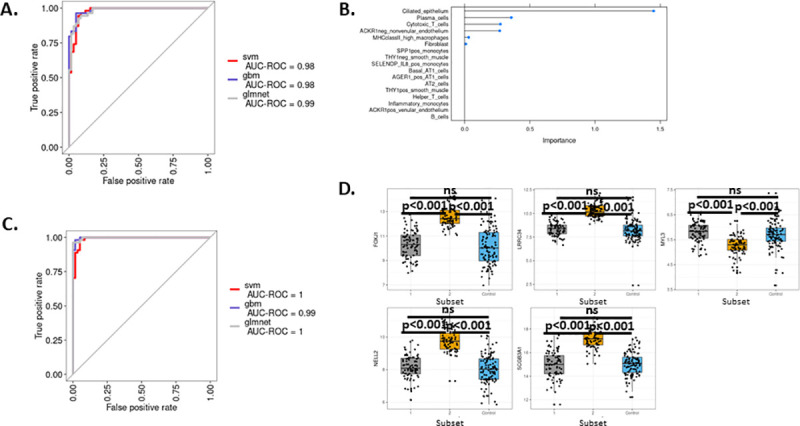
Idiopathic pulmonary fibrosis is a progressive and debilitating lung disease with large unmet medical need and few treatment options. We describe an analysis connecting single cell gene expression with bulk gene expression-based subsetting of patient cohorts to identify IPF patient subsets with different underlying pathogenesis and cellular changes. We reproduced earlier findings indicating the existence of two major subsets in IPF and showed that these subsets display different alterations in cellular composition of the lung. We developed classifiers based on the cellular changes in disease to distinguish subsets. Specifically, we showed that one subset of IPF patients had significant increases in gene signature scores for myeloid cells versus a second subset that had significantly increased gene signature scores for ciliated epithelial cells, suggesting a differential pathogenesis among IPF subsets. Ligand-receptor analyses suggested there was a monocyte-macrophage chemoattractant axis (including potentially CCL2-CCR2 and CCL17-CCR4) among the myeloid-enriched IPF subset and a ciliated epithelium-derived chemokine axis (e.g. CCL15) among the ciliated epithelium-enriched IPF subset. We also found that these IPF subsets had differential expression of pirfenidone-responsive genes suggesting that our findings may provide an approach to identify patients with differential responses to pirfenidone and other drugs. We believe this work is an important step towards targeted therapies and biomarkers of response.
特发性肺纤维化是一种进行性和使人虚弱的肺部疾病,存在大量未满足的医疗需求和治疗选择有限。我们描述了一种分析方法,将单细胞基因表达与基于批量基因表达的患者亚群细分相结合,以确定具有不同潜在发病机制和细胞变化的特发性肺纤维化患者亚群。我们复制了早期的发现,表明特发性肺纤维化存在两个主要亚群,并表明这些亚群显示出肺细胞成分的不同改变。我们基于疾病中的细胞变化开发了分类器来区分亚群。具体来说,我们表明,特发性肺纤维化患者的一个亚群中,髓样细胞的基因特征评分显著增加,而另一个亚群中,纤毛上皮细胞的基因特征评分显著增加,这表明特发性肺纤维化亚群之间存在不同的发病机制。配体-受体分析表明,在富含髓样细胞的特发性肺纤维化亚群中存在单核细胞-巨噬细胞趋化因子轴(包括潜在的 CCL2-CCR2 和 CCL17-CCR4),而在富含纤毛上皮细胞的特发性肺纤维化亚群中存在纤毛上皮细胞衍生的趋化因子轴(例如 CCL15)。我们还发现这些特发性肺纤维化亚群中存在吡非尼酮反应基因的差异表达,这表明我们的发现可能为识别对吡非尼酮和其他药物具有不同反应的患者提供了一种方法。我们相信这项工作是朝着靶向治疗和反应生物标志物迈出的重要一步。