Department of Mathematics and Statistics, University of Massachusetts Amherst, Amherst, MA MA 01003-9305, USA.
Math Biosci Eng. 2021 Feb 22;18(2):1879-1897. doi: 10.3934/mbe.2021098.
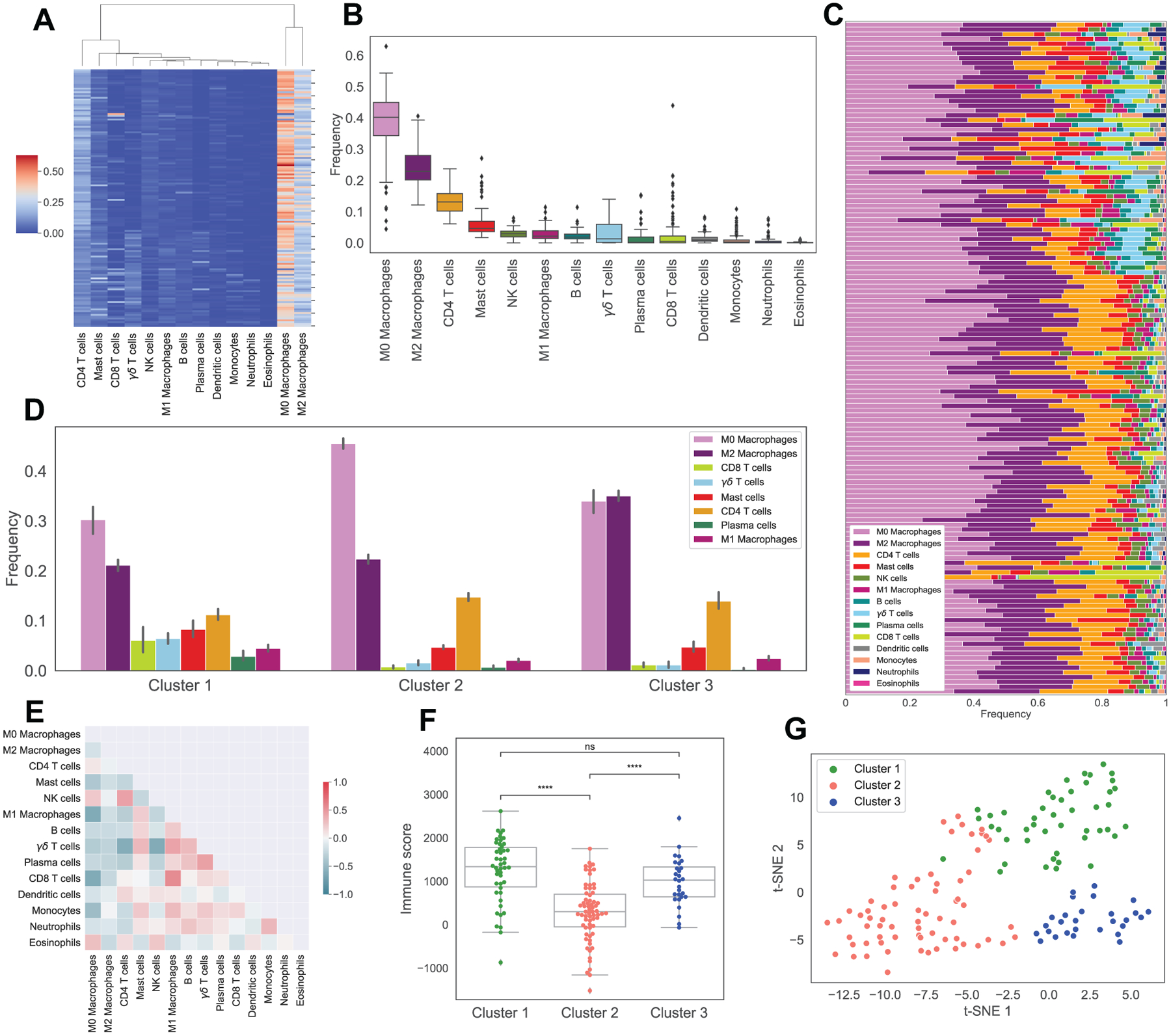
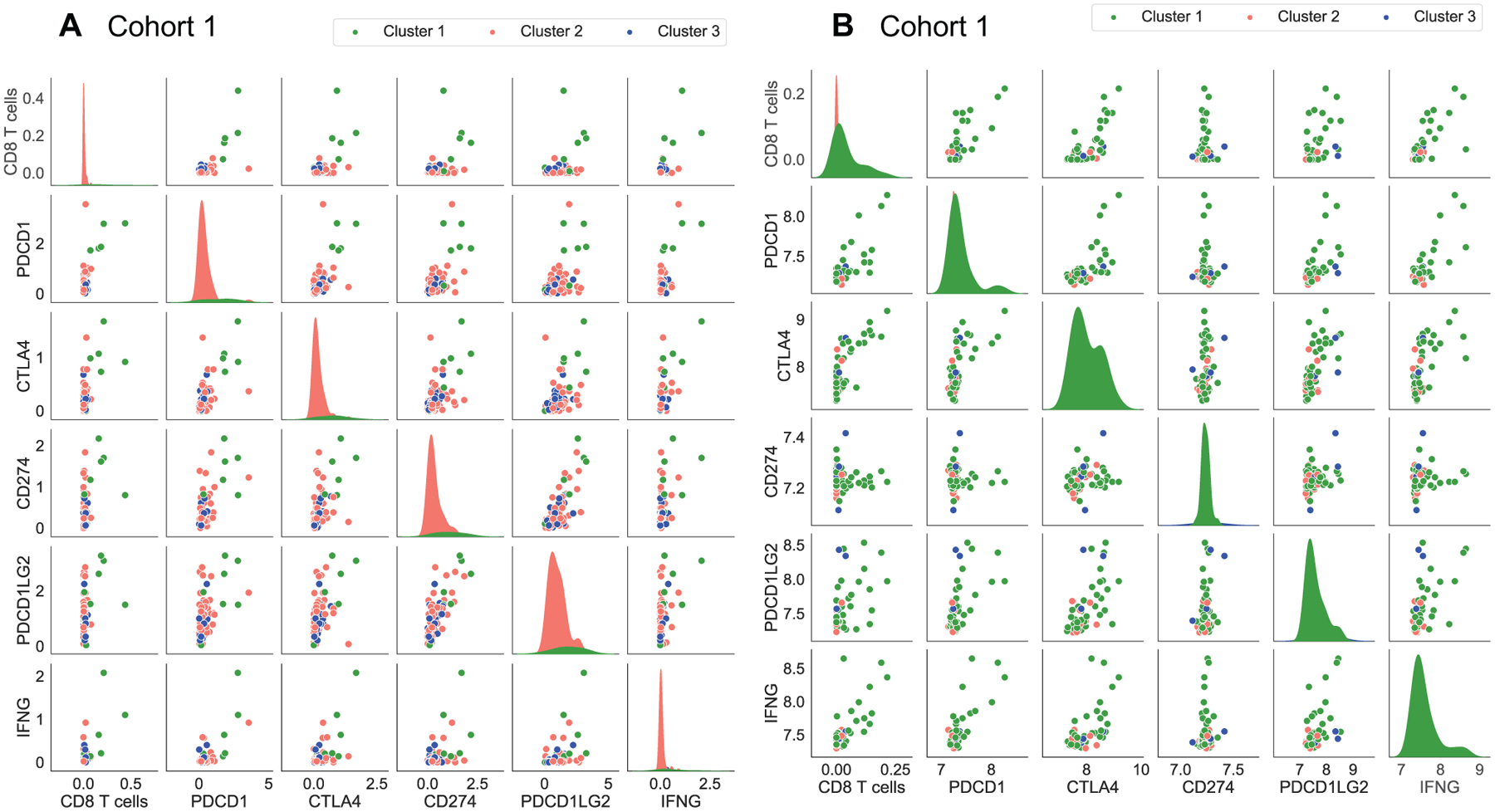
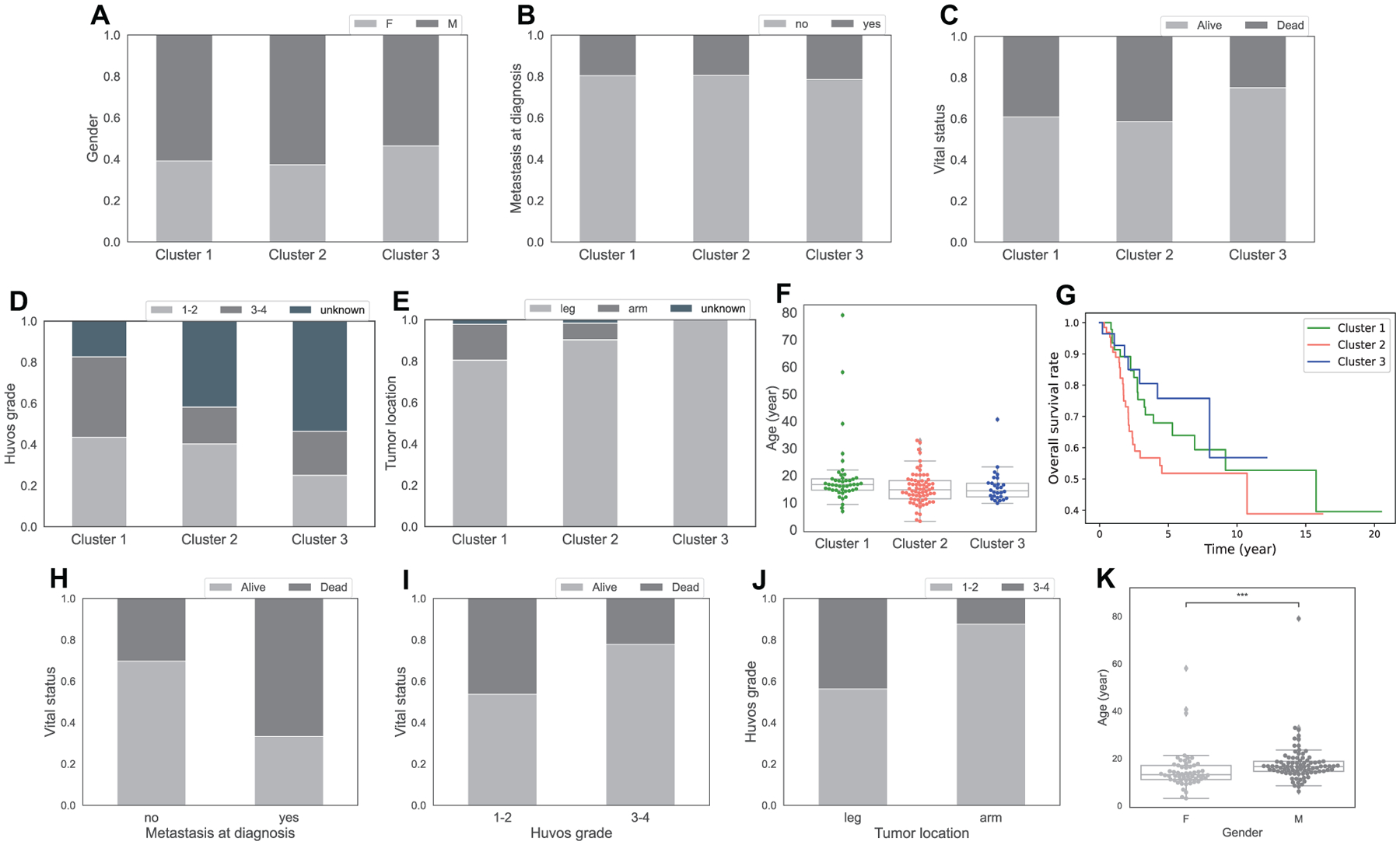
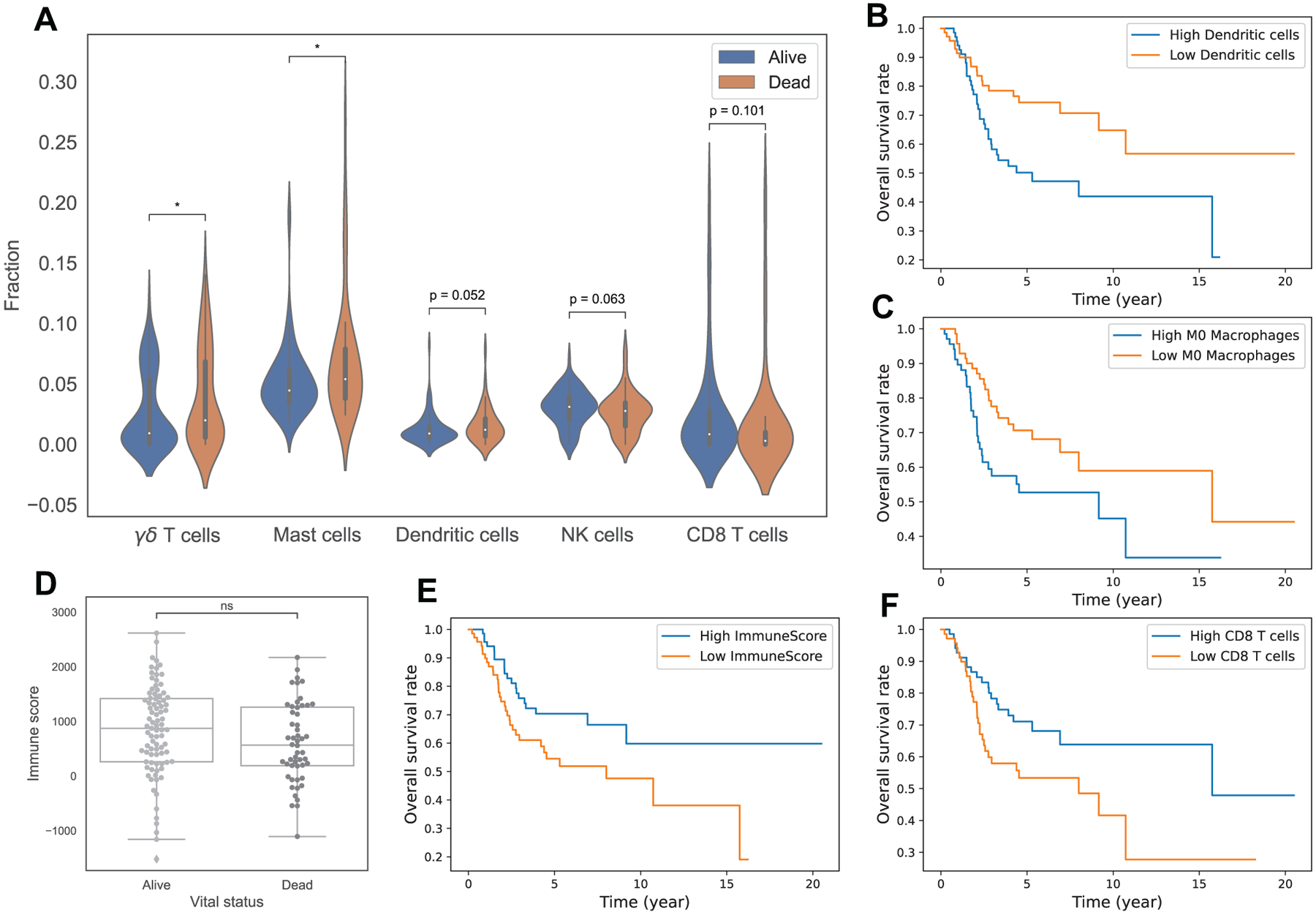
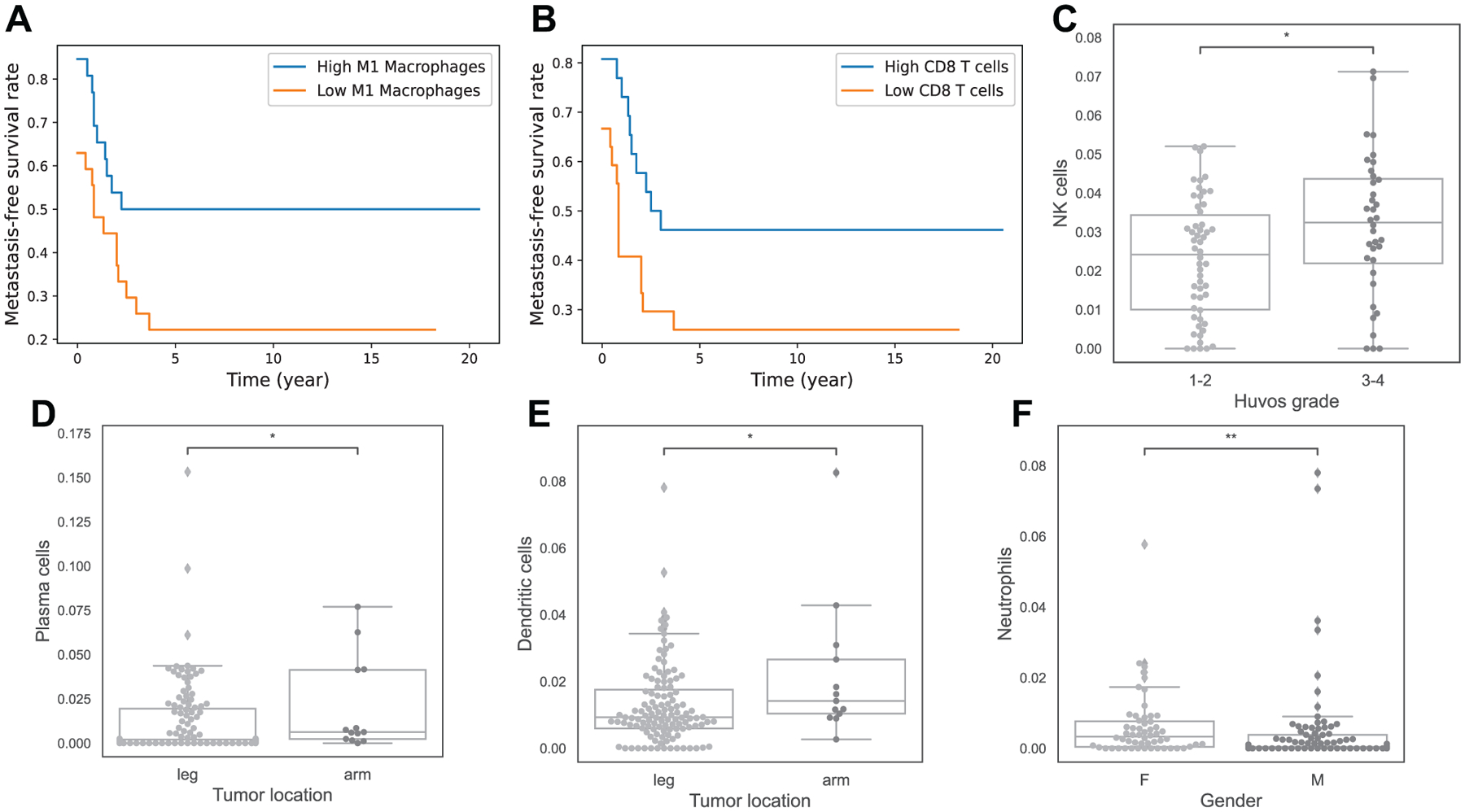
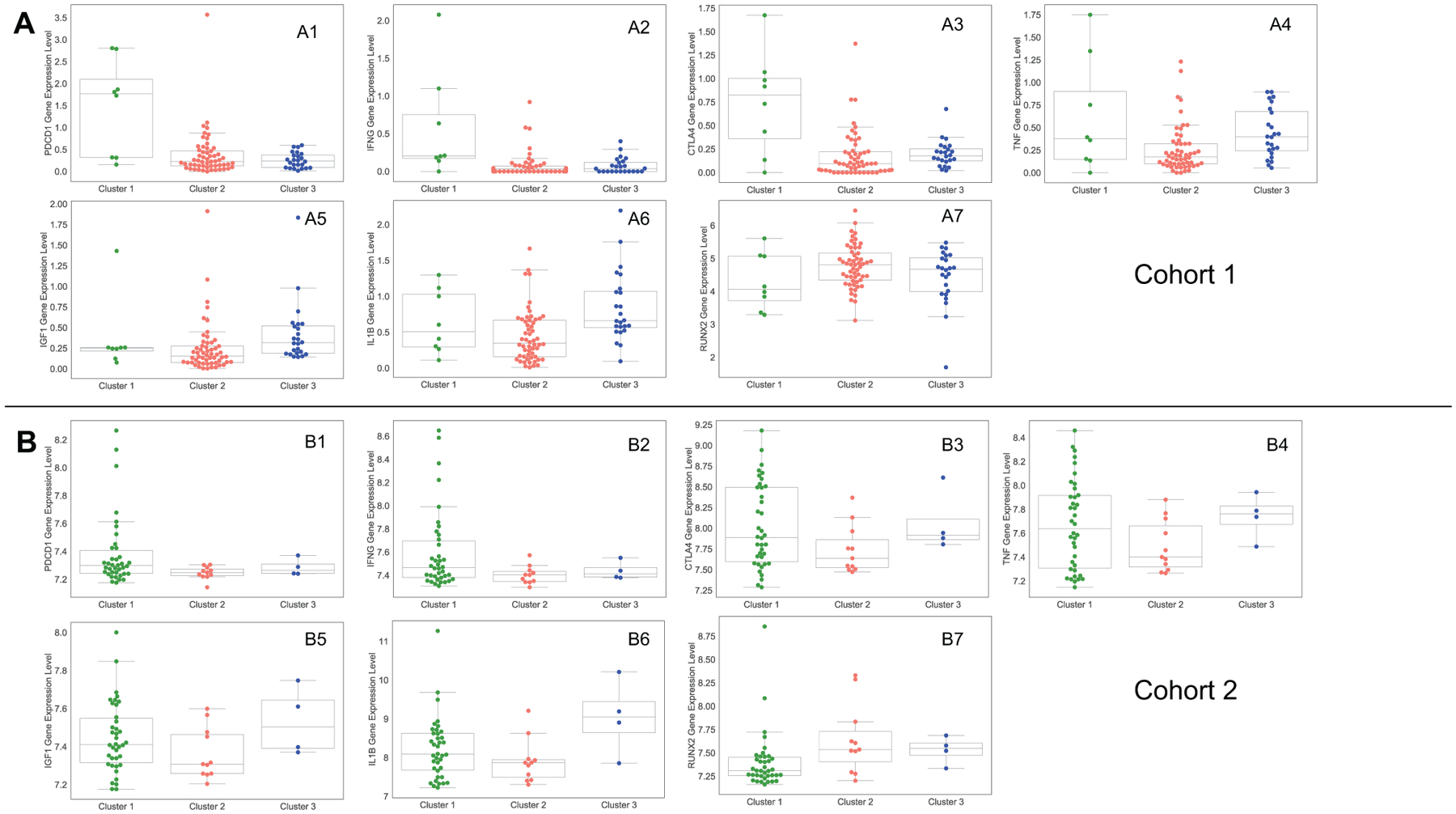
Tumor immune microenvironment has been shown to be important in predicting the tumor progression and the outcome of treatments. This work aims to identify different immune patterns in osteosarcoma and their clinical characteristics. We use the latest and best performing deconvolution method, CIBERSORTx, to obtain the relative abundance of 22 immune cells. Then we cluster patients based on their estimated immune abundance and study the characteristics of these clusters, along with the relationship between immune infiltration and outcome of patients. We find that abundance of CD8 T cells, NK cells and M1 Macrophages have a positive association with prognosis, while abundance of γδ T cells, Mast cells, M0 Macrophages and Dendritic cells have a negative association with prognosis. Accordingly, the cluster with the lowest proportion of CD8 T cells, M1 Macrophages and highest proportion of M0 Macrophages has the worst outcome among clusters. By grouping patients with similar immune patterns, we are also able to suggest treatments that are specific to the tumor microenvironment.
肿瘤免疫微环境在预测肿瘤进展和治疗效果方面具有重要意义。本研究旨在鉴定骨肉瘤中的不同免疫模式及其临床特征。我们使用最新、性能最佳的去卷积方法 CIBERSORTx 来获取 22 种免疫细胞的相对丰度。然后,我们根据估计的免疫丰度对患者进行聚类,并研究这些聚类的特征,以及免疫浸润与患者预后之间的关系。我们发现 CD8 T 细胞、NK 细胞和 M1 巨噬细胞的丰度与预后呈正相关,而 γδ T 细胞、肥大细胞、M0 巨噬细胞和树突状细胞的丰度与预后呈负相关。因此,在这些聚类中,CD8 T 细胞、M1 巨噬细胞比例最低,M0 巨噬细胞比例最高的聚类的预后最差。通过对具有相似免疫模式的患者进行分组,我们还能够针对肿瘤微环境建议特定的治疗方法。