Department of Bioengineering, University of California San Diego, La Jolla, California, USA.
Department of Pediatrics, University of California San Diego, La Jolla, California, USA.
J Biol Chem. 2021 Jan-Jun;296:100575. doi: 10.1016/j.jbc.2021.100575. Epub 2021 Mar 21.
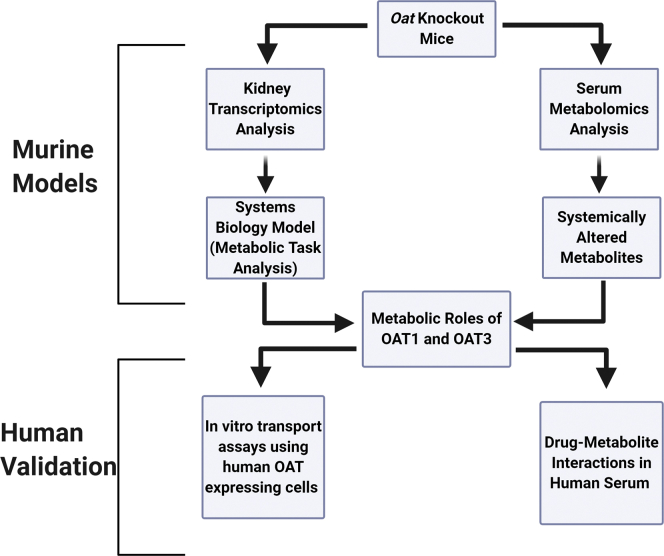
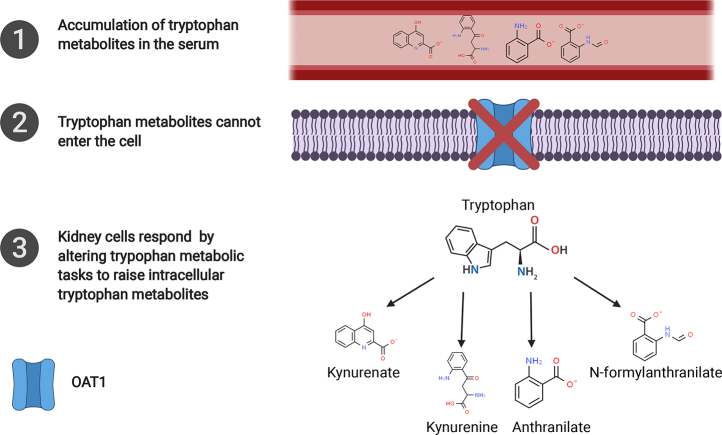
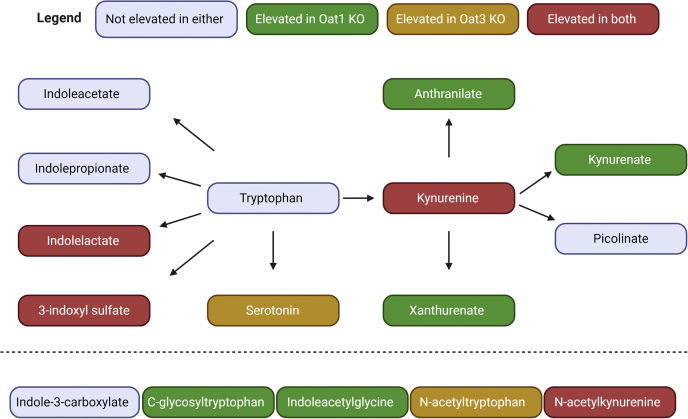
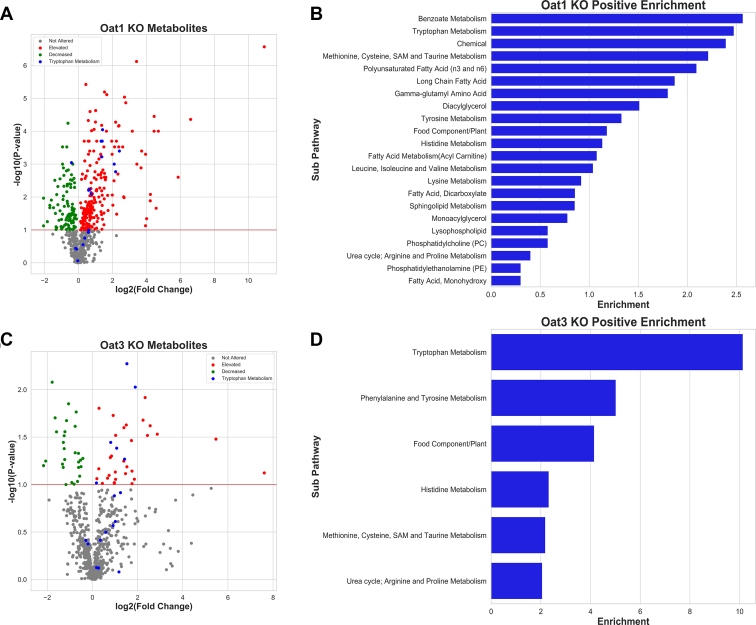
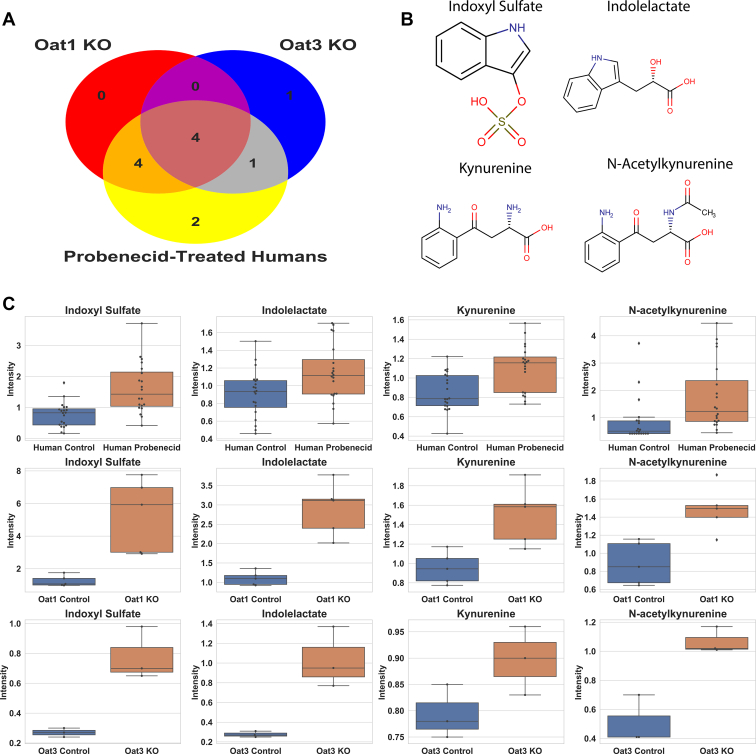
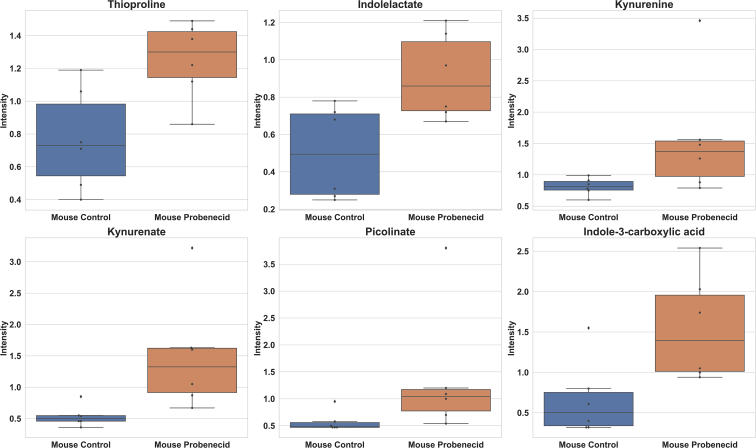
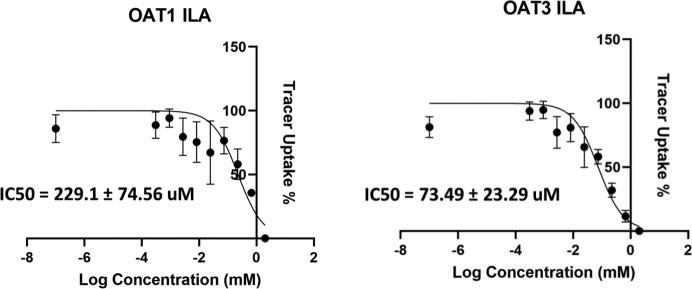
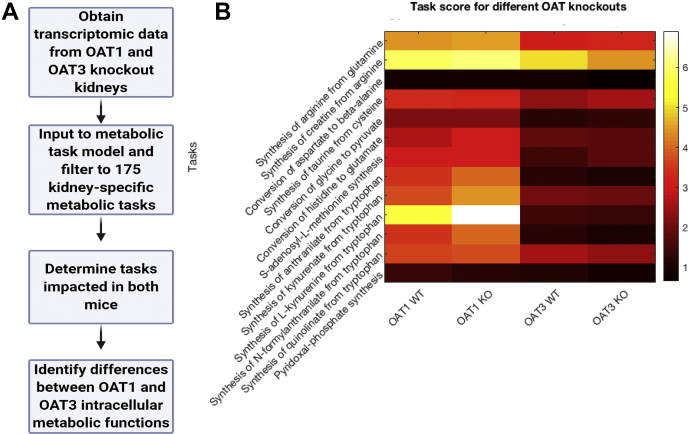
How organs sense circulating metabolites is a key question. Here, we show that the multispecific organic anion transporters of drugs, OAT1 (SLC22A6 or NKT) and OAT3 (SLC22A8), play a role in organ sensing. Metabolomics analyses of the serum of Oat1 and Oat3 knockout mice revealed changes in tryptophan derivatives involved in metabolism and signaling. Several of these metabolites are derived from the gut microbiome and are implicated as uremic toxins in chronic kidney disease. Direct interaction with the transporters was supported with cell-based transport assays. To assess the impact of the loss of OAT1 or OAT3 function on the kidney, an organ where these uptake transporters are highly expressed, knockout transcriptomic data were mapped onto a "metabolic task"-based computational model that evaluates over 150 cellular functions. Despite the changes of tryptophan metabolites in both knockouts, only in the Oat1 knockout were multiple tryptophan-related cellular functions increased. Thus, deprived of the ability to take up kynurenine, kynurenate, anthranilate, and N-formylanthranilate through OAT1, the kidney responds by activating its own tryptophan-related biosynthetic pathways. The results support the Remote Sensing and Signaling Theory, which describes how "drug" transporters help optimize levels of metabolites and signaling molecules by facilitating organ cross talk. Since OAT1 and OAT3 are inhibited by many drugs, the data implies potential for drug-metabolite interactions. Indeed, treatment of humans with probenecid, an OAT-inhibitor used to treat gout, elevated circulating tryptophan metabolites. Furthermore, given that regulatory agencies have recommended drugs be tested for OAT1 and OAT3 binding or transport, it follows that these metabolites can be used as endogenous biomarkers to determine if drug candidates interact with OAT1 and/or OAT3.
器官如何感知循环代谢物是一个关键问题。在这里,我们表明,药物的多特异性有机阴离子转运体 OAT1(SLC22A6 或 NKT)和 OAT3(SLC22A8)在器官感知中发挥作用。对 Oat1 和 Oat3 敲除小鼠血清的代谢组学分析显示,参与代谢和信号转导的色氨酸衍生物发生变化。这些代谢物中的几种来源于肠道微生物组,并被认为是慢性肾脏病中的尿毒症毒素。细胞内转运测定支持与转运体的直接相互作用。为了评估 OAT1 或 OAT3 功能丧失对肾脏的影响,肾脏是这些摄取转运体高度表达的器官,敲除转录组数据被映射到一个“代谢任务”为基础的计算模型上,该模型评估了超过 150 种细胞功能。尽管两种敲除物的色氨酸代谢物都发生了变化,但只有 Oat1 敲除物中多种与色氨酸相关的细胞功能增加。因此,由于缺乏通过 OAT1 摄取犬尿氨酸、犬尿氨酸盐、邻氨基苯甲酸和 N-甲酰邻氨基苯甲酸的能力,肾脏通过激活自身的色氨酸相关生物合成途径来做出反应。该结果支持远程感应和信号转导理论,该理论描述了“药物”转运体如何通过促进器官间通讯来帮助优化代谢物和信号分子的水平。由于 OAT1 和 OAT3 被许多药物抑制,这些数据意味着可能存在药物-代谢物相互作用。事实上,用丙磺舒(一种用于治疗痛风的 OAT 抑制剂)治疗人类会增加循环色氨酸代谢物。此外,鉴于监管机构建议对 OAT1 和 OAT3 结合或转运进行药物测试,因此这些代谢物可以用作内源性生物标志物,以确定候选药物是否与 OAT1 和/或 OAT3 相互作用。