Epigenetics Programme, Babraham Institute, Cambridge, United Kingdom.
Babraham Bioinformatics, Babraham Institute, Cambridge, United Kingdom.
PLoS Biol. 2021 Mar 24;19(3):e3000886. doi: 10.1371/journal.pbio.3000886. eCollection 2021 Mar.
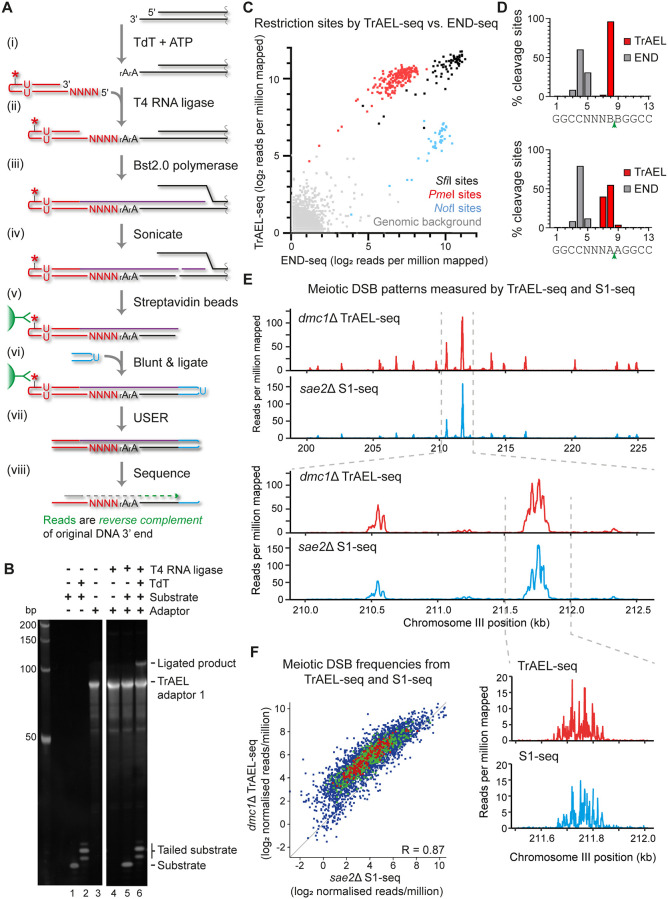
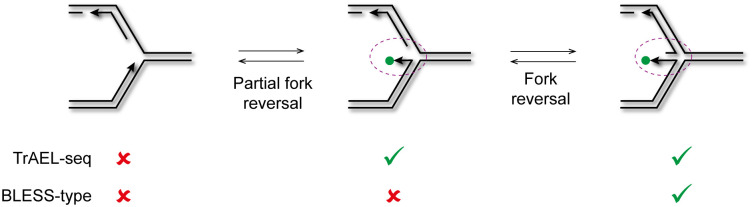
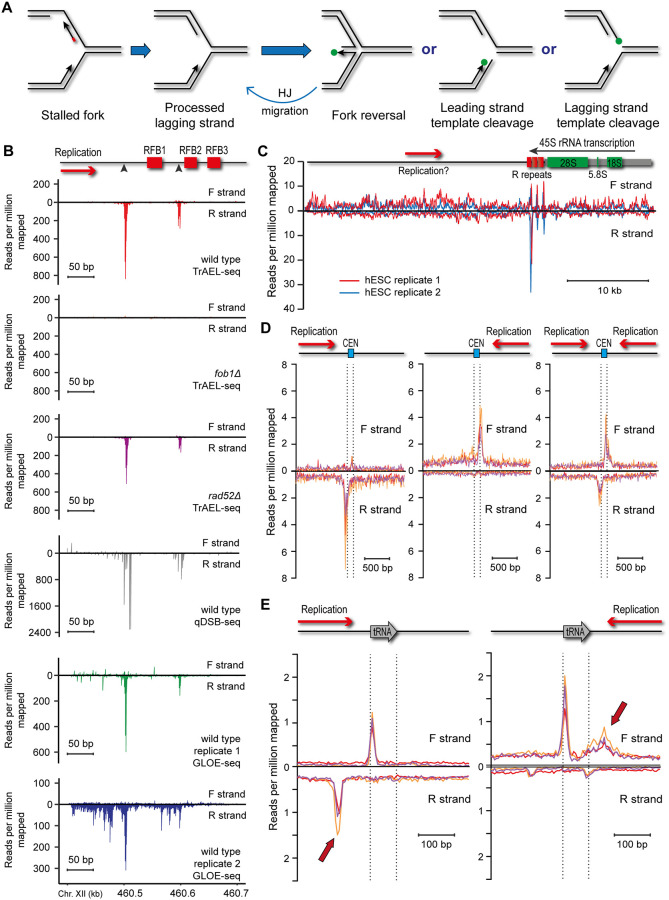
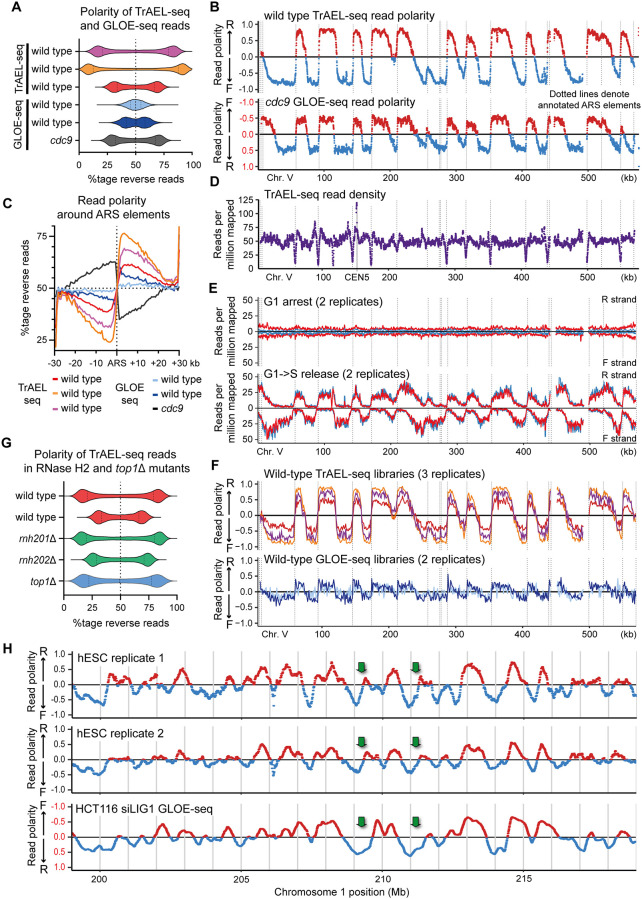
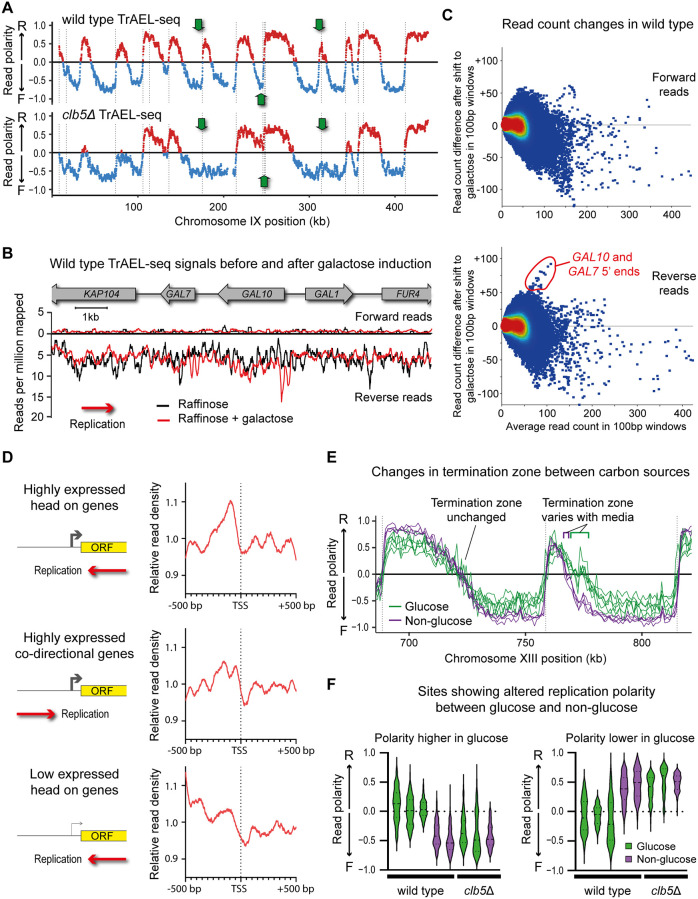
Faithful replication of the entire genome requires replication forks to copy large contiguous tracts of DNA, and sites of persistent replication fork stalling present a major threat to genome stability. Understanding the distribution of sites at which replication forks stall, and the ensuing fork processing events, requires genome-wide methods that profile replication fork position and the formation of recombinogenic DNA ends. Here, we describe Transferase-Activated End Ligation sequencing (TrAEL-seq), a method that captures single-stranded DNA 3' ends genome-wide and with base pair resolution. TrAEL-seq labels both DNA breaks and replication forks, providing genome-wide maps of replication fork progression and fork stalling sites in yeast and mammalian cells. Replication maps are similar to those obtained by Okazaki fragment sequencing; however, TrAEL-seq is performed on asynchronous populations of wild-type cells without incorporation of labels, cell sorting, or biochemical purification of replication intermediates, rendering TrAEL-seq far simpler and more widely applicable than existing replication fork direction profiling methods. The specificity of TrAEL-seq for DNA 3' ends also allows accurate detection of double-strand break sites after the initiation of DNA end resection, which we demonstrate by genome-wide mapping of meiotic double-strand break hotspots in a dmc1Δ mutant that is competent for end resection but not strand invasion. Overall, TrAEL-seq provides a flexible and robust methodology with high sensitivity and resolution for studying DNA replication and repair, which will be of significant use in determining mechanisms of genome instability.
忠实复制整个基因组需要复制叉复制大片连续的 DNA 片段,而持续复制叉停滞的位点对基因组稳定性构成了重大威胁。了解复制叉停滞的位点分布以及随后的叉处理事件,需要使用能够描绘复制叉位置和重组性 DNA 末端形成的全基因组方法。在这里,我们描述了转移酶激活端连接测序(TrAEL-seq),这是一种能够以碱基对分辨率捕获全基因组单链 DNA 3'末端的方法。TrAEL-seq 标记 DNA 断裂和复制叉,为酵母和哺乳动物细胞提供了全基因组的复制叉进展和叉停滞位点图谱。复制图谱与通过 Okazaki 片段测序获得的图谱相似;然而,TrAEL-seq 是在没有掺入标记、细胞分选或生化纯化复制中间体的情况下对野生型细胞的异步群体进行的,这使得 TrAEL-seq 比现有的复制叉方向分析方法简单得多,适用范围更广。TrAEL-seq 对 DNA 3'末端的特异性还允许在 DNA 末端切除起始后准确检测双链断裂位点,我们通过在 dmc1Δ 突变体中进行全基因组减数分裂双链断裂热点作图来证明这一点,该突变体能够进行末端切除但不能进行链入侵。总体而言,TrAEL-seq 为研究 DNA 复制和修复提供了一种灵活、稳健、高灵敏度和高分辨率的方法,对于确定基因组不稳定性的机制将具有重要意义。