Brain and Spinal Cord Injury Research Center, Neuroscience Institute, Tehran University of Medical Sciences, Tehran, Iran.
Experimental Medicine Research Center, Tehran University of Medical Sciences, Tehran, Iran.
Acta Neuropathol Commun. 2021 Mar 24;9(1):53. doi: 10.1186/s40478-021-01153-2.
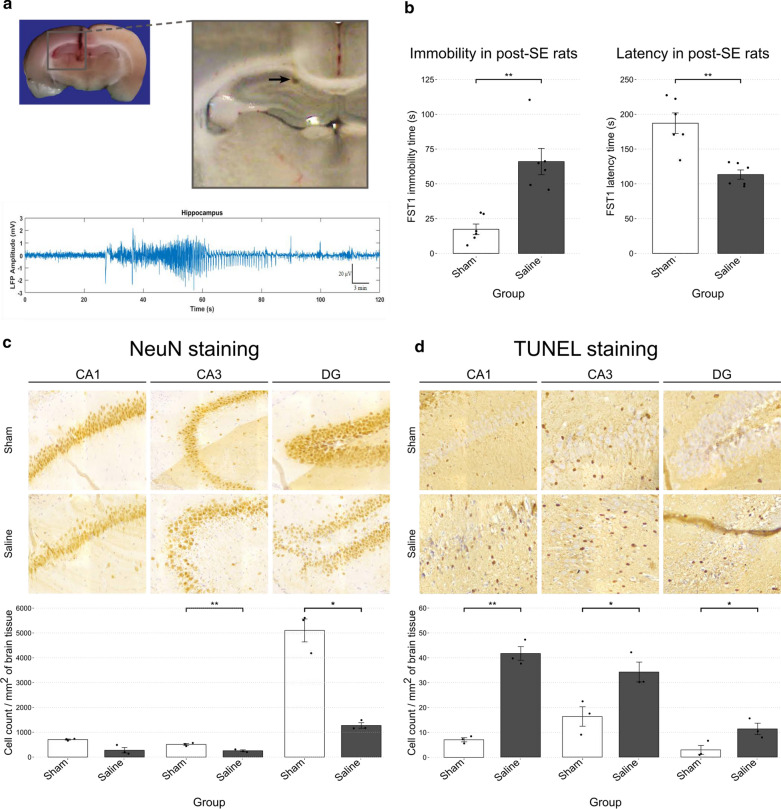
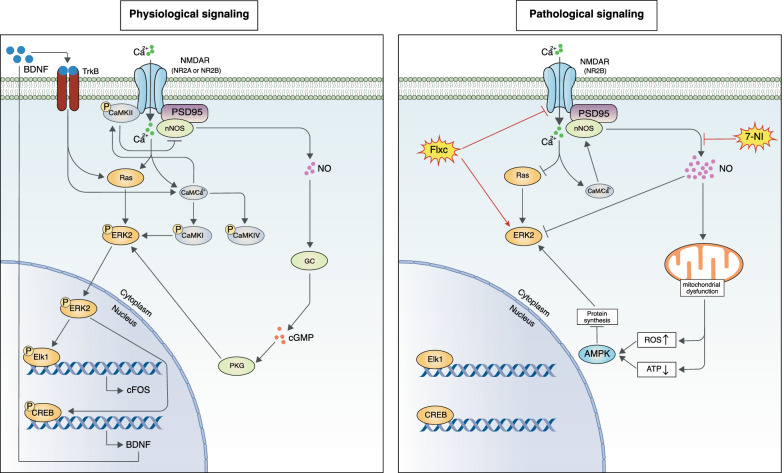
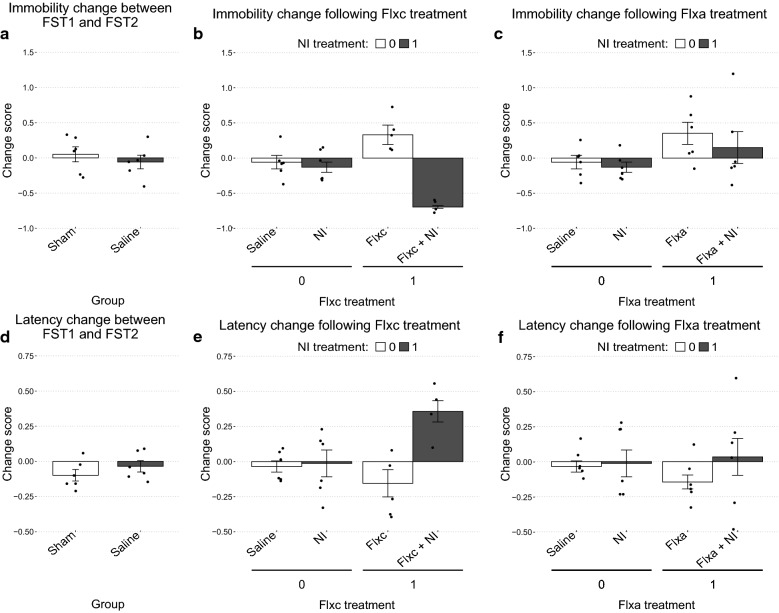
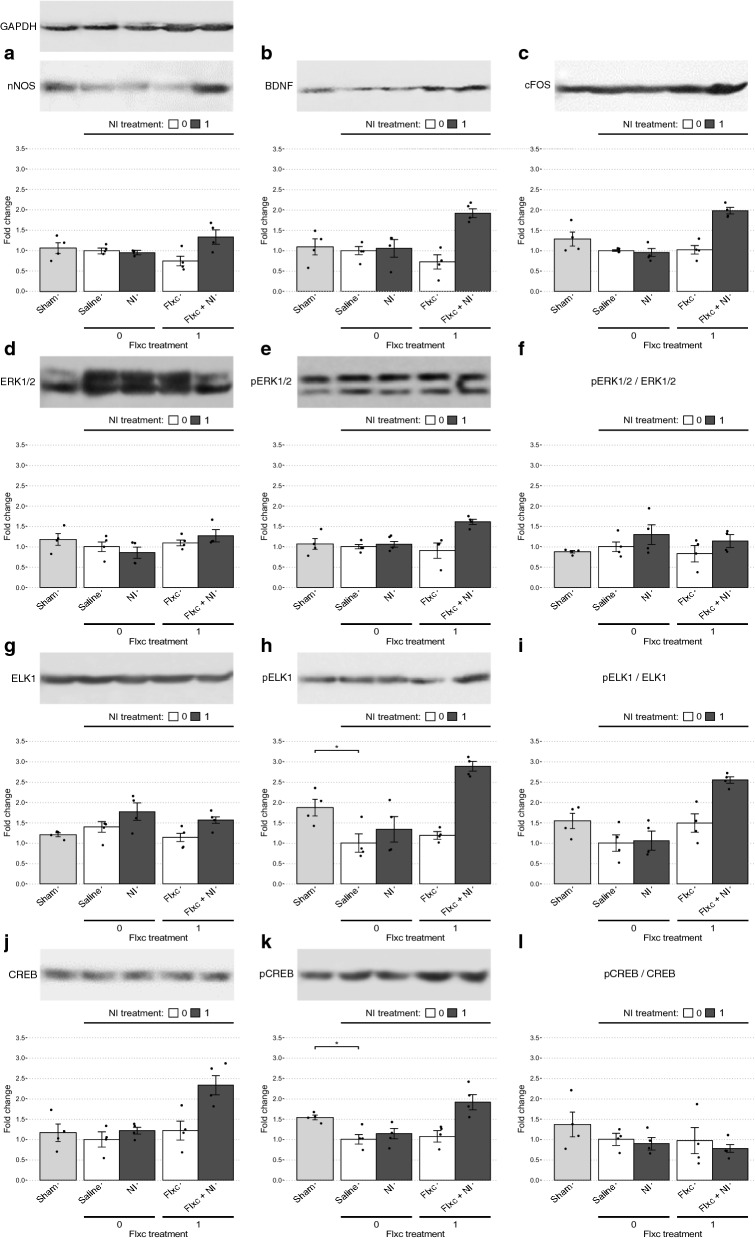
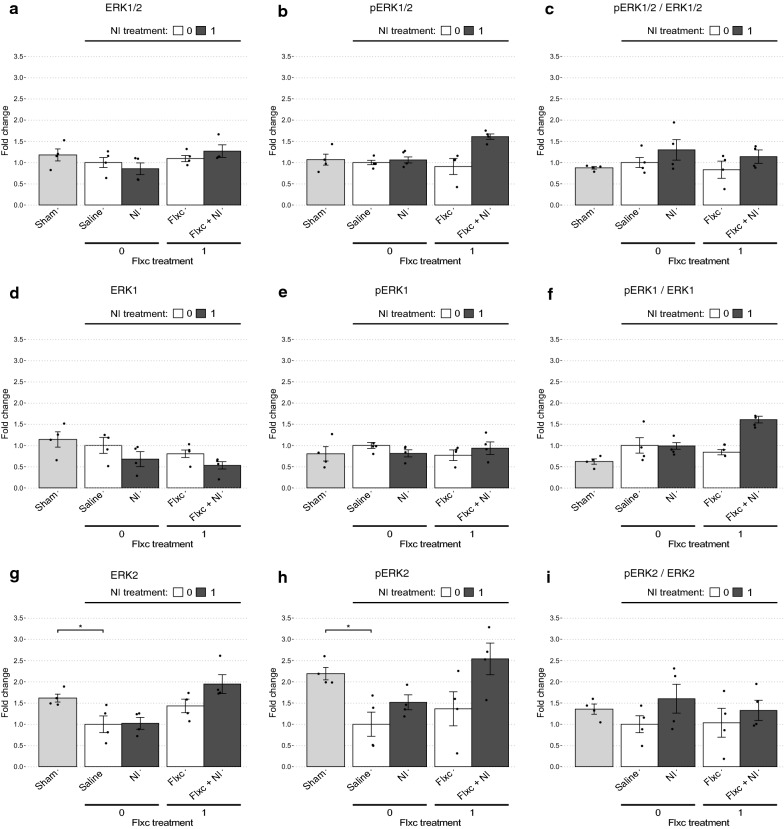
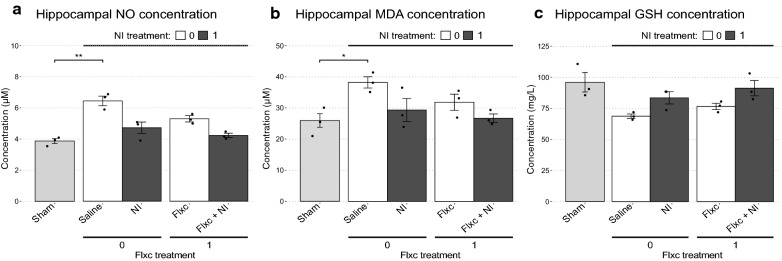
Depression is the most common psychiatric comorbidity of epilepsy. However, the molecular pathways underlying this association remain unclear. The NMDA receptor (NMDAR) may play a role in this association, as its downstream signaling has been shown to undergo long-term changes following excitotoxic neuronal damage. To study this pathway, we used an animal model of fluoxetine-resistant epilepsy-associated depression (EAD). We determined the molecular changes associated with the development of depressive symptoms and examined their response to various combinations of fluoxetine and a selective neuronal nitric oxide synthase inhibitor, 7-nitroindazole (NI). Depressive symptoms were determined using the forced swim test. Furthermore, expression and phosphorylation levels of markers in the ERK/CREB/ELK1/BDNF/cFOS pathway were measured to determine the molecular changes associated with these symptoms. Finally, oxidative stress markers were measured to more clearly determine the individual contributions of each treatment. While chronic fluoxetine (Flxc) and NI were ineffective alone, their combination had a statistically significant synergistic effect in reducing depressive symptoms. The development of depressive symptoms in epileptic rats was associated with the downregulation of ERK2 expression and ELK1 and CREB phosphorylation. These changes were exactly reversed upon Flxc + NI treatment, which led to increased BDNF and cFOS expression as well. Interestingly, ERK1 did not seem to play a role in these experiments. NI seemed to have augmented Flxc's antidepressant activity by reducing oxidative stress. Our findings suggest NMDAR signaling alterations are a major contributor to EAD development and a potential target for treating conditions associated with underlying excitotoxic neuronal damage.
抑郁是癫痫最常见的精神共病。然而,这种关联的分子途径尚不清楚。N-甲基-D-天冬氨酸受体(NMDAR)可能在这种关联中发挥作用,因为其下游信号在兴奋性神经元损伤后会发生长期变化。为了研究这条通路,我们使用了一种具有氟西汀抵抗性癫痫相关抑郁(EAD)的动物模型。我们确定了与抑郁症状发展相关的分子变化,并研究了它们对氟西汀和选择性神经元一氧化氮合酶抑制剂 7-硝基吲唑(NI)的不同组合的反应。使用强迫游泳试验来确定抑郁症状。此外,还测量了 ERK/CREB/ELK1/BDNF/cFOS 通路中标志物的表达和磷酸化水平,以确定与这些症状相关的分子变化。最后,测量了氧化应激标志物,以更清楚地确定每种治疗方法的个体贡献。虽然慢性氟西汀(Flxc)和 NI 单独使用无效,但它们的组合在减轻抑郁症状方面具有统计学上的协同作用。癫痫大鼠抑郁症状的发展与 ERK2 表达和 ELK1 和 CREB 磷酸化的下调有关。Flxc + NI 治疗完全逆转了这些变化,导致 BDNF 和 cFOS 的表达增加。有趣的是,ERK1 在这些实验中似乎没有发挥作用。NI 通过减少氧化应激似乎增强了 Flxc 的抗抑郁活性。我们的研究结果表明,NMDAR 信号转导的改变是 EAD 发展的主要原因,也是治疗潜在兴奋性神经元损伤相关疾病的潜在靶点。