Jenkins Dorothea D, Khodaparast Navid, O'Leary Georgia H, Washburn Stephanie N, Covalin Alejandro, Badran Bashar W
Department of Pediatrics, Medical University of South Carolina, Charleston, SC, United States.
Spark Biomedical, Inc., Dallas, TX, United States.
Front Hum Neurosci. 2021 Mar 8;15:648556. doi: 10.3389/fnhum.2021.648556. eCollection 2021.
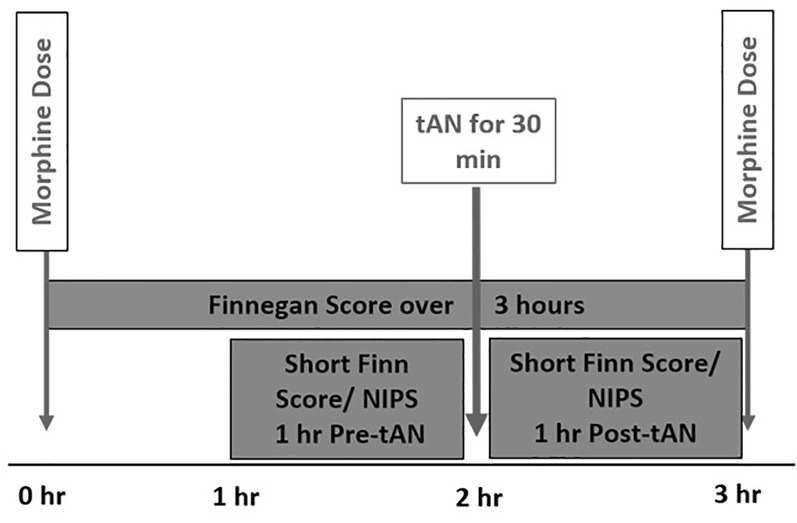
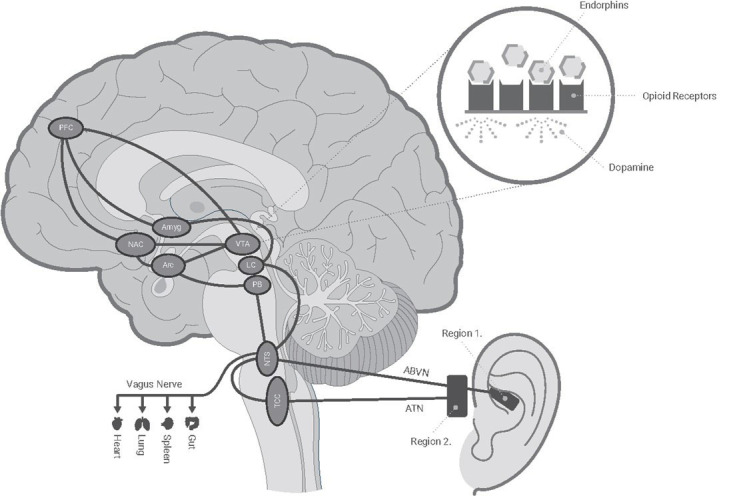
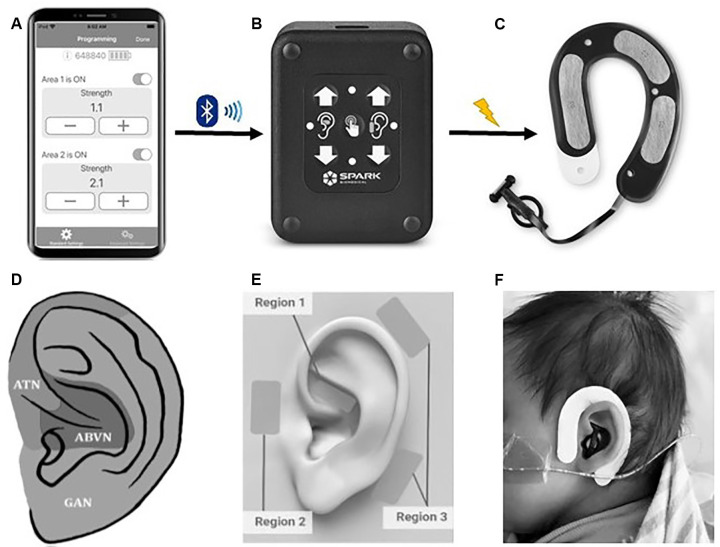
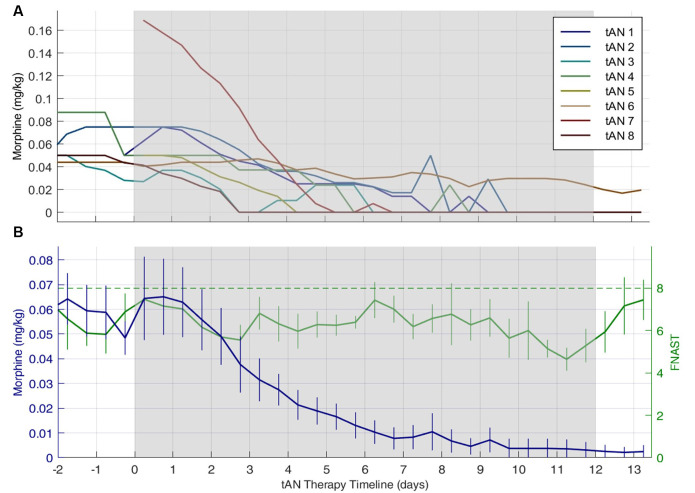
Maternal opioid use during pregnancy is a growing national problem and can lead to newborns developing neonatal opioid withdrawal syndrome (NOWS) soon after birth. Recent data demonstrates that nearly every 15 min a baby is born in the United States suffering from NOWS. The primary treatment for NOWS is opioid replacement therapy, commonly oral morphine, which has neurotoxic effects on the developing brain. There is an urgent need for non-opioid treatments for NOWS. Transcutaneous auricular neurostimulation (tAN), a novel and non-invasive form of electrostimulation, may serve as a promising alternative to morphine. tAN is delivered a multichannel earpiece electrode worn on and around the left ear, targeting two cranial nerves-the vagus and trigeminal nerves. Prior research suggests that auricular neurostimulation exerts an anxiolytic effect on the body by releasing endogenous opioids and reduces withdrawal symptoms in adults actively withdrawing from opioids. In this first-in-human prospective, open-label trial, we investigated tAN as an adjuvant to morphine therapy in eight infants >33 weeks gestational age suffering from NOWS and receiving oral morphine treatment. Infants received tAN for 30 min 1 h before receiving a morphine dose. tAN was delivered at 0.1 mA below perception intensity at two different nerve targets on the ear: Region 1, the auricular branch of the vagus nerve; and Region 2, the auriculotemporal nerve. tAN was delivered up to four times daily for a maximum of 12 days. The primary outcome measures were safety [heart rate monitoring, Neonatal Infant Pain Scale (NIPS), and skin irritation] and morphine length of treatment (LOT). tAN was well-tolerated and resulted in no unanticipated adverse events. Comparing to the national average of 23 days, the average oral morphine LOT was 13.3 days (median 9 days) and the average LOT after tAN initiation was 7 days (median 6 days). These preliminary data suggest that tAN is safe and may serve as a promising alternative adjuvant for treating NOWS and reducing the amount of time an infant receives oral morphine.
孕期母亲使用阿片类药物是一个日益严重的全国性问题,可能导致新生儿在出生后不久就患上新生儿阿片类药物戒断综合征(NOWS)。最近的数据表明,在美国,几乎每15分钟就有一名患有NOWS的婴儿出生。NOWS的主要治疗方法是阿片类药物替代疗法,通常是口服吗啡,这对发育中的大脑有神经毒性作用。迫切需要针对NOWS的非阿片类治疗方法。经皮耳神经刺激(tAN)是一种新型的非侵入性电刺激形式,可能是吗啡的一种有前景的替代方法。tAN通过佩戴在左耳及其周围的多通道耳塞电极进行,靶向两条颅神经——迷走神经和三叉神经。先前的研究表明,耳神经刺激通过释放内源性阿片类物质对身体产生抗焦虑作用,并减轻正在戒除阿片类药物的成年人的戒断症状。在这项首次人体前瞻性开放标签试验中,我们研究了tAN作为吗啡治疗的辅助方法,用于8名孕周>33周且患有NOWS并接受口服吗啡治疗的婴儿。婴儿在接受吗啡剂量前1小时接受30分钟的tAN治疗。tAN在耳朵上两个不同的神经靶点以低于感知强度0.1 mA的电流进行:区域1,迷走神经的耳支;区域2,耳颞神经。tAN每天最多进行4次,最长持续12天。主要结局指标是安全性[心率监测、新生儿婴儿疼痛量表(NIPS)和皮肤刺激]和吗啡治疗时长(LOT)。tAN耐受性良好,未导致意外不良事件。与全国平均23天相比,口服吗啡的平均LOT为13.3天(中位数9天),开始tAN治疗后的平均LOT为7天(中位数6天)。这些初步数据表明,tAN是安全的,可能是治疗NOWS和减少婴儿接受口服吗啡时间的一种有前景的替代辅助方法。