Department of Respiratory Medicine, The Second Affiliated Hospital of Zhejiang University School of Medicine, 88 Jiefang Road, 310009 Hangzhou, Zhejiang, China.
Department of Endocrinology, Zhejiang Greentown Cardiovascular Hospital, 409 Gudun Road, 310012 Hangzhou, Zhejiang, China.
Comput Math Methods Med. 2021 Mar 8;2021:6651907. doi: 10.1155/2021/6651907. eCollection 2021.
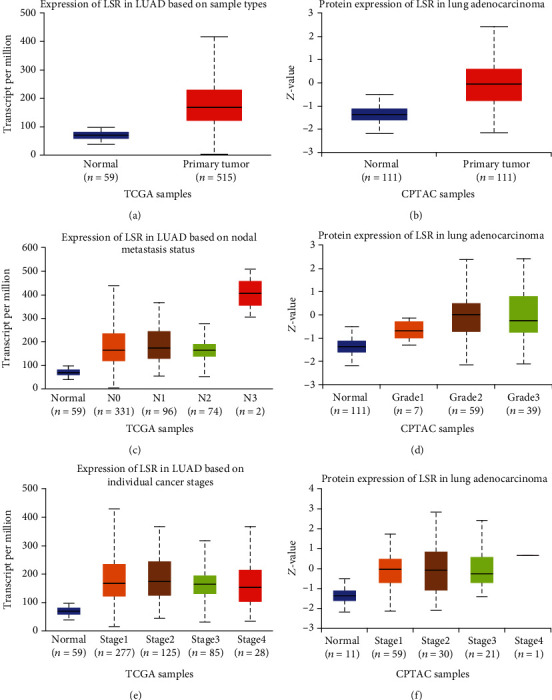
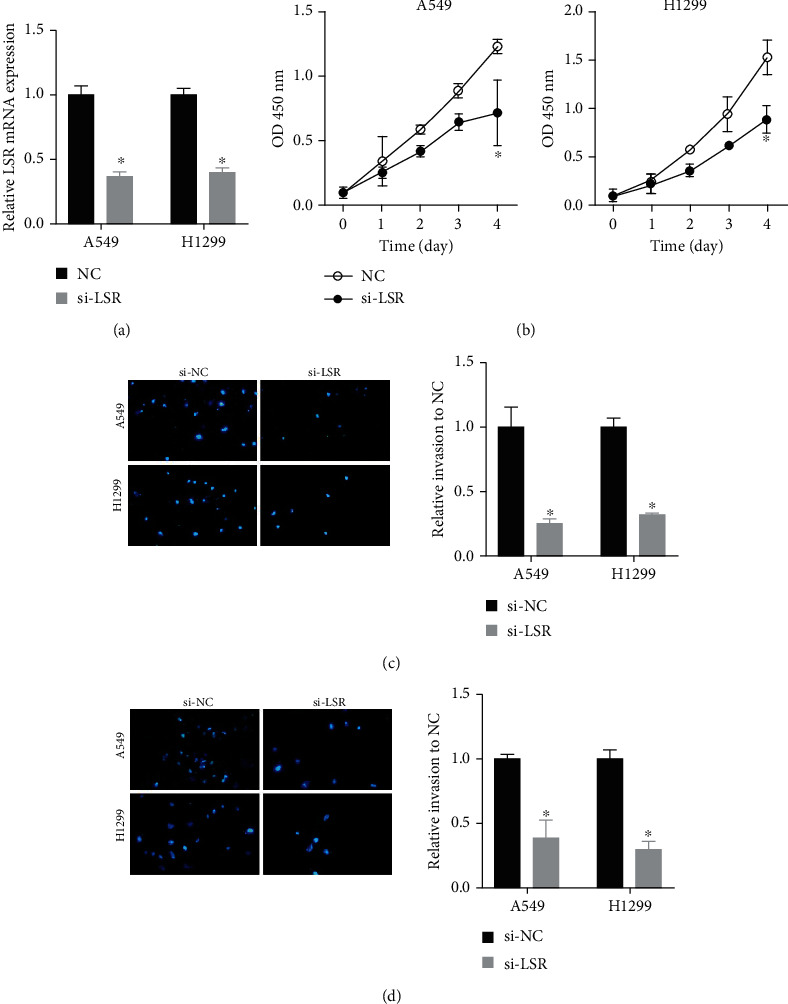
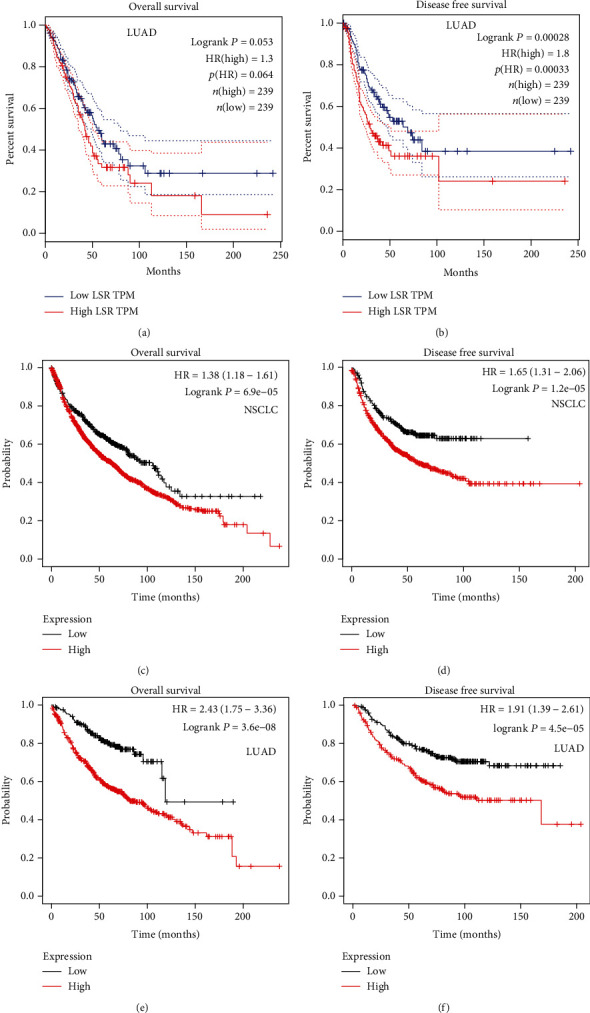
The lipolysis-stimulated lipoprotein receptor (LSR) displays an important regulatory role in cancer. However, the association between LSR and lung cancer is still elusive. Here, the candidate oncogene LSR on Ch.9q was obtained and assessed by bioinformatics analysis of The Cancer Genome Atlas (TCGA) dataset of lung cancer. We conducted clinical pathology and survival analysis based on the lung cancer database. We assessed the biological effects of LSR in lung cancer cells on cell proliferation. Our data indicated that LSR was upregulated in lung cancer cells. Meanwhile, LSR was identified in this study to be a poor prognostic factor, and its high expression exhibited relations with grades, stages, and nodal metastasis status. Using analysis, our data revealed that LSR could promote lung cancer progression by regulating cell proliferation, migration, and invasion. In our study, our data demonstrated that LSR was a tumor promoter for lung cancer and was a potential biomarker and target for lung cancer prognosis and treatment.
脂肪酶刺激的脂蛋白受体(LSR)在癌症中发挥着重要的调节作用。然而,LSR 与肺癌之间的关联仍然难以捉摸。在这里,我们通过对癌症基因组图谱(TCGA)肺癌数据集的生物信息学分析,获得了候选癌基因 9q 上的 LSR,并对其进行了评估。我们基于肺癌数据库进行了临床病理学和生存分析。我们评估了 LSR 在肺癌细胞中对细胞增殖的生物学效应。我们的数据表明,LSR 在肺癌细胞中上调。同时,本研究鉴定 LSR 是一个不良预后因素,其高表达与分级、分期和淋巴结转移状态有关。通过分析,我们的数据表明 LSR 可以通过调节细胞增殖、迁移和侵袭来促进肺癌的进展。在我们的研究中,我们的数据表明 LSR 是肺癌的促肿瘤因子,是肺癌预后和治疗的潜在生物标志物和靶标。