Department of Plant Pathology, University of Florida, Gainesville, Florida, United State of America.
The Institute for Advanced Learning and Research, Danville, Virginia, United State of America.
PLoS One. 2021 Mar 25;16(3):e0248364. doi: 10.1371/journal.pone.0248364. eCollection 2021.
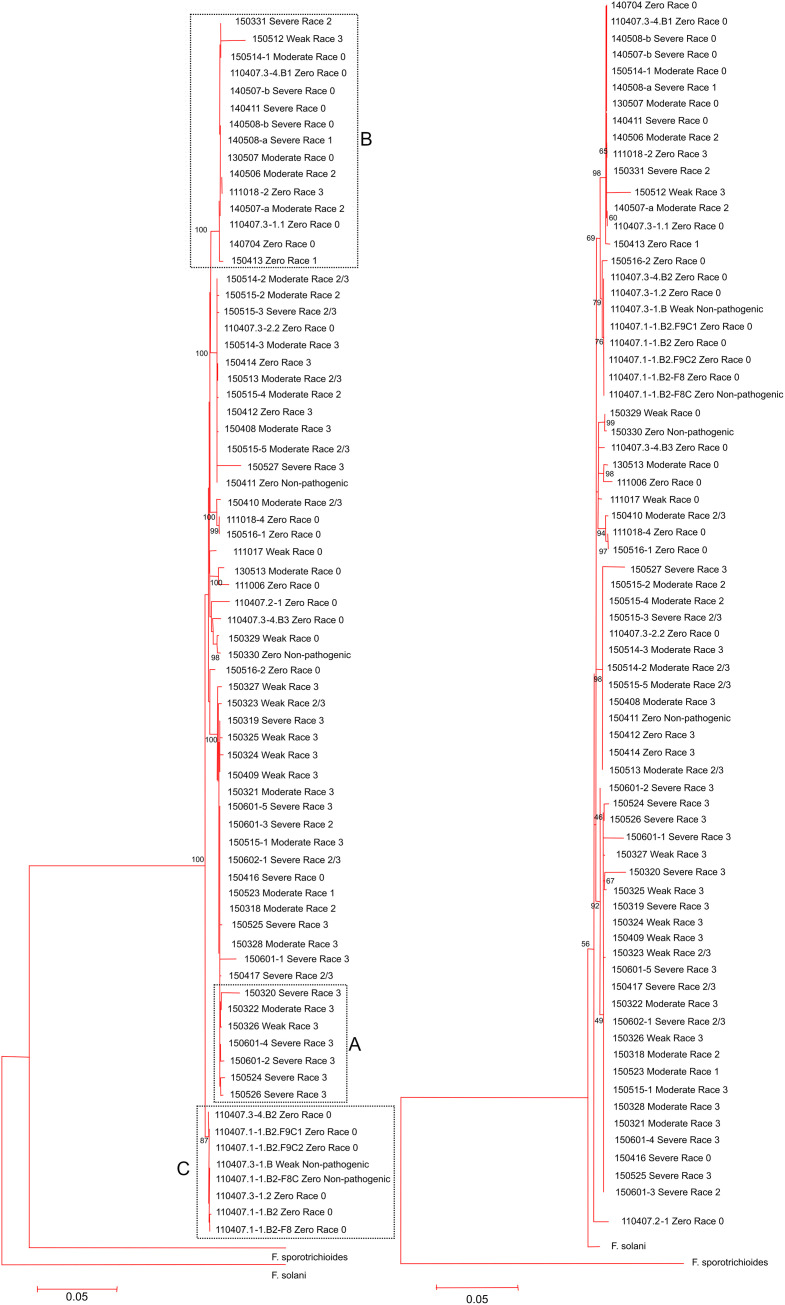
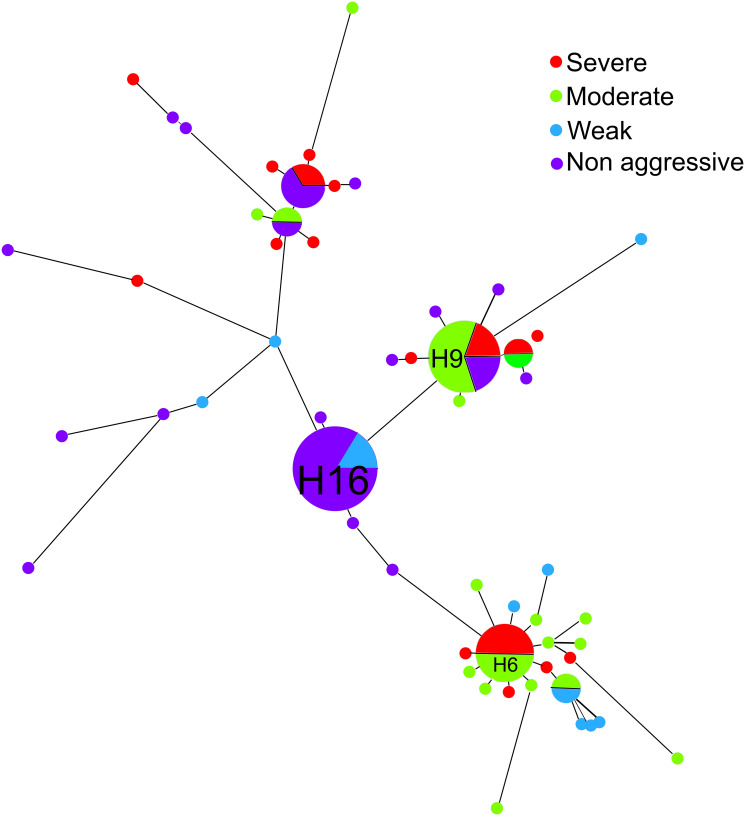
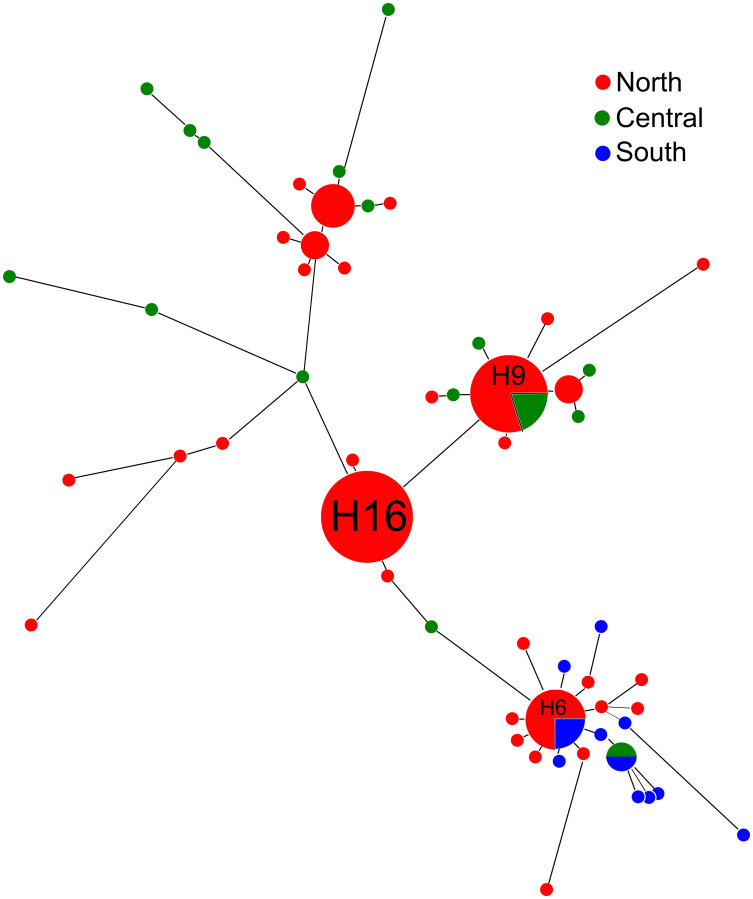
Fusarium wilt of watermelon (Citrullus lanatus) caused by Fusarium oxysporum f. sp. niveum (Fon), has become an increasing concern of farmers in the southeastern USA, especially in Florida. Management of this disease, most often through the use of resistant cultivars and crop rotation, requires an accurate understanding of an area's pathogen population structure and phenotypic characteristics. This study improved the understanding of the state's pathogen population by completing multilocus sequence analysis (MLSA) of two housekeeping genes (BT and TEF) and two loci (ITS and IGS), aggressiveness and race-determining bioassays on 72 isolates collected between 2011 and 2015 from major watermelon production areas in North, Central, and South Florida. Multilocus sequence analysis (MLSA) failed to group race 3 isolates into a single large clade; moreover, clade membership was not apparently correlated with aggressiveness (which varied both within and between clades), and only slightly with sampling location. The failure of multilocus sequence analysis using four highly conserved housekeeping genes and loci to clearly group and delineate known Fon races provides justification for future whole genome sequencing efforts whose more robust genomic comparisons will provide higher resolution of intra-species genetic distinctions. Consequently, these results suggest that identification of Fon isolates by race determination alone may fail to detect economically important phenotypic characteristics such as aggressiveness leading to inaccurate risk assessment.
西瓜枯萎病(Citrullus lanatus)由尖孢镰刀菌西瓜专化型(Fusarium oxysporum f. sp. niveum,Fon)引起,已成为美国东南部,尤其是佛罗里达州农民日益关注的问题。这种疾病的管理通常通过使用抗性品种和轮作来实现,这需要准确了解该地区的病原体种群结构和表型特征。本研究通过对 2011 年至 2015 年间从佛罗里达州北部、中部和南部主要西瓜产区采集的 72 个分离株进行两个管家基因(BT 和 TEF)和两个基因座(ITS 和 IGS)的多位点序列分析(MLSA)、致病性和致因生物测定,提高了对该州病原体种群的认识。多位点序列分析(MLSA)未能将 3 号致因组的分离株分为单一的大分支;此外,分支成员与致病性(在分支内和分支间均有变化)没有明显的相关性,与采样地点的相关性也很小。使用四个高度保守的管家基因和基因座的多位点序列分析未能清楚地分组和划定已知的 Fon 致因组,这为未来的全基因组测序工作提供了理由,其更强大的基因组比较将提供更高的种内遗传差异分辨率。因此,这些结果表明,仅通过致因组鉴定来鉴定 Fon 分离株可能无法检测到经济上重要的表型特征,如致病性,从而导致风险评估不准确。