Centre for Epidemiology and Evidence-Based Practice, Department of Social and Preventive Medicine, Faculty of Medicine, University of Malaya, Kuala Lumpur, Malaysia.
Department of Pharmacology, Faculty of Medicine, University of Malaya, Kuala Lumpur, Malaysia.
PLoS One. 2021 Mar 25;16(3):e0248916. doi: 10.1371/journal.pone.0248916. eCollection 2021.
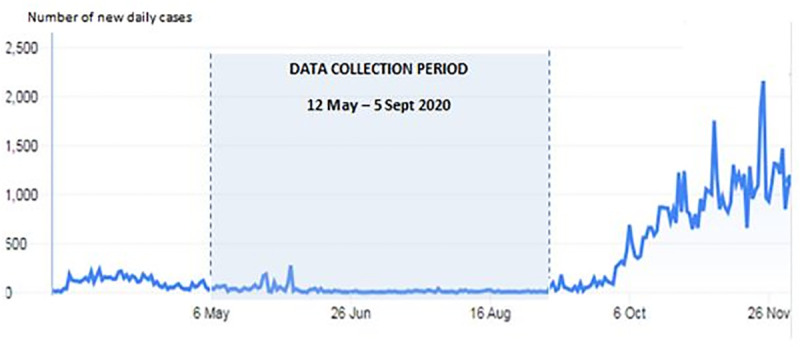
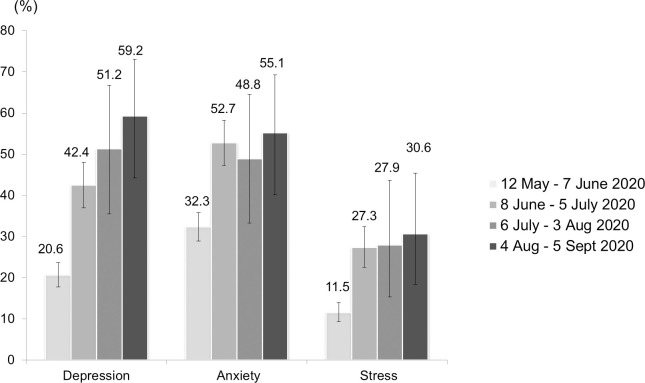
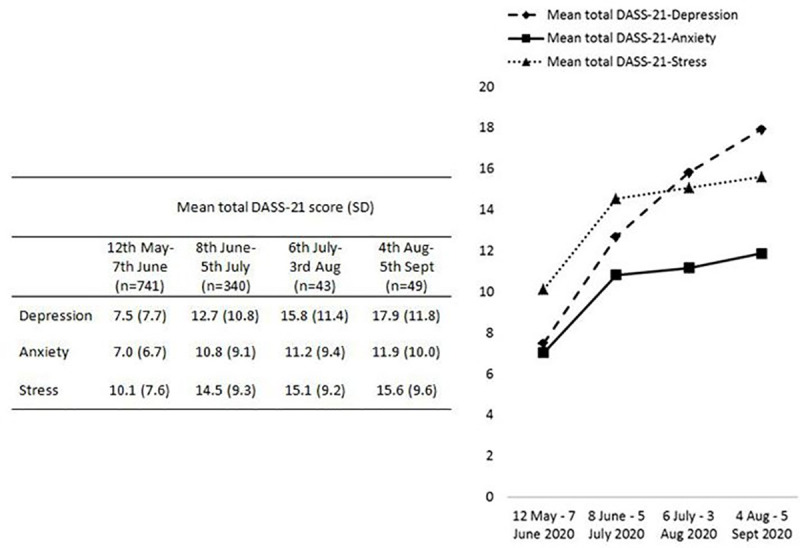
Since the first nationwide movement control order was implemented on 18 March 2020 in Malaysia to contain the coronavirus disease 2019 (COVID-19) outbreak, to what extent the uncertainty and continuous containment measures have imposed psychological burdens on the population is unknown. This study aimed to measure the level of mental health of the Malaysian public approximately 2 months after the pandemic's onset. Between 12 May and 5 September 2020, an anonymous online survey was conducted. The target group included all members of the Malaysian population aged 18 years and above. The Depression Anxiety Stress Scale (DASS-21) was used to assess mental health. There were increased depressive, anxiety and stress symptoms throughout the study period, with the depression rates showing the greatest increase. During the end of the data collection period (4 August-5 September 2020), there were high percentages of reported depressive (59.2%) and anxiety (55.1%) symptoms compared with stress (30.6%) symptoms. Perceived health status was the strongest significant predictor for depressive and anxiety symptoms. Individuals with a poorer health perception had higher odds of developing depression (odds ratio [OR] = 5.68; 95% confidence interval [CI] 3.81-8.47) and anxiety (OR = 3.50; 95%CI 2.37-5.17) compared with those with a higher health perception. By demographics, young people-particularly students, females and people with poor financial conditions-were more vulnerable to mental health symptoms. These findings provide an urgent call for increased attention to detect and provide intervention strategies to combat the increasing rate of mental health problems in the ongoing COVID-19 pandemic.
自 2020 年 3 月 18 日马来西亚首次实施全国性行动管制令以遏制 2019 年冠状病毒病(COVID-19)疫情以来,公众所承受的不确定性和持续的遏制措施在多大程度上造成了心理负担尚不清楚。本研究旨在在大流行开始大约 2 个月后测量马来西亚公众的心理健康水平。在 2020 年 5 月 12 日至 9 月 5 日期间进行了一项匿名在线调查。目标人群包括所有 18 岁及以上的马来西亚人口。使用抑郁、焦虑和压力量表(DASS-21)来评估心理健康状况。在整个研究期间,抑郁、焦虑和压力症状均有所增加,其中抑郁率的增加最大。在数据收集结束期间(2020 年 8 月 4 日至 9 月 5 日),与压力(30.6%)症状相比,报告的抑郁(59.2%)和焦虑(55.1%)症状的比例较高。感知健康状况是抑郁和焦虑症状的最强显著预测因子。感知健康状况较差的个体患抑郁症(优势比 [OR] = 5.68;95%置信区间 [CI] 3.81-8.47)和焦虑症(OR = 3.50;95%CI 2.37-5.17)的可能性高于感知健康状况较好的个体。按人口统计学分析,年轻人——尤其是学生、女性和经济状况较差的人——更容易受到心理健康问题的影响。这些发现迫切需要加强关注,以发现和提供干预策略,以应对当前 COVID-19 大流行中不断增加的心理健康问题率。