Institute for Structural Research (IBS), Warsaw, Poland.
IZA, Bonn, Germany.
PLoS One. 2021 Mar 25;16(3):e0249045. doi: 10.1371/journal.pone.0249045. eCollection 2021.
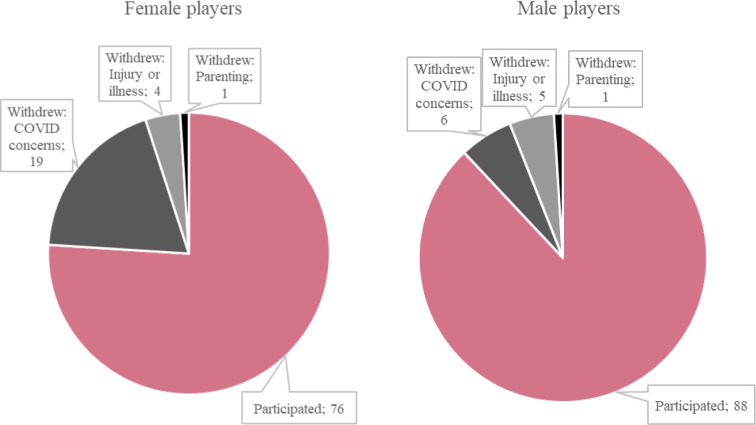
We study the gender differences in aversion to COVID-19 exposure using a natural experiment of the 2020 US Open. It was the first major tennis tournament after the season had been paused for six months, held with the same rules and prize money for men and women. We analyze the gender gap in the propensity to voluntarily withdraw because of COVID-19 concerns among players who were eligible and fit to play. We find that female players were significantly more likely than male players to have withdrawn from the 2020 US Open. While players from countries characterized by relatively high levels of trust and patience and relatively low levels of risk-taking were more likely to have withdrawn than their counterparts from other countries, female players exhibited significantly higher levels of aversion to pandemic exposure than male players even after cross-country differences in preferences are accounted for. About 15% of the probability of withdrawing that is explained by our model can be attributed to gender.
我们利用 2020 年美国网球公开赛这一自然实验研究了人们对感染新冠病毒风险的性别差异。这是在停赛六个月后举行的第一项主要网球赛事,男子和女子的比赛规则和奖金都相同。我们分析了有资格且适合参赛的运动员因担心感染新冠病毒而自愿退出的意愿中的性别差距。我们发现,女性运动员退出 2020 年美国网球公开赛的可能性明显高于男性运动员。尽管来自信任度和耐心程度相对较高、风险偏好程度相对较低的国家的运动员比来自其他国家的运动员更有可能退出,但即使考虑到各国之间偏好的差异,女性运动员对感染新冠病毒的风险的厌恶程度也明显高于男性运动员。我们的模型可以解释大约 15%的退出概率,这可以归因于性别差异。