Alamer Ali, Alharbi Fawaz
Department of Radiology, College of Medicine, Qassim University, Buraidah, 6655-51452, Saudi Arabia.
Insights Imaging. 2021 Mar 25;12(1):41. doi: 10.1186/s13244-021-00984-w.
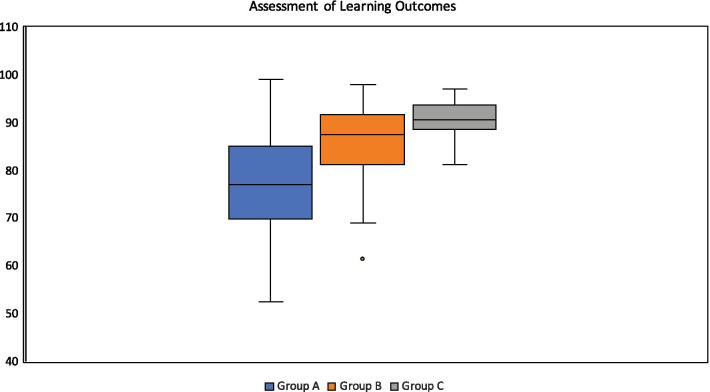
The COVID-19 pandemic has impacted education in myriad ways, primarily leading to an abrupt paradigm shift in teaching and learning practices towards distance learning. The study aims to assess the effectiveness of teaching radiology to undergraduate medical students using synchronous distance learning compared to traditional on-campus learning through exploring students' perceived satisfaction and concerns. Students' perceptions were correlated with their attendance, grades, and frequency of technical difficulties.
The study was designed as an observational study involving fourth-year medical students (2019/2020) from two institutions. The cohort students were exposed to traditional learning, distance learning, or both. Students completed an online self-administered questionnaire concerning their perceptions of distance learning. Students' attendance, engagement, technical difficulties, and post-clerkship knowledge assessments were analyzed using descriptive and inferential statistics.
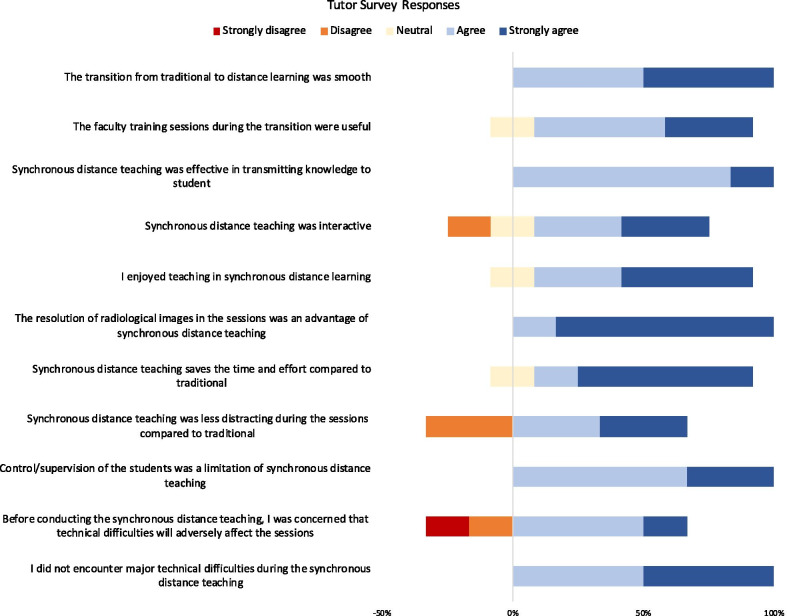
A total of 145 participants completed the clerkship using the following strategies: traditional learning (n = 66), both traditional and distance learning (n = 67), and distance learning alone (n = 12). The most important result indicates that the abrupt transition to distance learning was well perceived. Most students preferred distance learning over traditional learning in the radiology clerkship (p = .05). During the synchronous sessions, student attendance was high, reaching to 100%. Technical difficulties were limited (1.9%), and they did not affect learning.
Synchronous distance teaching promotes learning, interaction, and enjoyment in undergraduate radiology education, and it can be as effective as traditional on-campus learning. The technical difficulties encountered, although they were limited, can be overcome by recording the synchronous sessions.
新冠疫情对教育产生了多方面影响,主要导致教学实践突然向远程学习转变。本研究旨在通过探究学生的感知满意度和担忧,评估与传统校内学习相比,使用同步远程学习教授本科医学生放射学的有效性。学生的感知与他们的出勤情况、成绩和技术困难发生频率相关。
本研究设计为一项观察性研究,涉及来自两个机构的四年级医学生(2019/2020学年)。该队列学生接受了传统学习、远程学习或两者兼有的学习方式。学生完成了一份关于他们对远程学习看法的在线自填式问卷。使用描述性和推断性统计分析学生的出勤情况、参与度、技术困难以及实习后知识评估。
共有145名参与者采用以下策略完成了实习:传统学习(n = 66)、传统学习和远程学习两者兼用(n = 67)以及仅远程学习(n = 12)。最重要的结果表明,向远程学习的突然转变得到了很好的认可。在放射学实习中,大多数学生更喜欢远程学习而非传统学习(p = 0.05)。在同步课程期间,学生出勤率很高,达到了100%。技术困难有限(1.9%),且未影响学习。
同步远程教学促进了本科放射学教育中的学习、互动和乐趣,并且它可以与传统校内学习一样有效。所遇到的技术困难虽然有限,但可以通过录制同步课程来克服。