The Gynecology Department of Beijing Obstetrics and Gynecology Hospital, Capital Medical University, No. 251 of Yaojiayuan Road, Chaoyang District, Beijing, China.
The Gynecology Department of Peking University First Hospital, No. 1 of Xi'anmen Street, Xicheng District, Beijing, China.
BMC Microbiol. 2021 Mar 25;21(1):90. doi: 10.1186/s12866-021-02152-y.
High-risk human papilloma virus (hrHPV) is the main causal factor of cervical precancer and cancer when persistent infection is left untreated. Previous studies have confirmed the vaginal microbiota is associated with HPV infection and the development of cervical lesions. The microbiota at different parts of the female genital tract is closely related but different from each other. To analyze the distinction between the vaginal and cervical microbiota of hrHPV(+) women in China, one hundred subjects were recruited, including 10 patients with HPV16/18(+) and cervical carcinoma, 38 patients with HPV16/18(+) but no cervical carcinoma, 32 patients with other hrHPV(+) and 20 healthy controls with HPV(-). Vaginal and cervical microbiota were separately tested through next-generation sequencing (NGS) targeting the variable region (V3-V4) of the bacterial ribosome 16S rRNA gene.
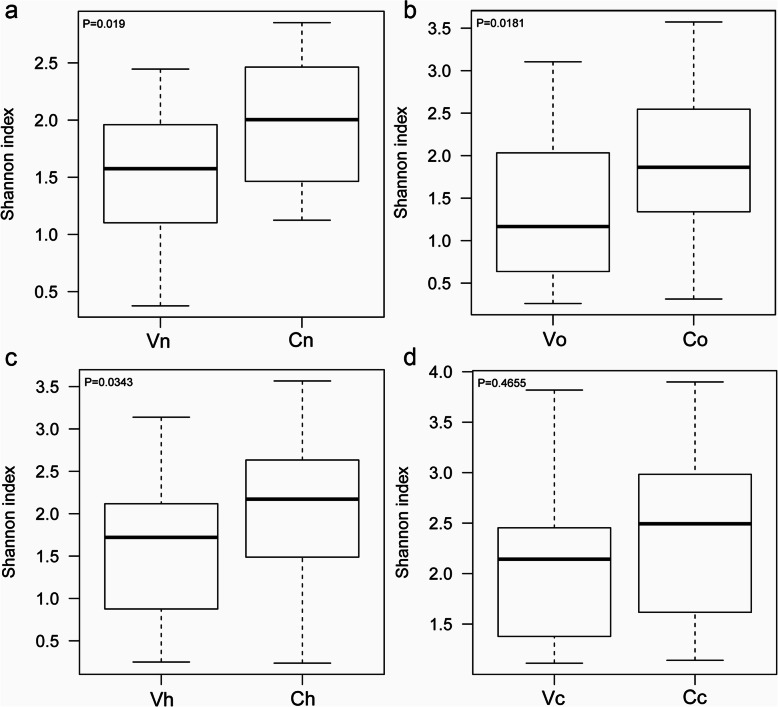
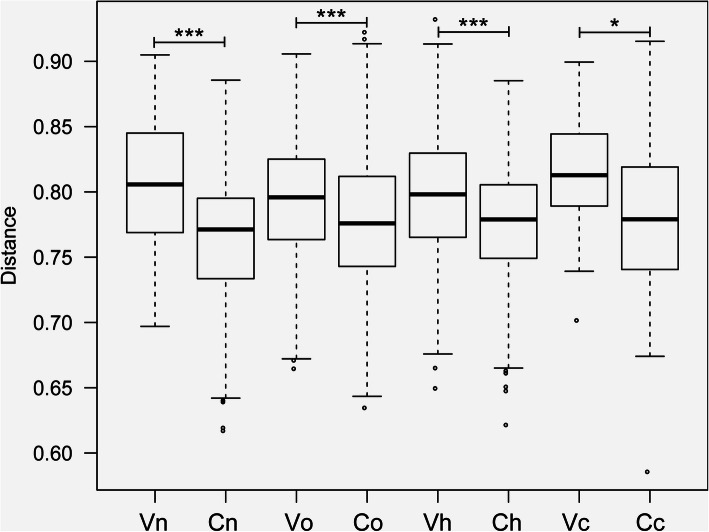
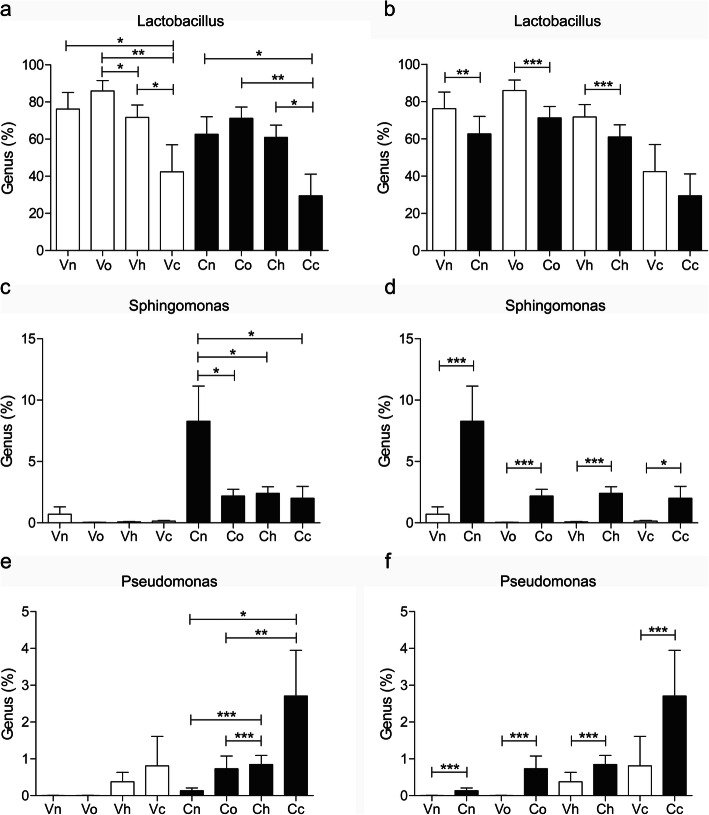
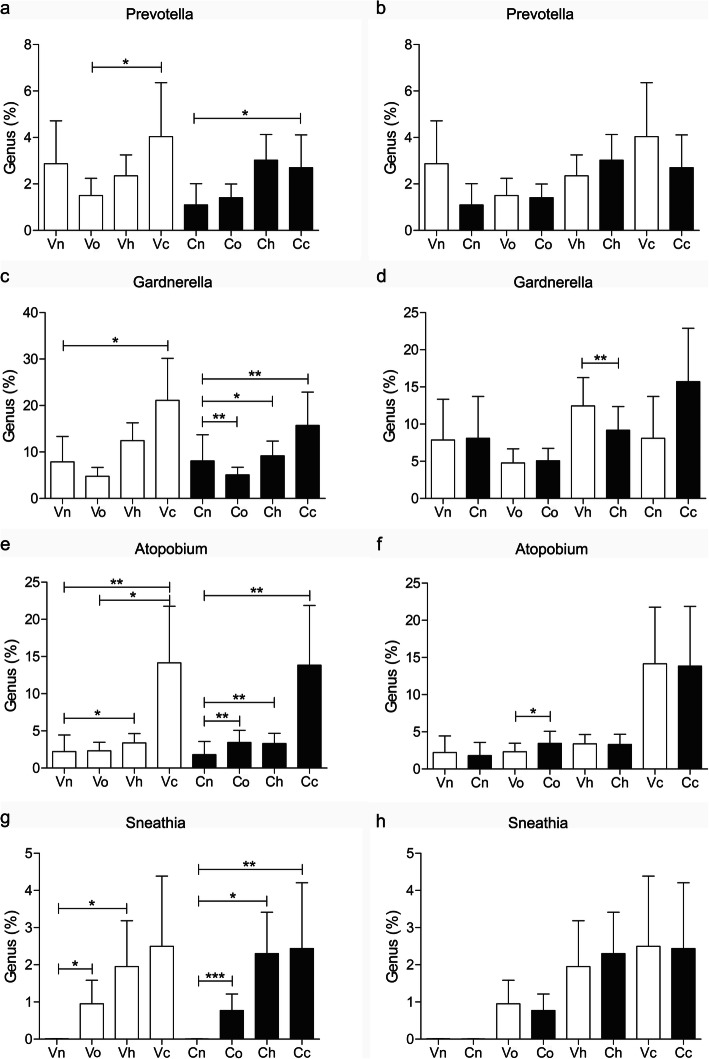
HrHPV(+) subjects had higher percentages of vaginal douching history (P = 0.001), showed more frequent usage of sanitary pads (P = 0.007), had more sex partners (P = 0.047), were more sexually active (P = 0.025) and more diversed in ways of contraception (P = 0.001). The alpha diversity of the cervical microbiota was higher than that of the vagina. The cervical microbiota consisted of a lower percentage of Firmicutes and a higher percentage of Proteobacteria than the vagina at the phylum level. Sphingomonas, belonging to α-Proteobacteria, was almost below the detection limit in the vagina but accounted for five to 10 % of the bacteria in the hrHPV(-) cervix (P<0.001) and was inversely associated with hrHPV infection (P<0.05). Pseudomonas, belonging to γ-Proteobacteria, could hardly be seen in the normal vagina and shared a small percentage in the normal cervix but was significantly higher in the HPV16/18(+) (P<0.001) and cancerous cervix (P<0.05). No significant difference was shown in the percentage of BV associated anaerobes, like Gardnerella, Prevotella, Atopobium and Sneathia, between the cevix and vigina.
The proportion of Proteobacteria was significantly higher in the cervical microbiota than that of vagina. The hrHPV infection and cervical cancer was positively associated with Pseudomonas and negatively associated with Sphingomonas. It is of great improtance to deeply explore the cervical microbiota and its function in cervical cacinogenesis.
高危型人乳头瘤病毒(hrHPV)是持续性感染未得到治疗导致宫颈癌前病变和癌症的主要致病因素。先前的研究已经证实阴道微生物群与 HPV 感染和宫颈病变的发展有关。女性生殖道不同部位的微生物群密切相关但又彼此不同。为了分析中国 hrHPV(+)女性阴道和宫颈微生物群的区别,招募了 100 名受试者,包括 10 名 HPV16/18(+)和宫颈癌患者、38 名 HPV16/18(+)但无宫颈癌患者、32 名其他 hrHPV(+)患者和 20 名 HPV(-)健康对照者。通过靶向细菌核糖体 16S rRNA 基因可变区(V3-V4)的下一代测序(NGS)分别检测阴道和宫颈微生物群。
hrHPV(+)受试者阴道冲洗史的比例更高(P=0.001),使用卫生护垫更频繁(P=0.007),性伴侣更多(P=0.047),性活动更活跃(P=0.025),避孕方式更多样化(P=0.001)。宫颈微生物群的 α 多样性高于阴道。在门水平上,宫颈微生物群中厚壁菌门的比例较低,变形菌门的比例较高。属于α-变形菌的鞘氨醇单胞菌在阴道中几乎检测不到,但占 HPV(-)宫颈的 5-10%(P<0.001),与 HPV 感染呈负相关(P<0.05)。属于γ-变形菌的假单胞菌在正常阴道中几乎看不到,在正常宫颈中所占比例较小,但在 HPV16/18(+)(P<0.001)和宫颈癌中显著升高(P<0.05)。阴道和宫颈中与 BV 相关的厌氧菌(如 Gardnerella、Prevotella、Atopobium 和 Sneathia)的比例无显著差异。
宫颈微生物群中变形菌门的比例明显高于阴道。HPV 感染和宫颈癌与假单胞菌呈正相关,与鞘氨醇单胞菌呈负相关。深入研究宫颈微生物群及其在宫颈癌发生中的功能具有重要意义。