Centre for Maternal, Adolescent, Reproductive & Child Health (MARCH), London School of Hygiene & Tropical Medicine (LSHTM), London, UK.
Department of Health Systems, Impact Evaluation and Policy, Ifakara Health Institute (IHI), Dar Es Salaam, Tanzania.
BMC Pregnancy Childbirth. 2021 Mar 26;21(Suppl 1):230. doi: 10.1186/s12884-020-03420-x.
Postpartum haemorrhage (PPH) is a leading cause of preventable maternal mortality worldwide. The World Health Organization (WHO) recommends uterotonic administration for every woman after birth to prevent PPH. There are no standardised data collected in large-scale measurement platforms. The Every Newborn Birth Indicators Research Tracking in Hospitals (EN-BIRTH) is an observational study to assess the validity of measurement of maternal and newborn indicators, and this paper reports findings regarding measurement of coverage and quality for uterotonics.
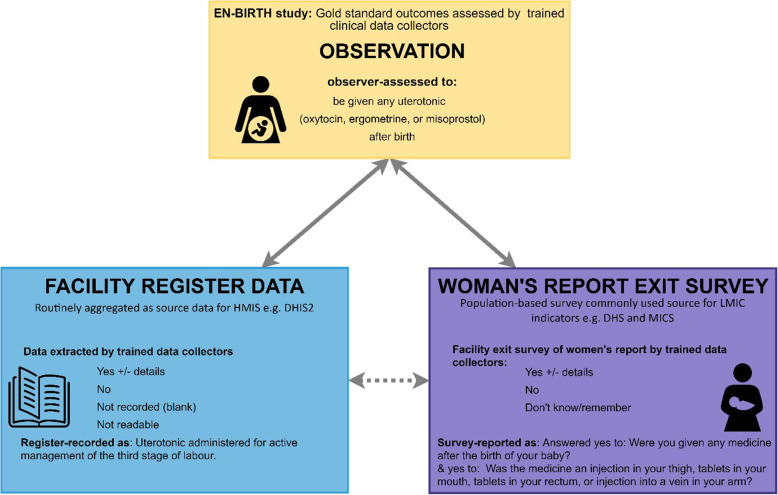
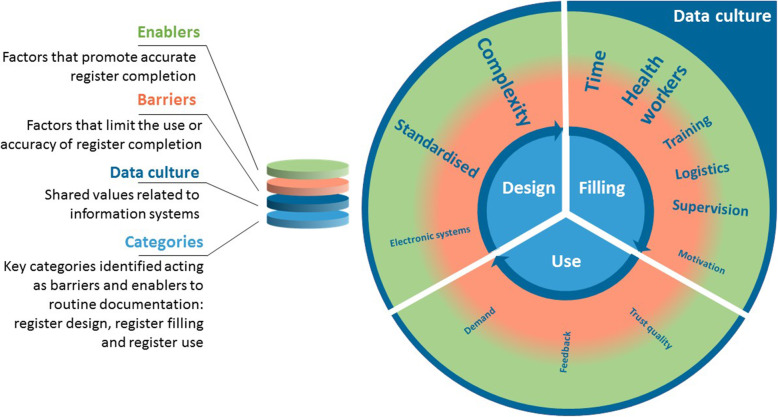
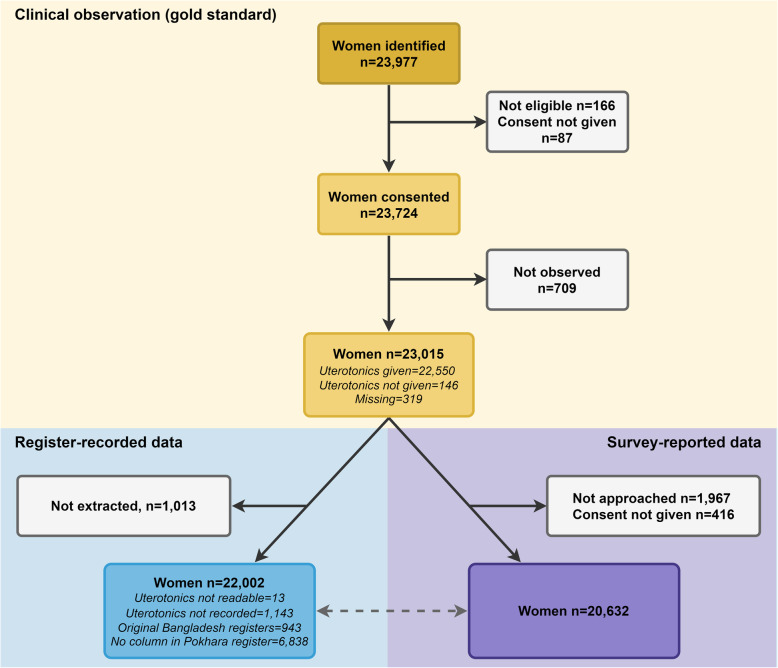
The EN-BIRTH study took place in five hospitals in Bangladesh, Nepal and Tanzania, from July 2017 to July 2018. Clinical observers collected tablet-based, time-stamped data. We compared observation data for uterotonics to routine hospital register-records and women's report at exit-interview survey. We analysed the coverage and quality gap for timing and dose of administration. The register design was evaluated against gap analyses and qualitative interview data assessing the barriers and enablers to data recording and use.
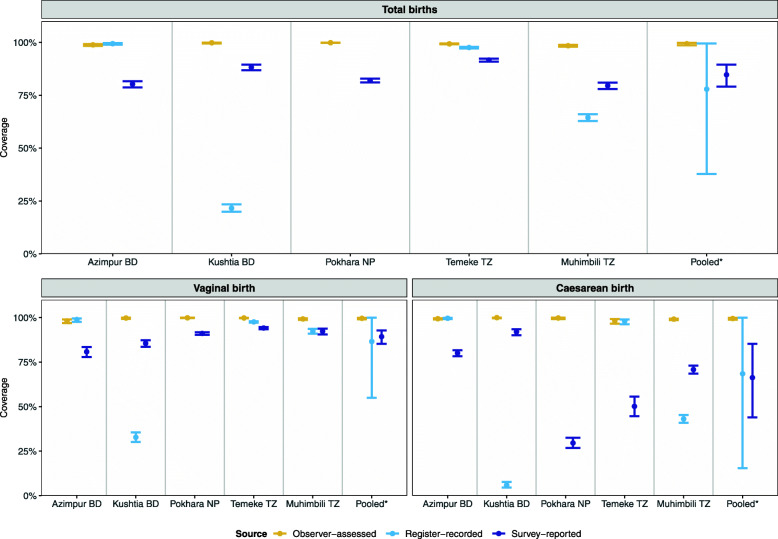
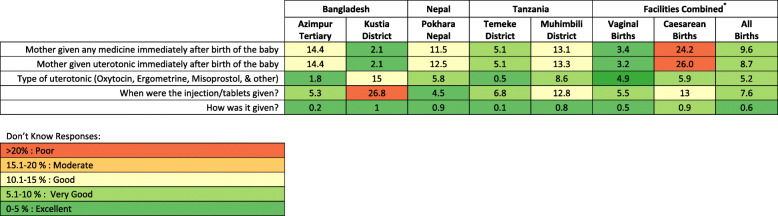
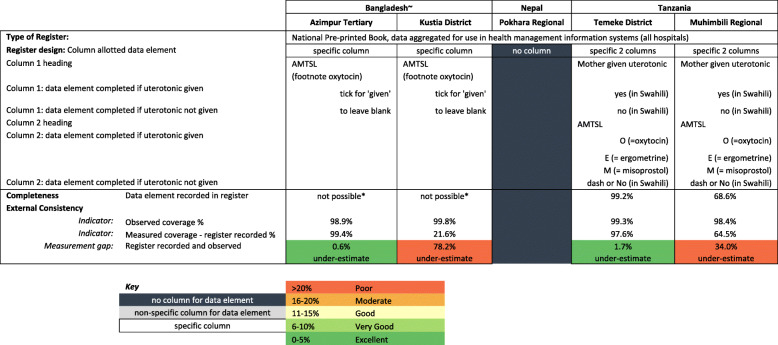
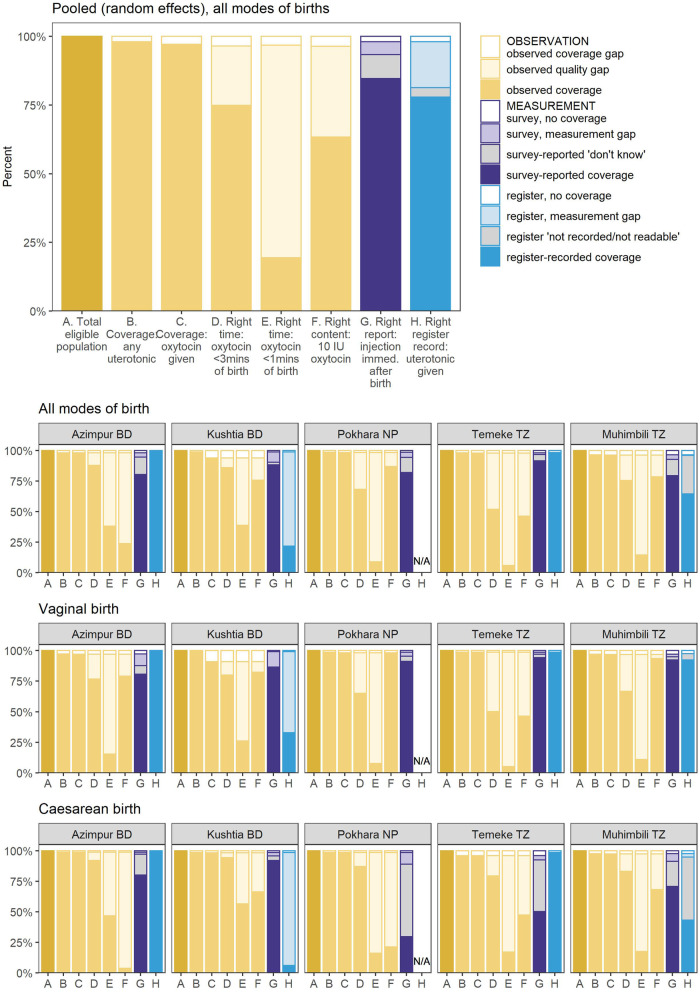
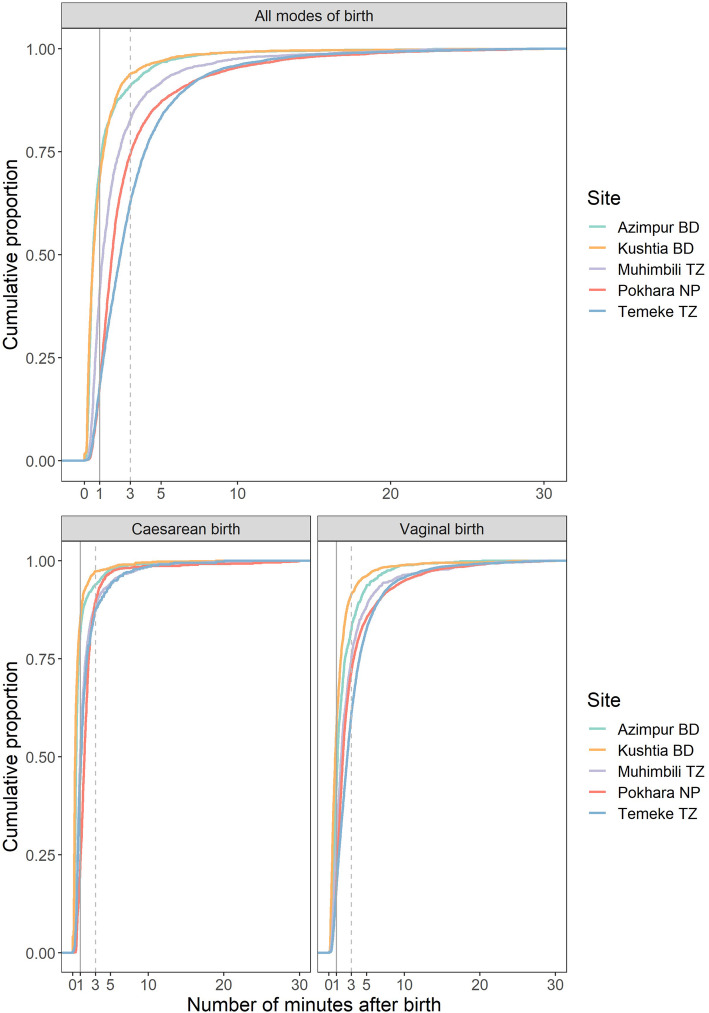
Observed uterotonic coverage was high in all five hospitals (> 99%, 95% CI 98.7-99.8%). Survey-report underestimated coverage (79.5 to 91.7%). "Don't know" replies varied (2.1 to 14.4%) and were higher after caesarean (3.7 to 59.3%). Overall, there was low accuracy in survey data for details of uterotonic administration (type and timing). Register-recorded coverage varied in four hospitals capturing uterotonics in a specific column (21.6, 64.5, 97.6, 99.4%). The average coverage measurement gap was 18.1% for register-recorded and 6.0% for survey-reported coverage. Uterotonics were given to 15.9% of women within the "right time" (1 min) and 69.8% within 3 min. Women's report of knowing the purpose of uterotonics after birth ranged from 0.4 to 64.9% between hospitals. Enabling register design and adequate staffing were reported to improve routine recording.
Routine registers have potential to track uterotonic coverage - register data were highly accurate in two EN-BIRTH hospitals, compared to consistently underestimated coverage by survey-report. Although uterotonic coverage was high, there were gaps in observed quality for timing and dose. Standardisation of register design and implementation could improve data quality and data flow from registers into health management information reporting systems, and requires further assessment.
产后出血(PPH)是全球可预防产妇死亡的主要原因。世界卫生组织(WHO)建议在每个女性分娩后使用子宫收缩剂以预防 PPH。目前尚无在大规模测量平台上收集的标准化数据。新生儿出生指标研究追踪医院(EN-BIRTH)是一项观察性研究,旨在评估测量产妇和新生儿指标的有效性,本文报告了有关子宫收缩剂测量覆盖率和质量的研究结果。
EN-BIRTH 研究于 2017 年 7 月至 2018 年 7 月在孟加拉国、尼泊尔和坦桑尼亚的五家医院进行。临床观察员收集基于平板电脑的、有时间戳的数据。我们将子宫收缩剂的观察数据与常规医院登记记录和妇女在出院访谈调查中的报告进行了比较。我们分析了给药时间和剂量的覆盖率和质量差距。根据差距分析和定性访谈数据评估登记设计,这些数据评估了数据记录和使用的障碍和促成因素。
所有五家医院的观察到的子宫收缩剂覆盖率均很高(>99%,95%CI 98.7-99.8%)。调查报告低估了覆盖率(79.5%至 91.7%)。“不知道”的回复各不相同(2.1%至 14.4%),剖宫产术后更高(3.7%至 59.3%)。总体而言,关于子宫收缩剂给药细节(类型和时间)的调查数据准确性较低。在四家医院中,登记记录的覆盖率各不相同,在特定列中记录了子宫收缩剂(21.6%、64.5%、97.6%和 99.4%)。登记记录的覆盖率平均测量差距为 18.1%,调查报告的覆盖率为 6.0%。15.9%的妇女在“正确时间”(1 分钟内)内使用了子宫收缩剂,69.8%在 3 分钟内使用。医院之间,妇女分娩后对子宫收缩剂目的的了解程度从 0.4%到 64.9%不等。据报道,登记设计的启用和充足的人员配备有助于改善常规记录。
常规登记册有可能追踪子宫收缩剂的覆盖率-与调查报告始终低估覆盖率相比,EN-BIRTH 两所医院的登记册数据非常准确。尽管子宫收缩剂的覆盖率很高,但在给药时间和剂量方面仍存在质量差距。登记册设计和实施的标准化可以提高数据质量,并改善从登记册到卫生管理信息报告系统的数据流程,这需要进一步评估。