Liu Langqing, Bosse Mirte, Megens Hendrik-Jan, de Visser Manon, A M Groenen Martien, Madsen Ole
Animal Breeding and Genomics Wageningen University & Research Wageningen the Netherlands.
Evol Appl. 2020 Nov 11;14(3):710-720. doi: 10.1111/eva.13150. eCollection 2021 Mar.
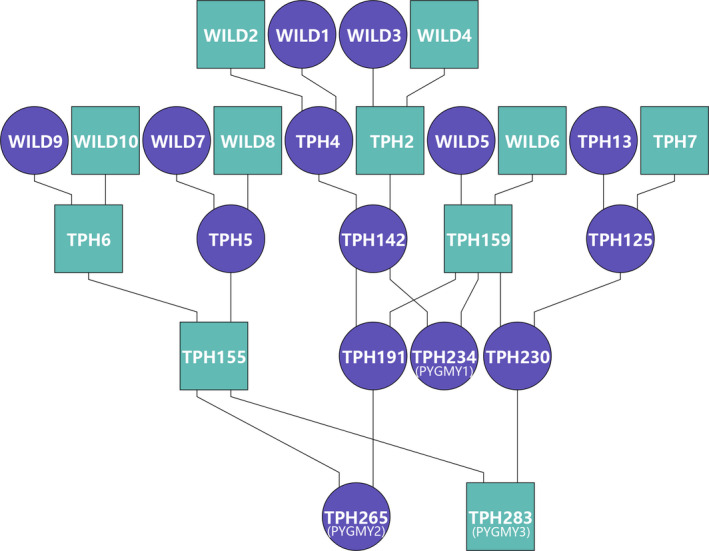
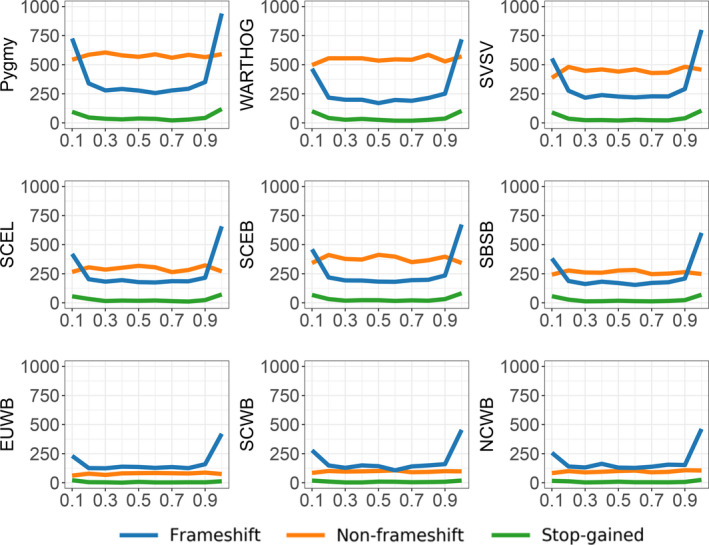
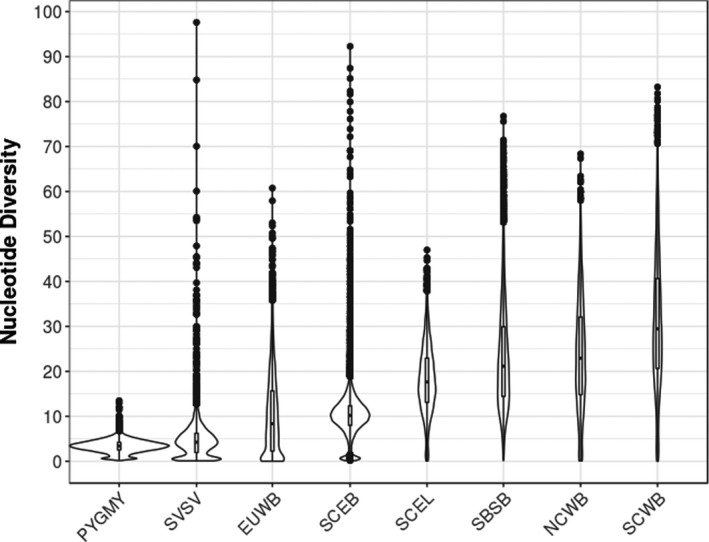
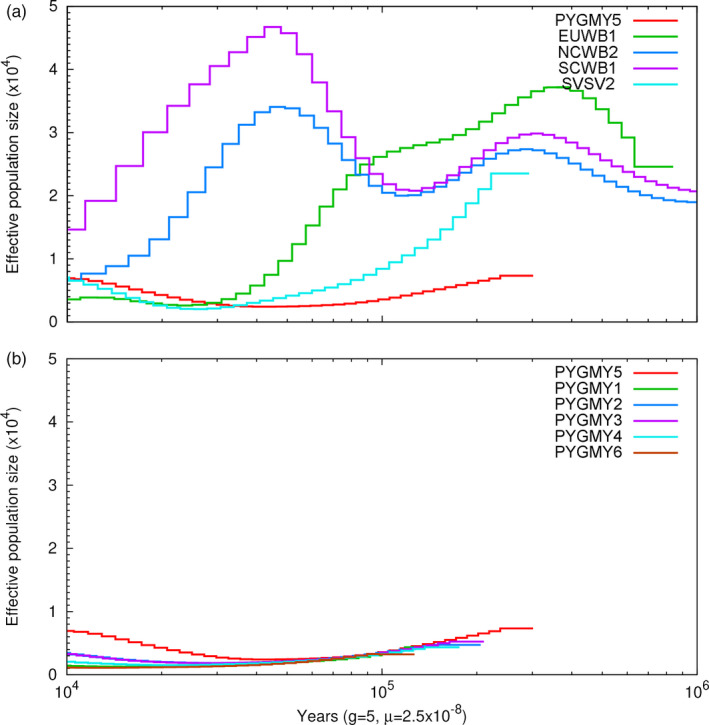
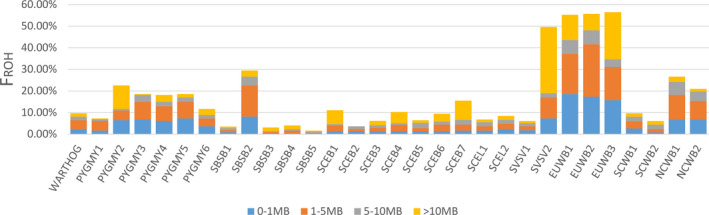
Increasing human disturbance and climate change have a major impact on habitat integrity and size, with far-reaching consequences for wild fauna and flora. Specifically, population decline and habitat fragmentation result in small, isolated populations. To what extend different endangered species can cope with small population size is still largely unknown. Studies on the genomic landscape of these species can shed light on past demographic dynamics and current genetic load, thereby also providing guidance for conservation programs. The pygmy hog () is the smallest and rarest wild pig in the world, with current estimation of only a few hundred living in the wild. Here, we analyzed whole-genome sequencing data of six pygmy hogs, three from the wild and three from a captive population, along with 30 pigs representing six other . First, we show that the pygmy hog had a very small population size with low genetic diversity over the course of the past ~1 million years. One indication of historical small effective population size is the absence of mitochondrial variation in the six sequenced individuals. Second, we evaluated the impact of historical demography. Runs of homozygosity (ROH) analysis suggests that the pygmy hog population has gone through past but not recent inbreeding. Also, the long-term, extremely small population size may have led to the accumulation of harmful mutations suggesting that the accumulation of deleterious mutations is exceeding purifying selection in this species. Thus, care has to be taken in the conservation program to avoid or minimize the potential for further inbreeding depression, and guard against environmental changes in the future.
人类干扰的增加和气候变化对栖息地的完整性和面积产生了重大影响,对野生动植物造成了深远的后果。具体而言,种群数量下降和栖息地破碎化导致了小而孤立的种群。不同濒危物种在多大程度上能够应对小种群规模,目前仍 largely unknown。对这些物种的基因组景观进行研究,可以揭示过去的种群动态和当前的遗传负荷,从而也为保护计划提供指导。侏儒猪()是世界上最小且最稀有的野猪,目前估计野外仅存几百只。在这里,我们分析了六只侏儒猪的全基因组测序数据,其中三只来自野外,三只来自圈养种群,以及代表其他六个物种的30头猪。首先,我们表明,在过去约100万年的时间里,侏儒猪的种群规模非常小,遗传多样性较低。历史上有效种群规模较小的一个迹象是,在六个测序个体中没有线粒体变异。其次,我们评估了历史种群统计学的影响。纯合子连续片段(ROH)分析表明,侏儒猪种群经历了过去但并非近期的近亲繁殖。此外,长期的极小种群规模可能导致了有害突变的积累,这表明该物种中有害突变的积累超过了纯化选择。因此,在保护计划中必须谨慎行事,以避免或最小化进一步近亲繁殖衰退的可能性,并防范未来的环境变化。