Chen Hongjin, Xia Ruixue, Jiang Long, Zhou Yong, Xu Haojun, Peng Weiwei, Yao Chengyun, Zhou Guoren, Zhang Yijie, Xia Hongping, Wang Yongsheng
Department of Pathology, School of Basic Medical Sciences & Sir Run Run Hospital & Key Laboratory of Antibody Technique of National Health Commission, Nanjing Medical University, Nanjing, China.
Department of Respiratory and Critical Care Medicine, Henan University Huaihe Hospital, Kaifeng, China.
Front Oncol. 2021 Mar 9;11:619013. doi: 10.3389/fonc.2021.619013. eCollection 2021.
The Rho GTPase family with ~20 member genes play central roles in a wide variety of cellular processes and tumor cell migration and metastasis. Different Rho GTPase may play different roles in the progression of lung adenocarcinoma.
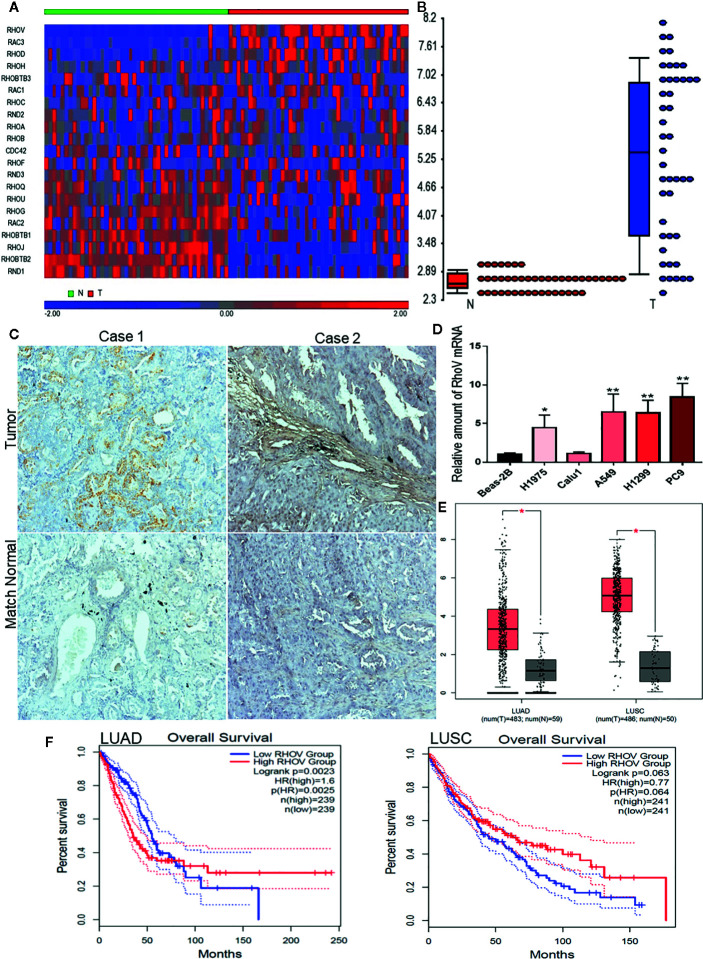
We comprehensively examined the expression of all Rho GTPase family member genes in a panel of lung adenocarcinoma patient's tumors and matched normal tissues. We next investigated the critical role of RhoV in different lung adenocarcinoma cells and animal models.
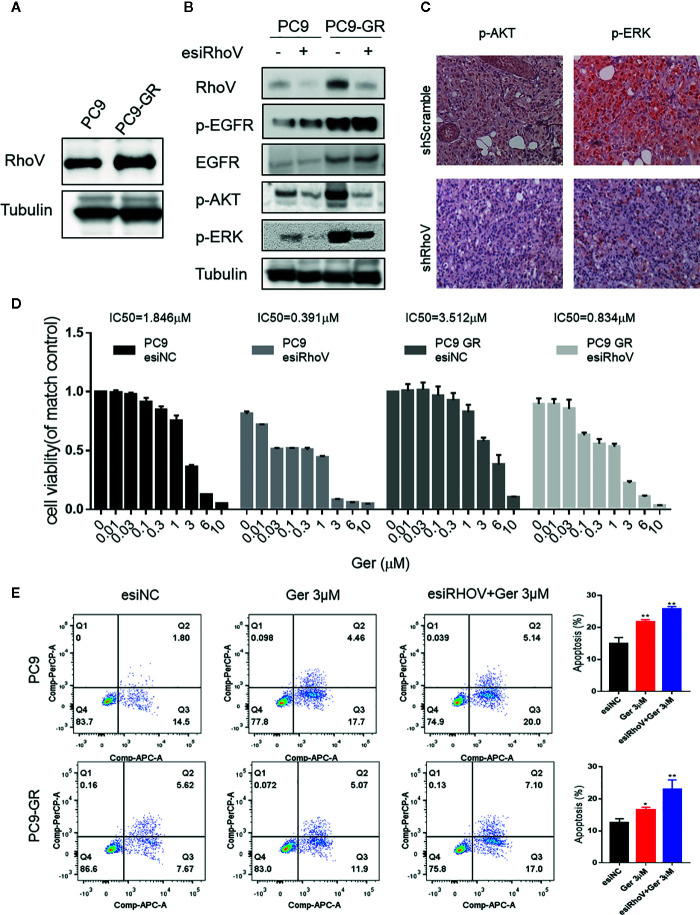
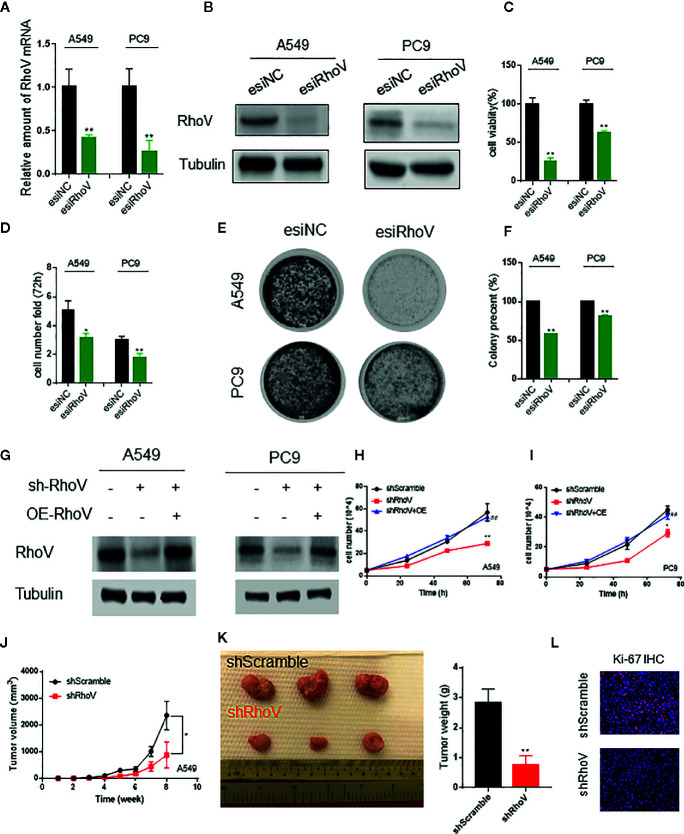
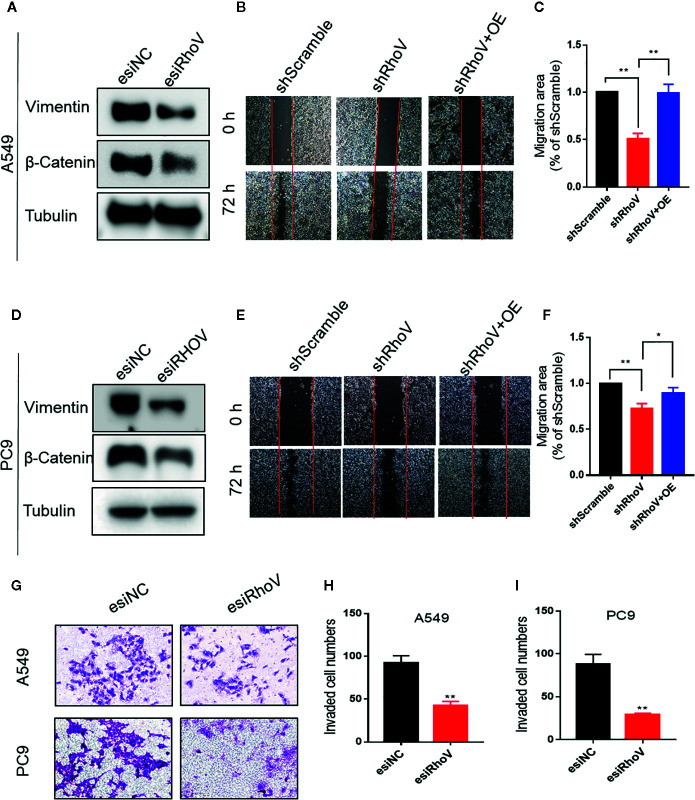
RhoV was identified as one of the most significantly overexpressed Rho GTPases in lung adenocarcinoma and associated with patients' survival. Silencing RhoV expression inhibits proliferation, migration and invasion, and tumorigenicity capacities of lung adenocarcinoma cells. Moreover, knockdown RhoV promoted the sensitivity of EGFR-TKI in the gefitinib resistant PC9 cells (PC9-GR) and aggravated gefitinib-induced lung cancer cell apoptosis both in PC9 and PC9-GR cells. Our data also indicated that RhoV induced progression and EGFR-TKI resistance of lung adenocarcinoma may be related to the activation of the AKT/ERK pathway.
Overexpression of RhoV in lung adenocarcinoma promotes the progression and EGFR-TKI resistance, suggesting RhoV is a promising prognosis and therapeutic target of lung adenocarcinoma.
具有约20个成员基因的Rho GTPase家族在多种细胞过程以及肿瘤细胞迁移和转移中发挥核心作用。不同的Rho GTPase在肺腺癌进展中可能发挥不同作用。
我们全面检测了一组肺腺癌患者肿瘤组织及配对正常组织中所有Rho GTPase家族成员基因的表达。接下来,我们研究了RhoV在不同肺腺癌细胞和动物模型中的关键作用。
RhoV被鉴定为肺腺癌中表达最显著上调的Rho GTPase之一,且与患者生存相关。沉默RhoV表达可抑制肺腺癌细胞的增殖、迁移、侵袭及致瘤能力。此外,敲低RhoV可提高吉非替尼耐药的PC9细胞(PC9-GR)对EGFR-TKI的敏感性,并加重吉非替尼诱导的PC9和PC9-GR细胞的肺癌细胞凋亡。我们的数据还表明,RhoV诱导肺腺癌进展和EGFR-TKI耐药可能与AKT/ERK通路的激活有关。
肺腺癌中RhoV的过表达促进进展和EGFR-TKI耐药,提示RhoV是肺腺癌一个有前景的预后和治疗靶点。