MRC Protein Phosphorylation and Ubiquitylation Unit, University of Dundee, Dundee DD1 5EH, U.K.
Biochem Soc Trans. 2021 Apr 30;49(2):551-562. doi: 10.1042/BST20190236.
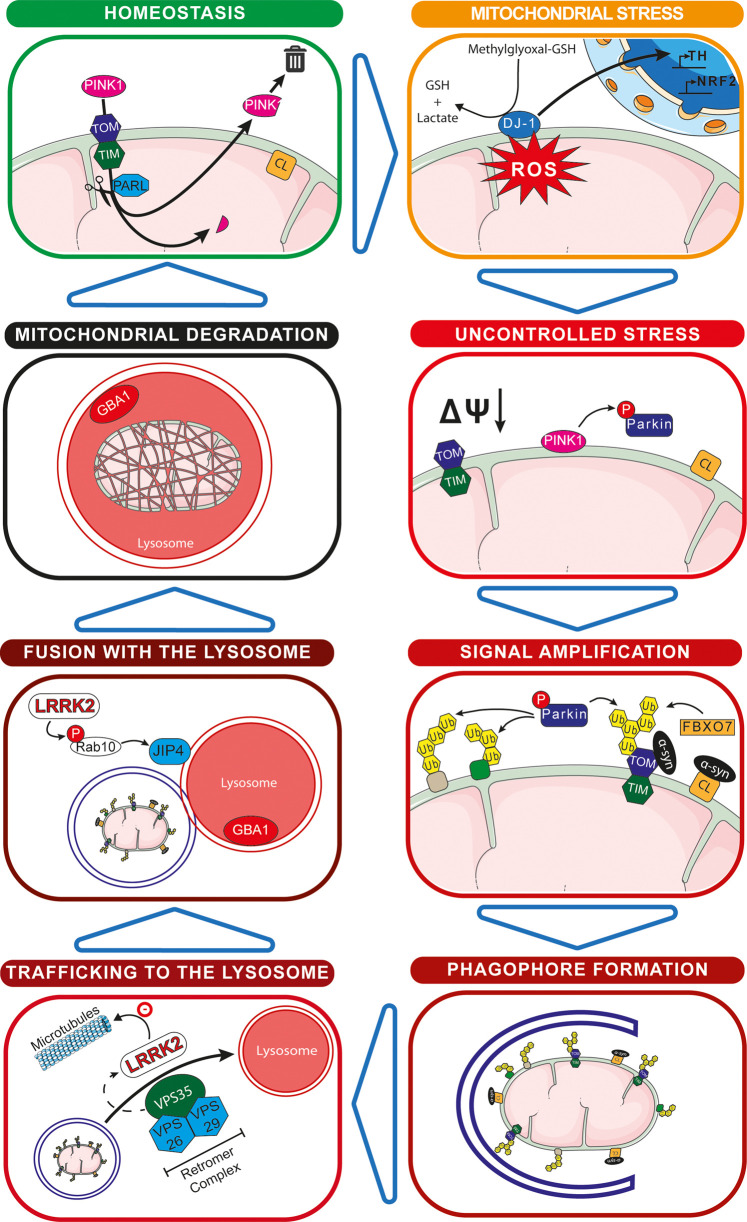
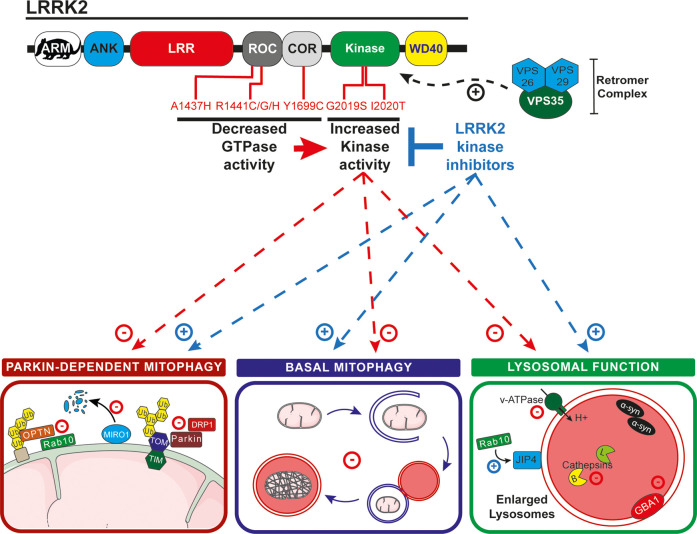
Parkinson's disease (PD) is a progressive neurodegenerative disorder that affects around 2% of individuals over 60 years old. It is characterised by the loss of dopaminergic neurons in the substantia nigra pars compacta of the midbrain, which is thought to account for the major clinical symptoms such as tremor, slowness of movement and muscle stiffness. Its aetiology is poorly understood as the physiological and molecular mechanisms leading to this neuronal loss are currently unclear. However, mitochondrial and lysosomal dysfunction seem to play a central role in this disease. In recent years, defective mitochondrial elimination through autophagy, termed mitophagy, has emerged as a potential contributing factor to disease pathology. PINK1 and Parkin, two proteins mutated in familial PD, were found to eliminate mitochondria under distinct mitochondrial depolarisation-induced stress. However, PINK1 and Parkin are not essential for all types of mitophagy and such pathways occur in most cell types and tissues in vivo, even in the absence of overt mitochondrial stress - so-called basal mitophagy. The most common mutation in PD, that of glycine at position 2019 to serine in the protein kinase LRRK2, results in increased activity and this was recently shown to disrupt basal mitophagy in vivo. Thus, different modalities of mitophagy are affected by distinct proteins implicated in PD, suggesting impaired mitophagy may be a common denominator for the disease. In this short review, we discuss the current knowledge about the link between PD pathogenic mutations and mitophagy, with a particular focus on LRRK2.
帕金森病(PD)是一种进行性神经退行性疾病,影响约 60 岁以上人群的 2%。其特征是中脑黑质致密部多巴胺能神经元丧失,这被认为是导致震颤、运动缓慢和肌肉僵硬等主要临床症状的原因。其病因尚不清楚,因为导致这种神经元丧失的生理和分子机制目前尚不清楚。然而,线粒体和溶酶体功能障碍似乎在这种疾病中起着核心作用。近年来,通过自噬(称为线粒体自噬)清除缺陷线粒体已成为疾病发病机制的一个潜在因素。在家族性 PD 中突变的两种蛋白 PINK1 和 Parkin 被发现可以在不同的线粒体去极化诱导的应激下消除线粒体。然而,PINK1 和 Parkin 并非所有类型的线粒体自噬所必需,并且这种途径存在于大多数细胞类型和组织中,即使在没有明显线粒体应激的情况下 - 所谓的基础线粒体自噬。PD 中最常见的突变是蛋白激酶 LRRK2 中 2019 位甘氨酸突变为丝氨酸,导致活性增加,最近的研究表明,这种突变会破坏体内的基础线粒体自噬。因此,不同的线粒体自噬方式受 PD 中不同蛋白的影响,这表明受损的线粒体自噬可能是该疾病的一个共同特征。在这篇简短的综述中,我们讨论了 PD 致病突变与线粒体自噬之间的现有知识,特别关注 LRRK2。