Interdisciplinary School of Health Sciences, Faculty of Health Sciences, University of Ottawa, Ottawa, ON, Canada.
Department of Biochemistry, Microbiology and Immunology, University of Ottawa, Ottawa, ON, Canada.
FASEB J. 2021 Apr;35(4):e21278. doi: 10.1096/fj.202002151R.
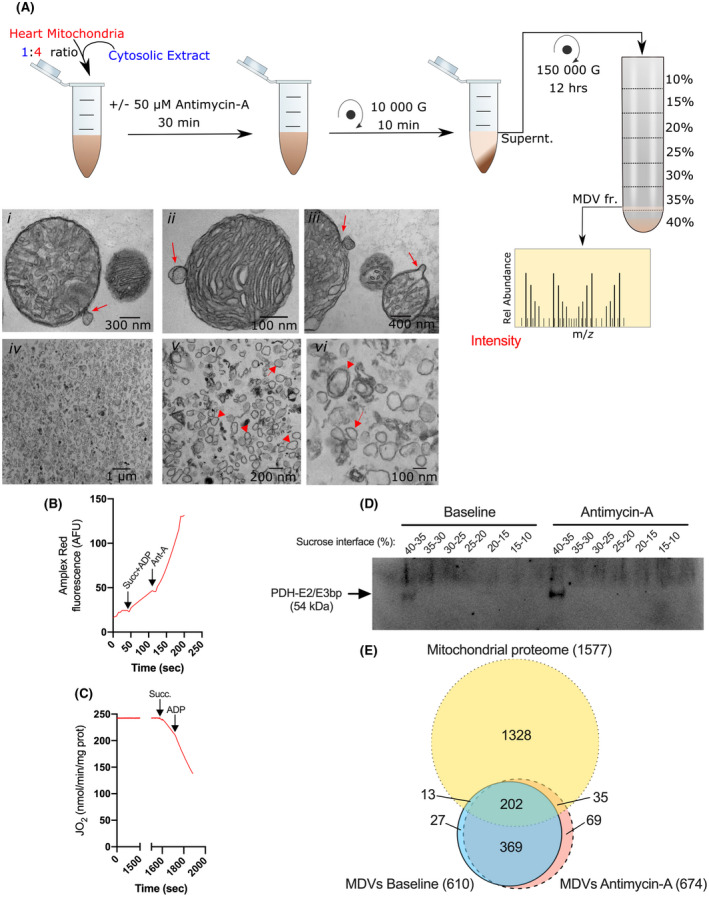
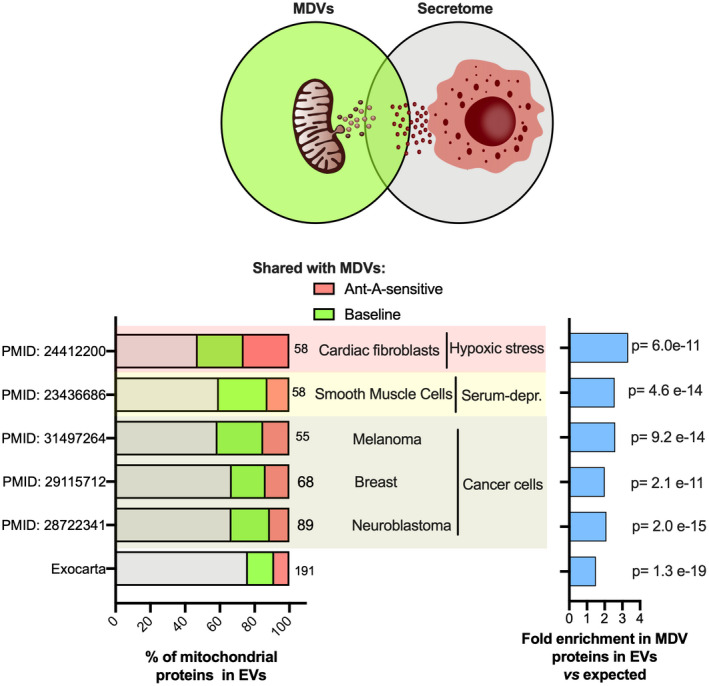
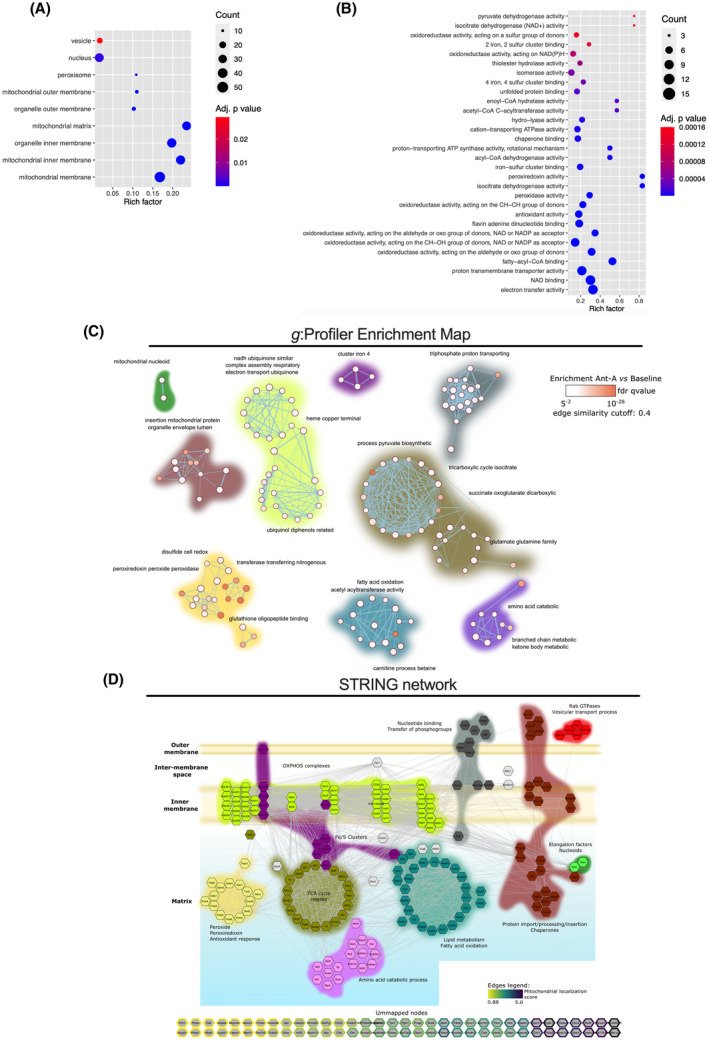
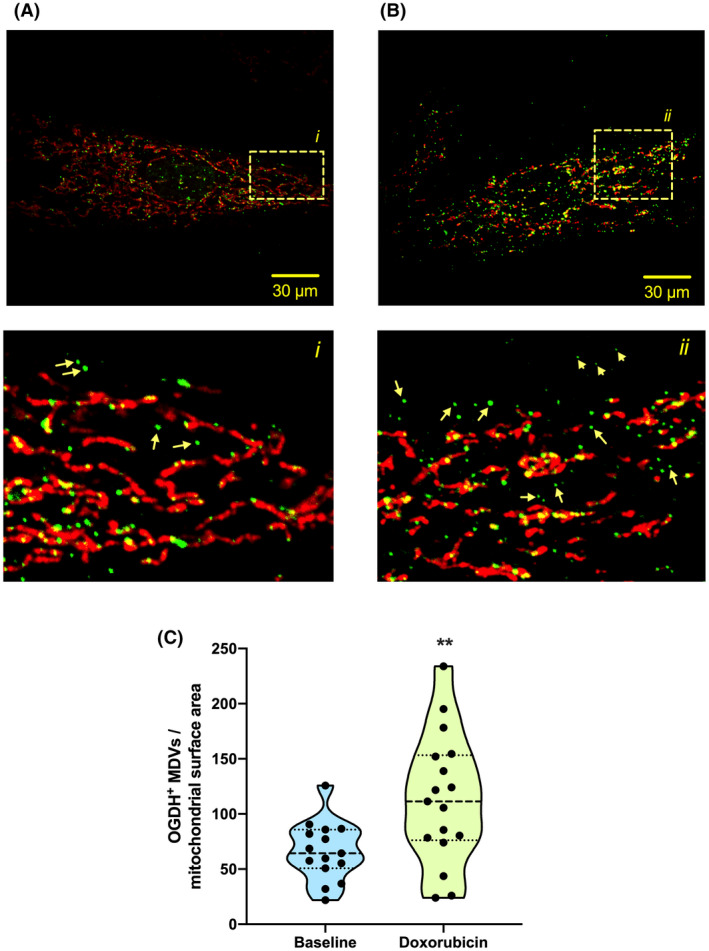
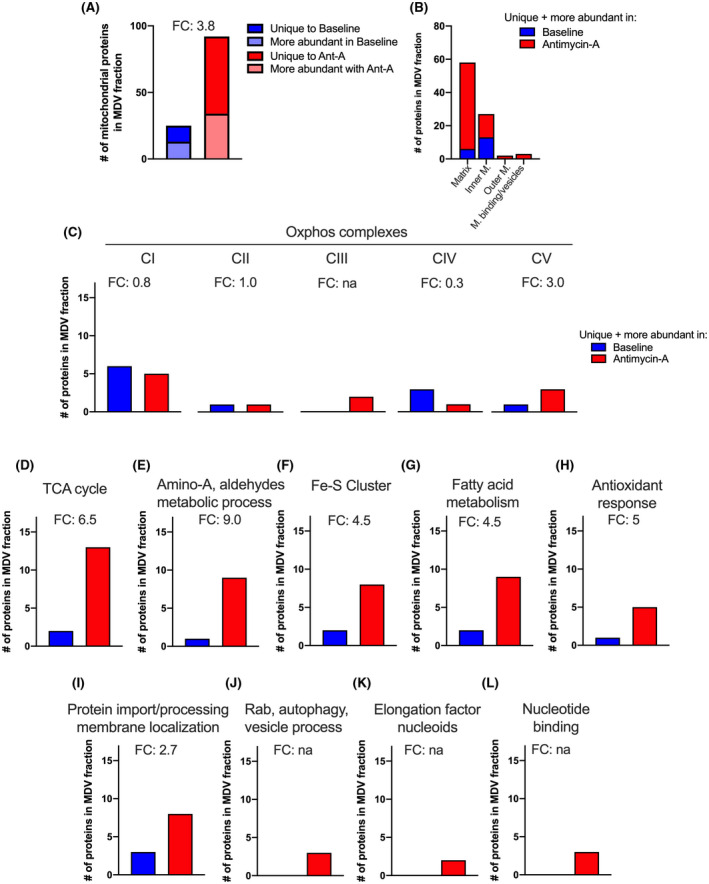
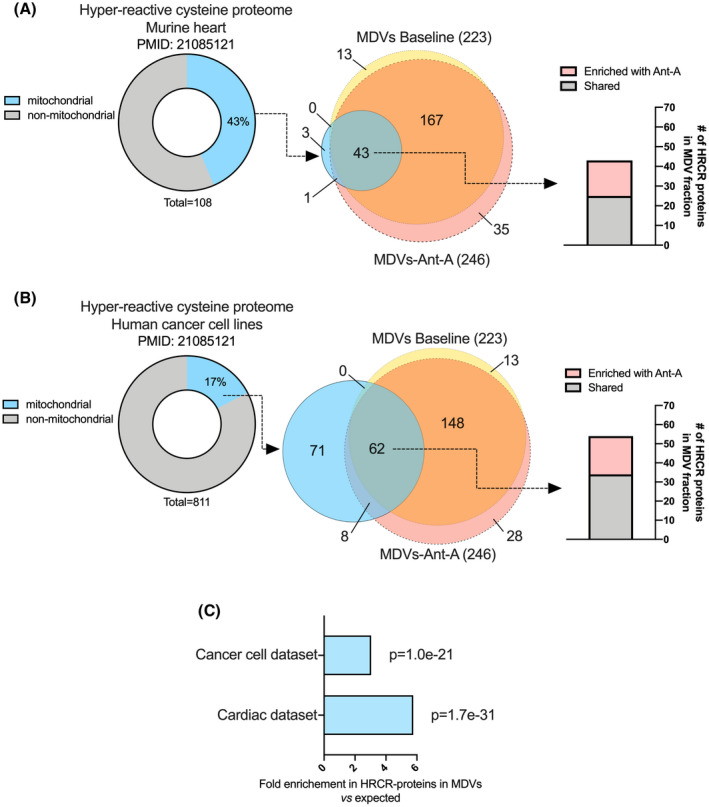
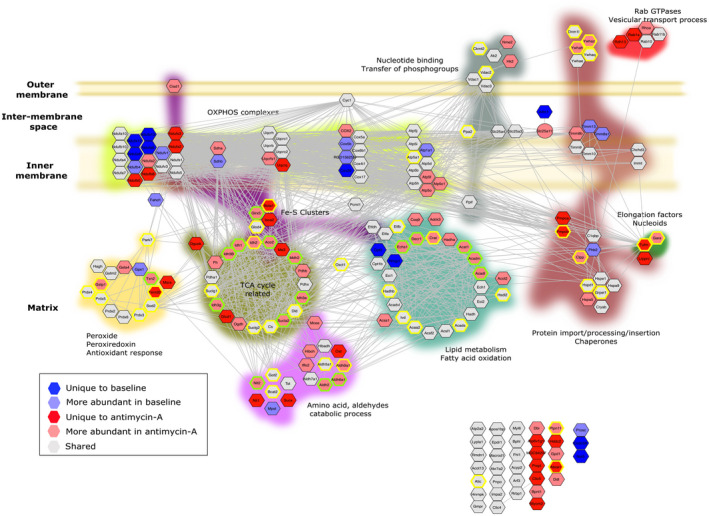
Mitochondria share attributes of vesicular transport with their bacterial ancestors given their ability to form mitochondrial-derived vesicles (MDVs). MDVs are involved in mitochondrial quality control and their formation is enhanced with stress and may, therefore, play a potential role in mitochondrial-cellular communication. However, MDV proteomic cargo has remained mostly undefined. In this study, we strategically used an in vitro MDV budding/reconstitution assay on cardiac mitochondria, followed by graded oxidative stress, to identify and characterize the MDV proteome. Our results confirmed previously identified cardiac MDV markers, while also revealing a complete map of the MDV proteome, paving the way to a better understanding of the role of MDVs. The oxidative stress vulnerability of proteins directed the cargo loading of MDVs, which was enhanced by antimycin A (Ant-A). Among OXPHOS complexes, complexes III and V were found to be Ant-A-sensitive. Proteins from metabolic pathways such as the TCA cycle and fatty acid metabolism, along with Fe-S cluster, antioxidant response proteins, and autophagy were also found to be Ant-A sensitive. Intriguingly, proteins containing hyper-reactive cysteine residues, metabolic redox switches, including professional redox enzymes and those that mediate iron metabolism, were found to be components of MDV cargo with Ant-A sensitivity. Last, we revealed a possible contribution of MDVs to the formation of extracellular vesicles, which may indicate mitochondrial stress. In conclusion, our study provides an MDV proteomics signature that delineates MDV cargo selectivity and hints at the potential for MDVs and their novel protein cargo to serve as vital biomarkers during mitochondrial stress and related pathologies.
线粒体与其细菌祖先具有囊泡运输的特征,因为它们能够形成线粒体衍生的小泡(MDV)。MDV 参与线粒体质量控制,其形成在应激下增强,因此可能在线粒体-细胞通讯中发挥潜在作用。然而,MDV 蛋白质组货物的大部分内容仍然未知。在这项研究中,我们在心脏线粒体上使用了一种体外 MDV 出芽/重组测定法,然后进行分级氧化应激,以鉴定和表征 MDV 蛋白质组。我们的结果证实了先前鉴定的心脏 MDV 标志物,同时还揭示了 MDV 蛋白质组的完整图谱,为更好地理解 MDV 的作用铺平了道路。蛋白质对氧化应激的脆弱性指导了 MDV 的货物装载,而 Ant-A 增强了这种装载。在 OXPHOS 复合物中,复合物 III 和 V 被发现对 Ant-A 敏感。来自三羧酸循环和脂肪酸代谢等代谢途径的蛋白质,以及铁硫簇、抗氧化反应蛋白和自噬蛋白,也被发现对 Ant-A 敏感。有趣的是,含有高反应性半胱氨酸残基的蛋白质、代谢氧化还原开关,包括专业的氧化还原酶和介导铁代谢的蛋白质,被发现是 Ant-A 敏感的 MDV 货物的组成部分。最后,我们揭示了 MDV 可能有助于形成细胞外囊泡,这可能表明线粒体应激。总之,我们的研究提供了一个 MDV 蛋白质组学特征,描绘了 MDV 货物的选择性,并暗示了 MDV 及其新型蛋白质货物可能作为线粒体应激和相关病理过程中的重要生物标志物。