Department of Epidemiology and Health Statistics, School of Public Health, Fujian Medical University, Fuzhou 350122, Fujian Province, China.
Centre for Epidemiology and Evidence-Based Practice, Department of Social and Preventive Medicine, Faculty of Medicine, University of Malaya 50603, Kuala Lumpur, Malaysia.
J Psychosom Res. 2021 May;144:110420. doi: 10.1016/j.jpsychores.2021.110420. Epub 2021 Mar 16.
Wuhan, the epicentre of the coronavirus diseases (COVID-19) outbreak, has been locked down on January 23, 2020. We conducted a study among the lay public in Wuhan to access their support, understanding of, compliance with, and the psychological impacts of the quarantine.
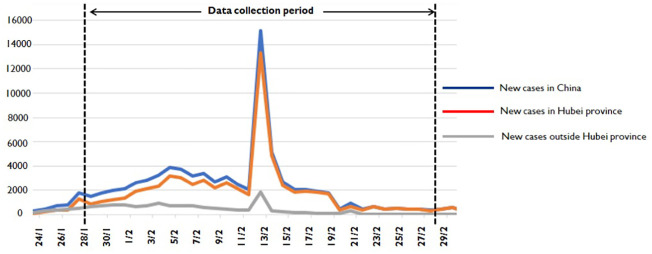
We conducted a cross-sectional, online-based survey study between January 28, 2020, and February 2, 2020 among the adult lay public in Wuhan to access their support, understanding of, compliance with, and the psychological impacts of the quarantine. Multivariable logistic analysis was used to identify factors associated with psychological impacts.
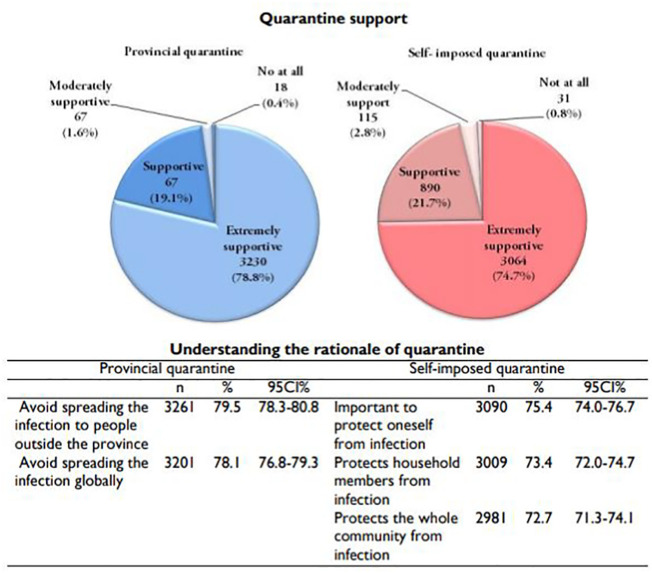
Among the 4100 participants investigated, a total of 15.9% were compliant with all the five household prevention measures, whereas 74.4% were compliant with all the three community prevention measures investigated. By demographics, participants of younger age, higher income, residing in an urban area, knowing neighbors infected with COVID-19 reported significantly higher psychological impact score. Participants with a lower level of support for quarantine were more likely to have a higher psychological impact score (OR = 1.45, 95% CI 1.07-1.96). Participants with a lower level of compliance with preventive measures (score of 0-19) reported higher psychological impact (OR = 1.40, 95% CI 1.22-1.60 vs. score 20-24). Participants who had been out of house socializing and attended public events expressed higher psychological impact.
Support, understanding of the rationale for quarantine are essential in ensuring appropriate psychological well-being during the quarantine. Improvements in compliance with preventive measures are highly warranted and may bring about a reduction in psychological distress.
武汉是冠状病毒病(COVID-19)疫情的中心,于 2020 年 1 月 23 日实施封城。本研究旨在调查武汉普通民众对隔离措施的支持、理解、遵守情况和心理影响。
我们于 2020 年 1 月 28 日至 2 月 2 日期间在武汉成年普通民众中开展了一项横断面、基于网络的调查研究,以评估他们对隔离措施的支持、理解、遵守情况和心理影响。采用多变量逻辑回归分析确定与心理影响相关的因素。
在 4100 名调查对象中,共有 15.9%的人完全遵守了所有 5 项家庭预防措施,而 74.4%的人完全遵守了所有 3 项社区预防措施。从人口统计学特征来看,年龄较小、收入较高、居住在城市地区、了解邻居感染 COVID-19 的参与者报告的心理影响评分显著更高。对隔离措施支持程度较低的参与者更有可能出现较高的心理影响评分(比值比 1.45,95%置信区间 1.07-1.96)。预防措施遵守程度较低(评分 0-19)的参与者报告了更高的心理影响(比值比 1.40,95%置信区间 1.22-1.60 与评分 20-24 相比)。有外出社交和参加公共活动的参与者表达了更高的心理影响。
支持和理解隔离的基本原理对于确保隔离期间的适当心理健康至关重要。提高预防措施的遵守程度非常有必要,这可能会减轻心理困扰。