Pang Ai-Ping, Wang Haiyan, Zhang Funing, Hu Xin, Wu Fu-Gen, Zhou Zhihua, Wang Wei, Lu Zuhong, Lin Fengming
State Key Laboratory of Bioelectronics, School of Biological Science and Medical Engineering, Southeast University, Nanjing, China.
Key Laboratory of Synthetic Biology, Institute of Plant Physiology and Ecology, Shanghai Institutes for Biological Sciences, Chinese Academy of Sciences, Shanghai, China.
Biotechnol Biofuels. 2021 Mar 26;14(1):77. doi: 10.1186/s13068-021-01926-w.
Knowledge with respect to regulatory systems for cellulase production is prerequisite for exploitation of such regulatory networks to increase cellulase production, improve fermentation efficiency and reduce the relevant production cost. The target of rapamycin (TOR) signaling pathway is considered as a central signaling hub coordinating eukaryotic cell growth and metabolism with environmental inputs. However, how and to what extent the TOR signaling pathway and rapamycin are involved in cellulase production remain elusive.
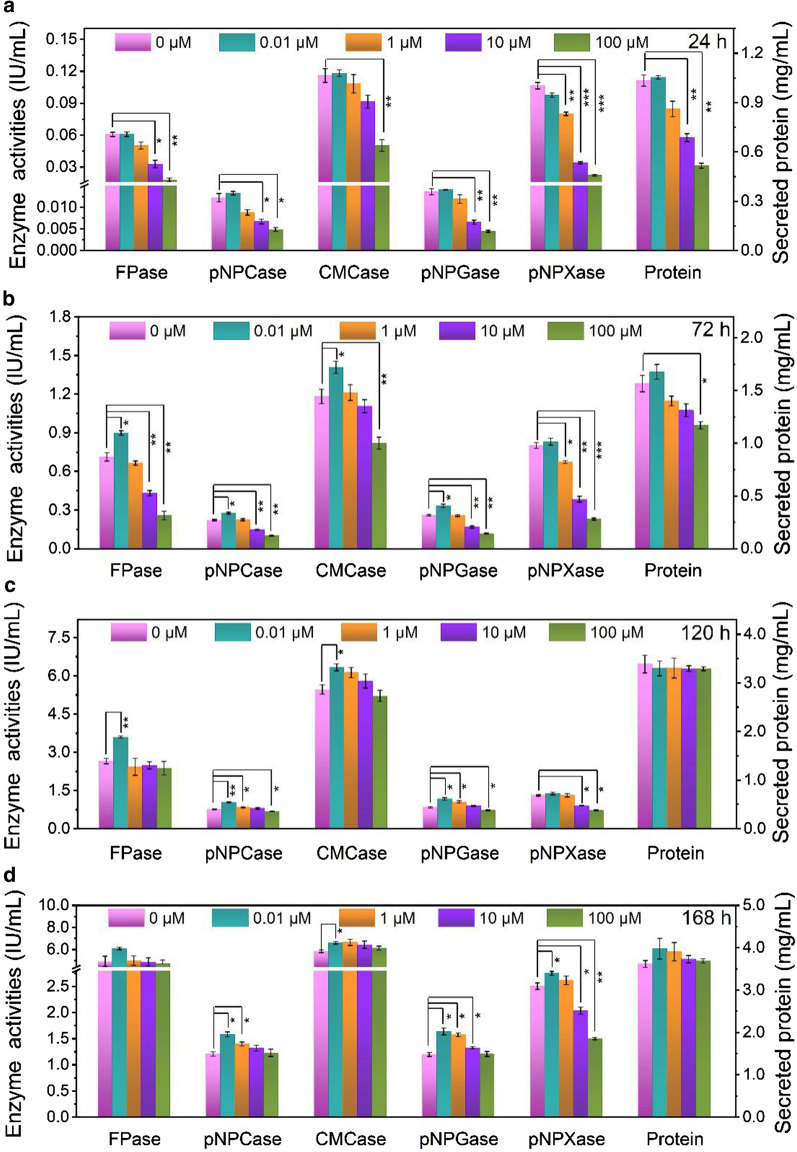
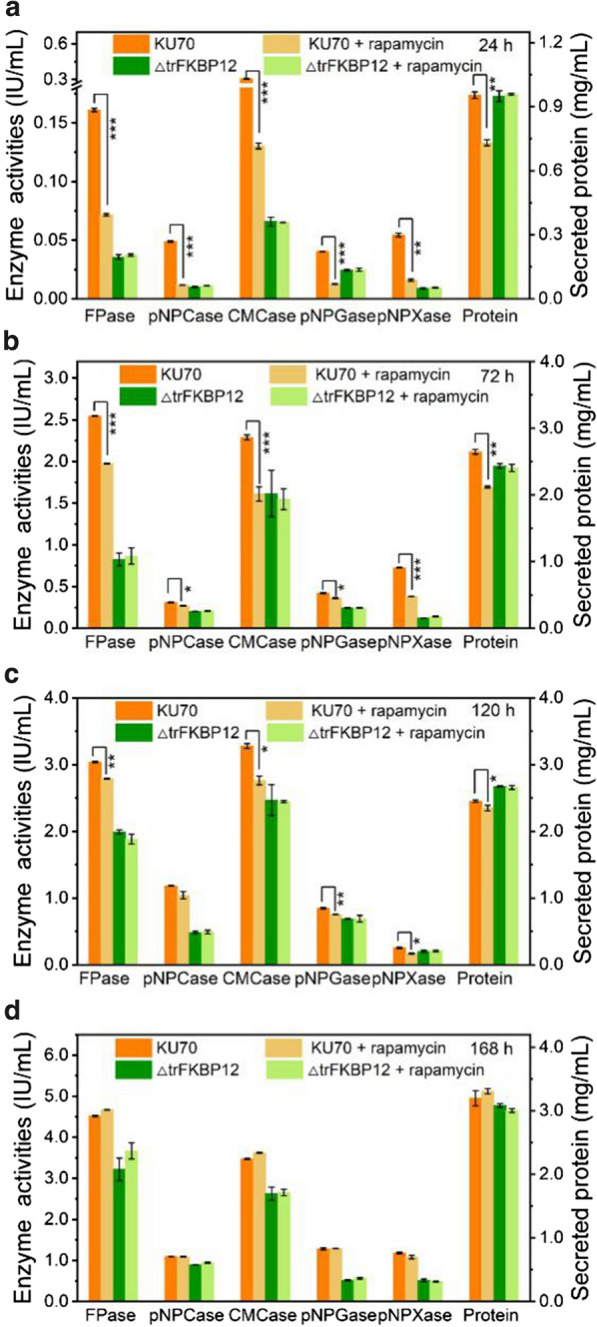
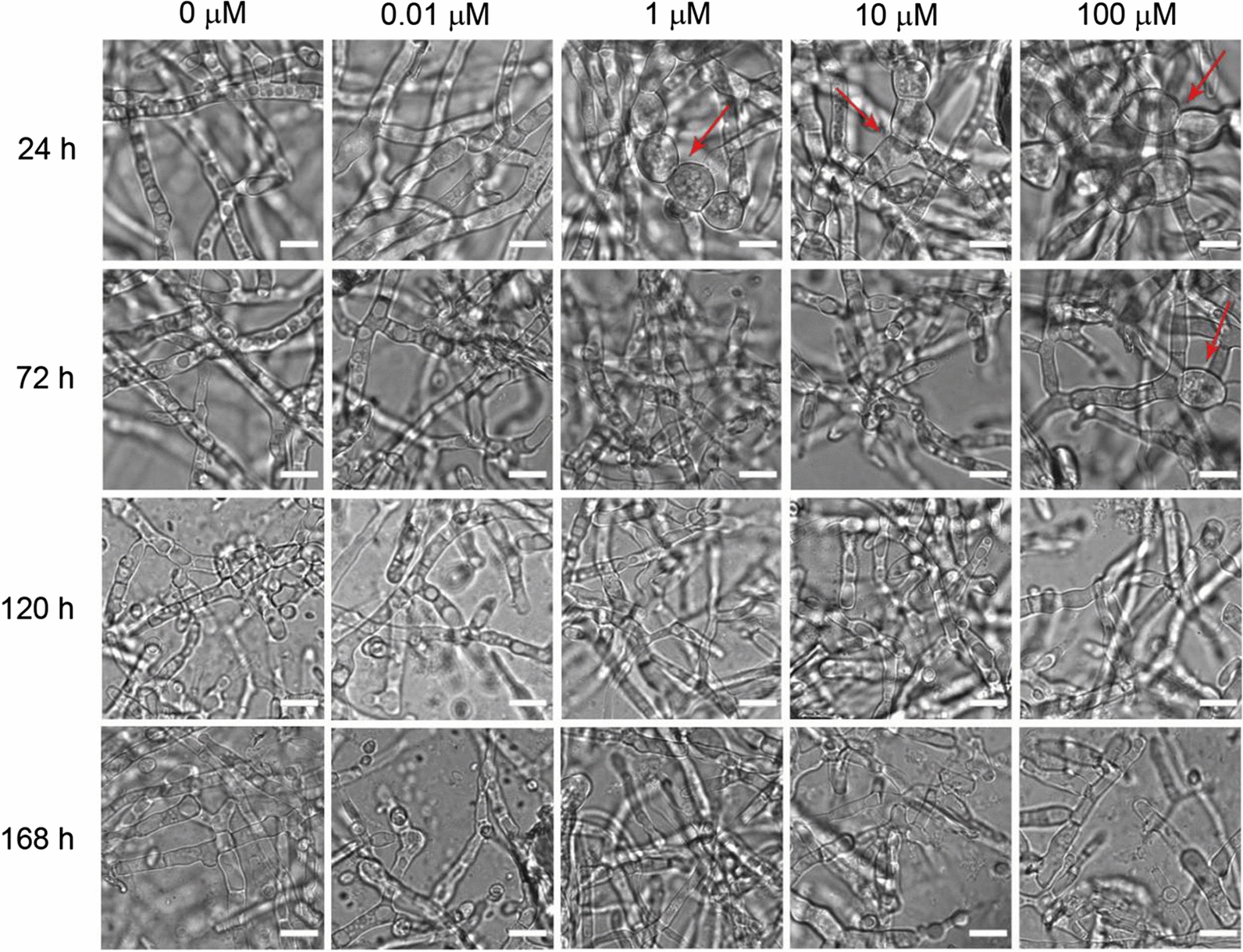
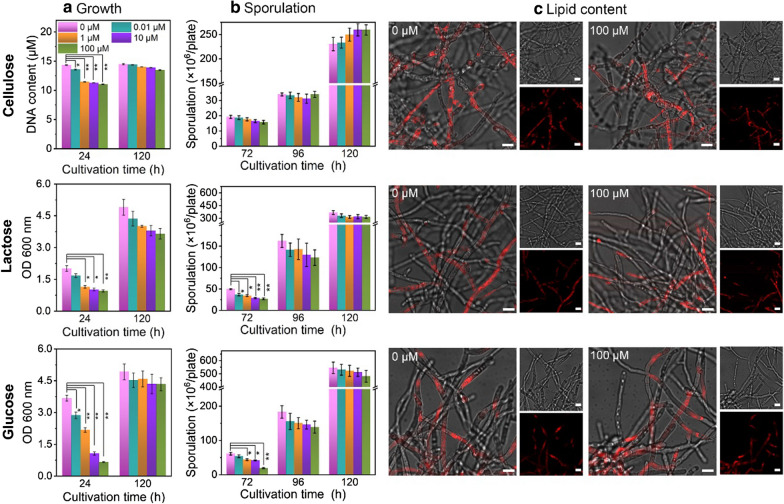
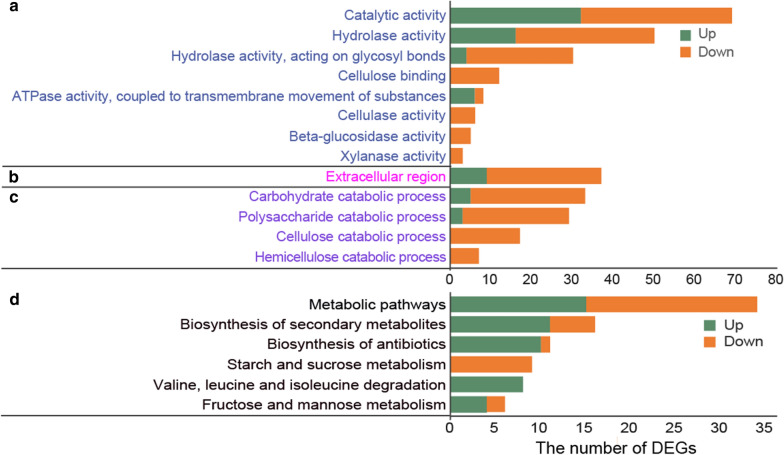
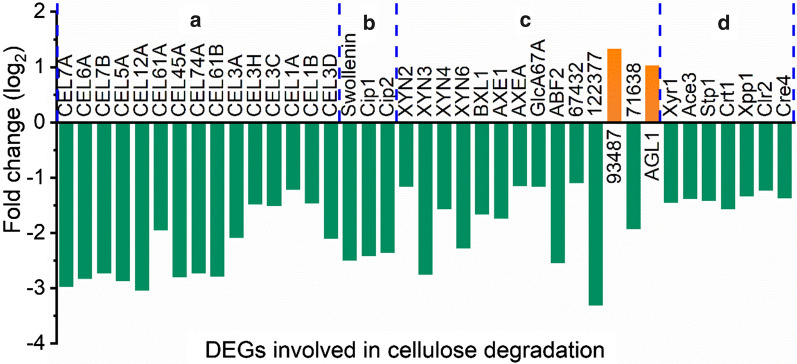
At the early fermentation stage, high-dose rapamycin (100 μM) caused a temporary inhibition effect on cellulase production, cell growth and sporulation of Trichoderma reesei RUT-C30 independently of the carbon sources, and specifically caused a tentative morphology defect in RUT-C30 grown on cellulose. On the contrary, the lipid content of T. reesei RUT-C30 was not affected by rapamycin. Accordingly, the transcriptional levels of genes involved in the cellulase production were downregulated notably with the addition of rapamycin. Although the mRNA levels of the putative rapamycin receptor trFKBP12 was upregulated significantly by rapamycin, gene trTOR (the downstream effector of the rapamycin-FKBP12 complex) and genes associated with the TOR signaling pathways were not changed markedly. With the deletion of gene trFKBP12, there is no impact of rapamycin on cellulase production, indicating that trFKBP12 mediates the observed temporary inhibition effect of rapamycin.
Our study shows for the first time that only high-concentration rapamycin induced a transient impact on T. reesei RUT-C30 at its early cultivation stage, demonstrating T. reesei RUT-C30 is highly resistant to rapamycin, probably due to that trTOR and its related signaling pathways were not that sensitive to rapamycin. This temporary influence of rapamycin was facilitated by gene trFKBP12. These findings add to our knowledge on the roles of rapamycin and the TOR signaling pathways play in T. reesei.
了解纤维素酶产生的调控系统是利用此类调控网络来提高纤维素酶产量、改善发酵效率并降低相关生产成本的前提条件。雷帕霉素靶蛋白(TOR)信号通路被认为是一个核心信号枢纽,可将真核细胞生长和代谢与环境输入进行协调。然而,TOR信号通路和雷帕霉素如何以及在何种程度上参与纤维素酶的产生仍不清楚。
在发酵早期阶段,高剂量雷帕霉素(100 μM)对里氏木霉RUT - C30的纤维素酶产生、细胞生长和孢子形成产生了暂时的抑制作用,且与碳源无关,并特别导致在纤维素上生长的RUT - C30出现暂时的形态缺陷。相反,雷帕霉素不影响里氏木霉RUT - C30的脂质含量。因此,添加雷帕霉素后,参与纤维素酶产生的基因转录水平显著下调。虽然雷帕霉素显著上调了假定的雷帕霉素受体trFKBP12的mRNA水平,但基因trTOR(雷帕霉素 - FKBP12复合物的下游效应器)和与TOR信号通路相关的基因没有明显变化。随着基因trFKBP12的缺失,雷帕霉素对纤维素酶产生没有影响,表明trFKBP12介导了观察到的雷帕霉素的暂时抑制作用。
我们的研究首次表明,只有高浓度雷帕霉素在里氏木霉RUT - C30的早期培养阶段诱导了短暂影响,表明里氏木霉RUT - C30对雷帕霉素具有高度抗性,可能是由于trTOR及其相关信号通路对雷帕霉素不太敏感。雷帕霉素的这种暂时影响是由基因trFKBP12促成的。这些发现增加了我们对雷帕霉素和TOR信号通路在里氏木霉中作用的认识。