Ismail Nasrul, Lazaris Audrey, O'Moore Éamonn, Plugge Emma, Stürup-Toft Sunita
Centre for Public Health & Wellbeing, University of the West of England Bristol, Bristol, UK
School for Policy Studies, University of Bristol, 8 Priory Road, Bristol BS8 1TZ, UK.
BMJ Glob Health. 2021 Mar;6(3). doi: 10.1136/bmjgh-2020-004252.
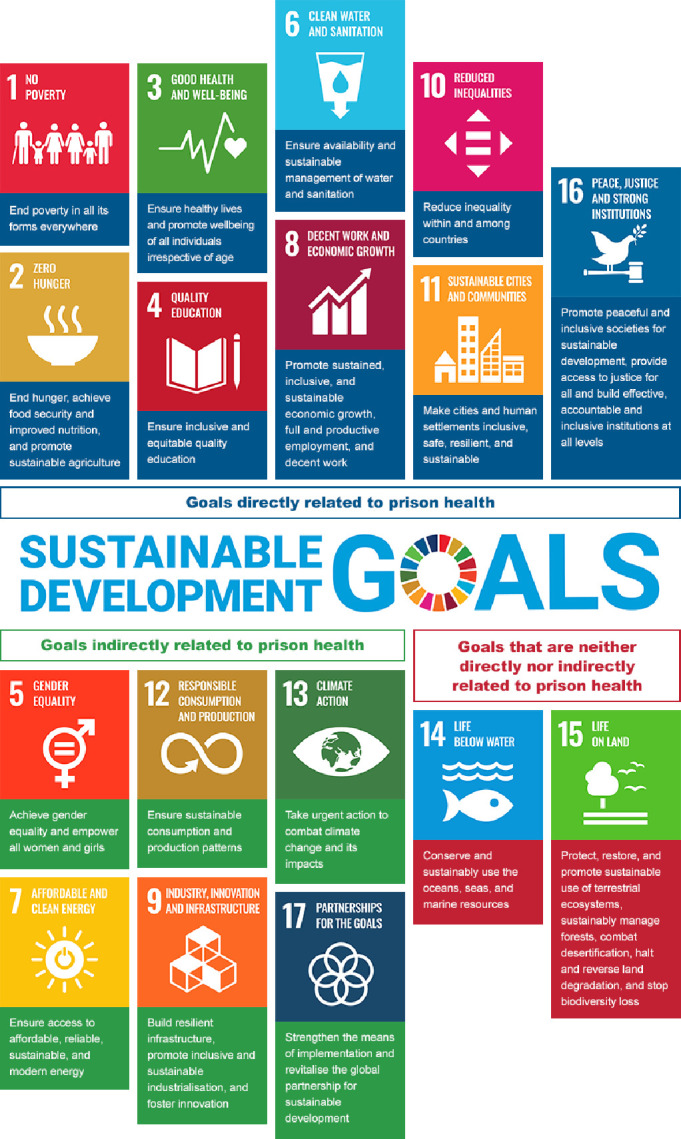
Worldwide, approximately 11 million people are currently being held in prison, a number that has steadily grown since the turn of the 21st century. The prison population is more likely to suffer from physical and mental ailments both during and prior to their imprisonment due to poverty, social exclusion and chaotic lifestyles. Recognition of people in prison is noticeably absent from the Sustainable Development Goals (SDGs), despite the goals' ethos of 'leaving no one behind'.We present the first analysis of how improving the health of people in prison can contribute to achieving 15 SDGs. Relevant indicators are proposed to fulfil these goals while meeting the existing international prison health standards. We also assess the political, economic and social challenges, alongside the unparalleled COVID-19 pandemic that can thwart the realisation of the SDGs. To reach the 'furthest behind first', prison health must be at the forefront of the SDGs.
全球范围内,目前约有1100万人被关押在监狱中,自21世纪初以来,这一数字一直在稳步增长。由于贫困、社会排斥和混乱的生活方式,监狱人口在入狱期间及入狱前更有可能患有身心疾病。尽管可持续发展目标秉持“不让任何一个人掉队”的理念,但监狱人口却明显未被纳入其中。我们首次分析了改善监狱人口健康状况如何有助于实现15个可持续发展目标。在符合现有国际监狱健康标准的同时,我们提出了实现这些目标的相关指标。我们还评估了可能阻碍可持续发展目标实现的政治、经济和社会挑战,以及史无前例的新冠疫情。为了“先帮助最落后的人”,监狱健康必须处于可持续发展目标的前沿。