Department of Molecular Physiology and Biophysics, Vanderbilt University, 747 Light Hall, 2215 Garland Avenue, Nashville, TN 37232, USA.
Department of Molecular Physiology and Biophysics, Vanderbilt University, 747 Light Hall, 2215 Garland Avenue, Nashville, TN 37232, USA.
J Mol Biol. 2021 Aug 6;433(16):166959. doi: 10.1016/j.jmb.2021.166959. Epub 2021 Mar 24.
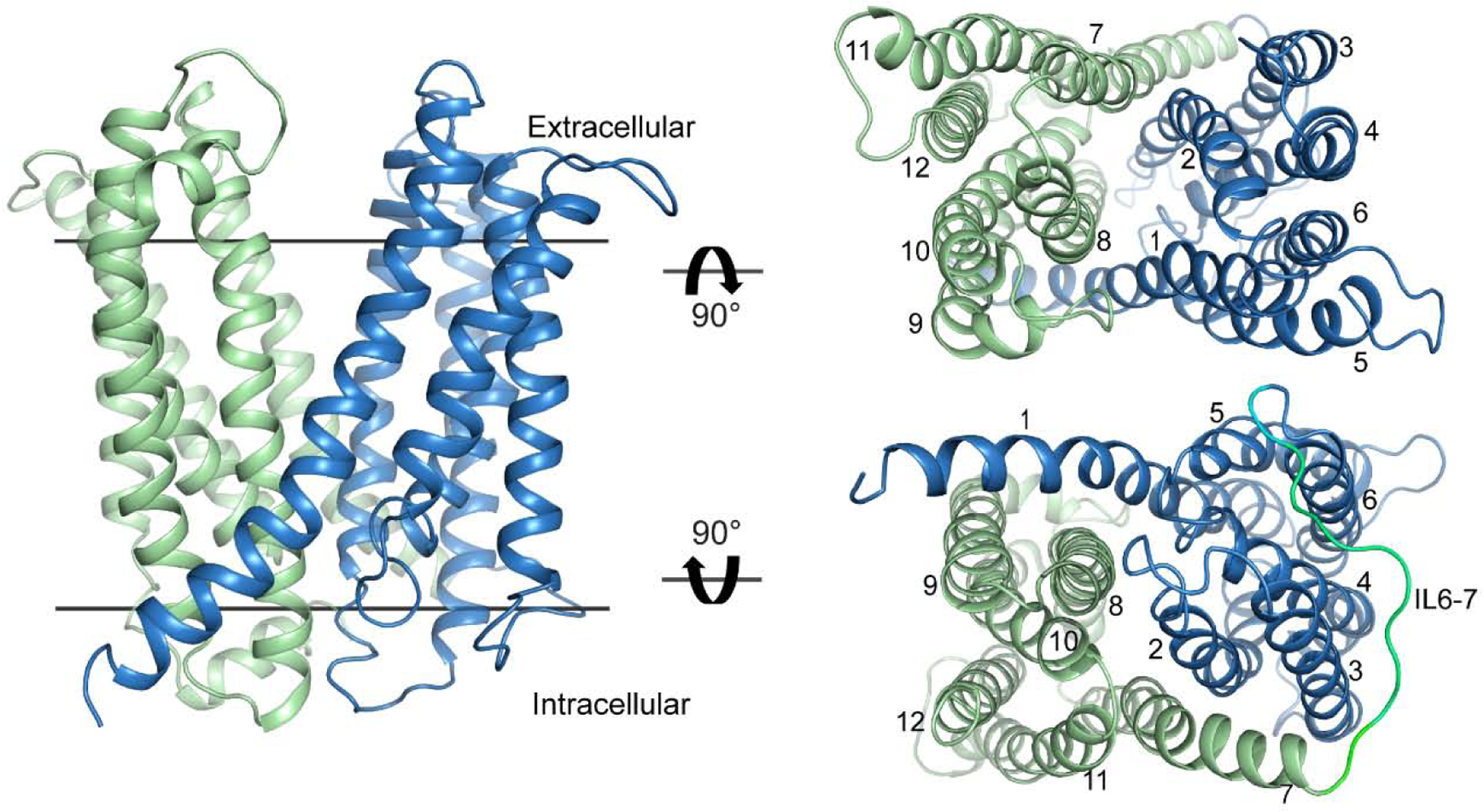
The multidrug and toxin extrusion (MATE) transporters catalyze active efflux of a broad range of chemically- and structurally-diverse compounds including antimicrobials and chemotherapeutics, thus contributing to multidrug resistance in pathogenic bacteria and cancers. Multiple methodological approaches have been taken to investigate the structural basis of energy transduction and substrate translocation in MATE transporters. Crystal structures representing members from all three MATE subfamilies have been interpreted within the context of an alternating access mechanism that postulates occupation of distinct structural intermediates in a conformational cycle powered by electrochemical ion gradients. Here we review the structural biology of MATE transporters, integrating the crystallographic models with biophysical and computational studies to define the molecular determinants that shape the transport energy landscape. This holistic analysis highlights both shared and disparate structural and functional features within the MATE family, which underpin an emerging theme of mechanistic diversity within the framework of a conserved structural scaffold.
多药和毒素外排(MATE)转运蛋白催化广泛的化学和结构多样的化合物的主动外排,包括抗生素和化疗药物,从而导致病原细菌和癌症的多药耐药性。已经采用了多种方法来研究 MATE 转运蛋白中能量转导和底物转运的结构基础。晶体结构代表了所有三个 MATE 亚家族的成员,这些结构在一个假设的交替访问机制中进行了解释,该机制假设在电化学离子梯度驱动的构象循环中占据不同的结构中间体。在这里,我们综述了 MATE 转运蛋白的结构生物学,将晶体模型与生物物理和计算研究相结合,以确定塑造运输能量景观的分子决定因素。这种整体分析突出了 MATE 家族内共享和不同的结构和功能特征,这是在保守的结构支架框架内的机制多样性的新兴主题的基础。