da Luz Thiarlen Marinho, Araújo Amanda Pereira da Costa, Estrela Fernanda Neves, Braz Helyson Lucas Bezerra, Jorge Roberta Jeane Bezerra, Charlie-Silva Ives, Malafaia Guilherme
Laboratório de Pesquisas Biológicas, Instituto Federal Goiano, Urutaí, GO, Brazil.
Programa de Pós-Graduação em Ciências Ambientais, Universidade Federal de Goiás, Goiânia, GO, Brazil.
Sci Total Environ. 2021 Aug 1;780:146553. doi: 10.1016/j.scitotenv.2021.146553. Epub 2021 Mar 18.
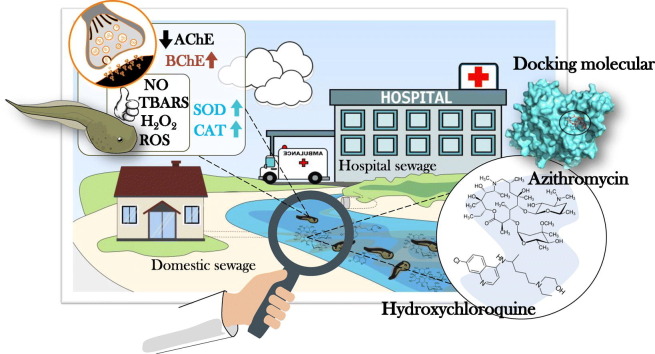
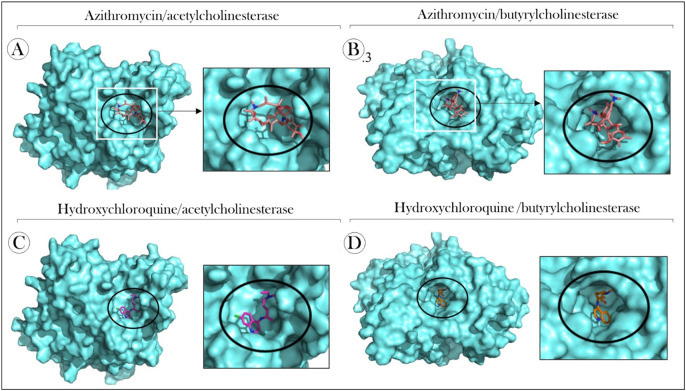
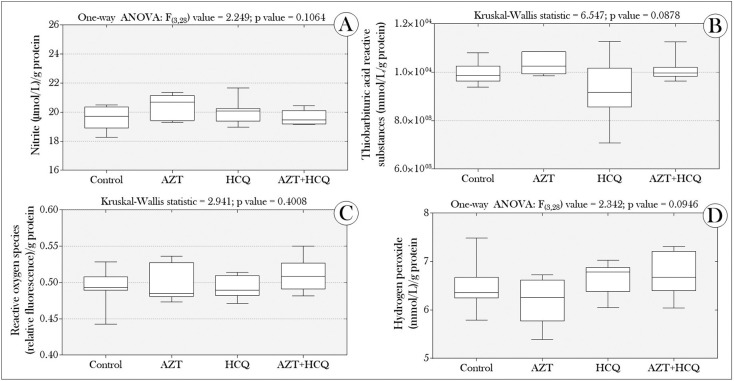
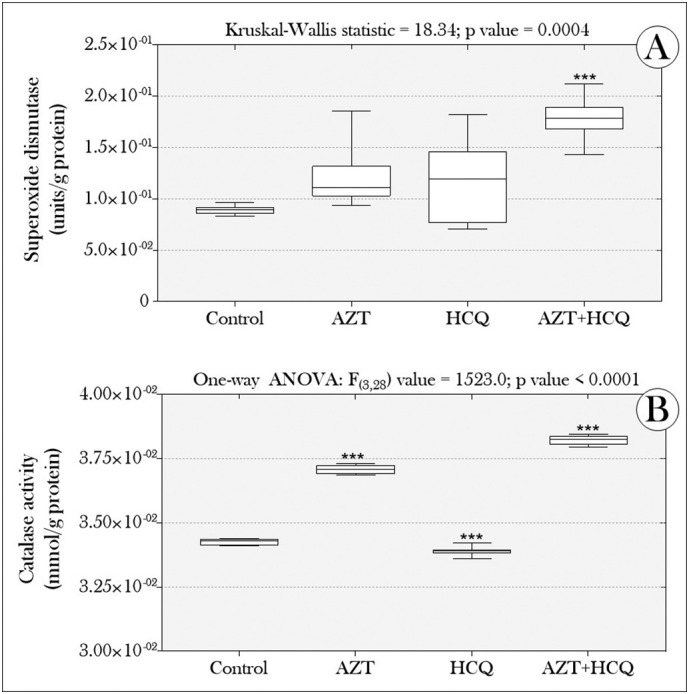
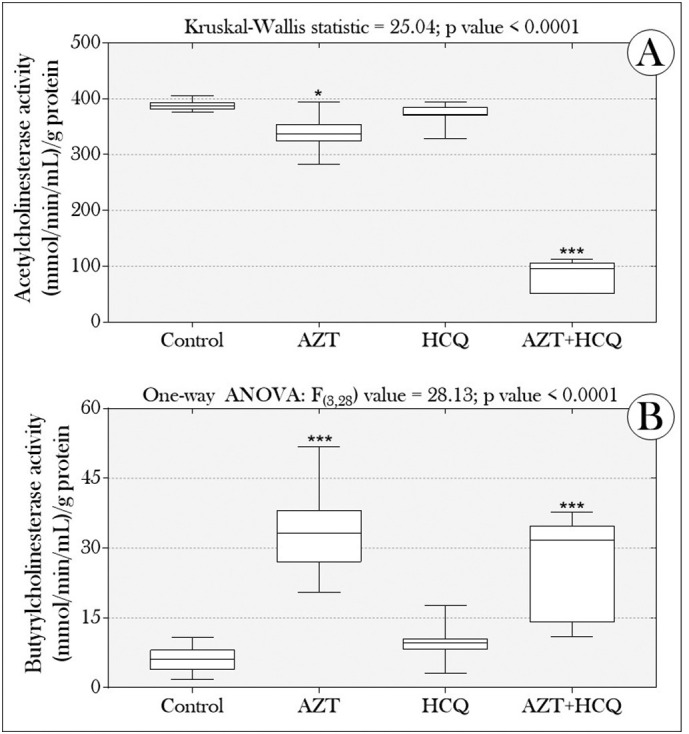
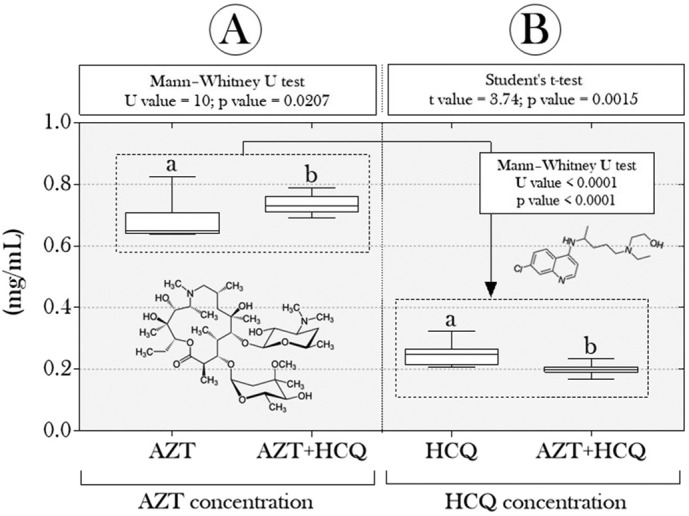
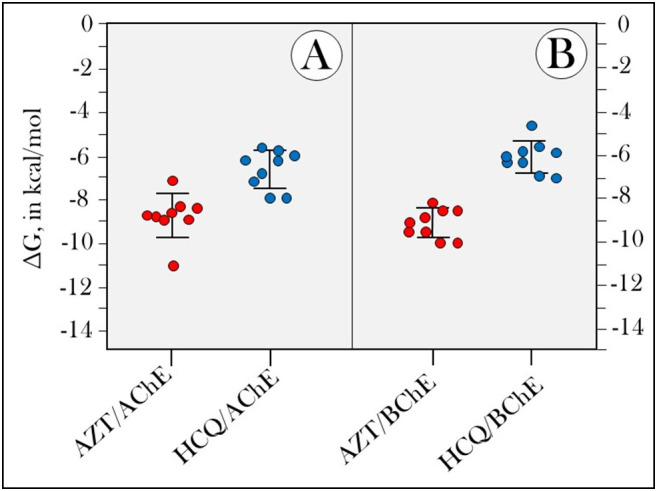
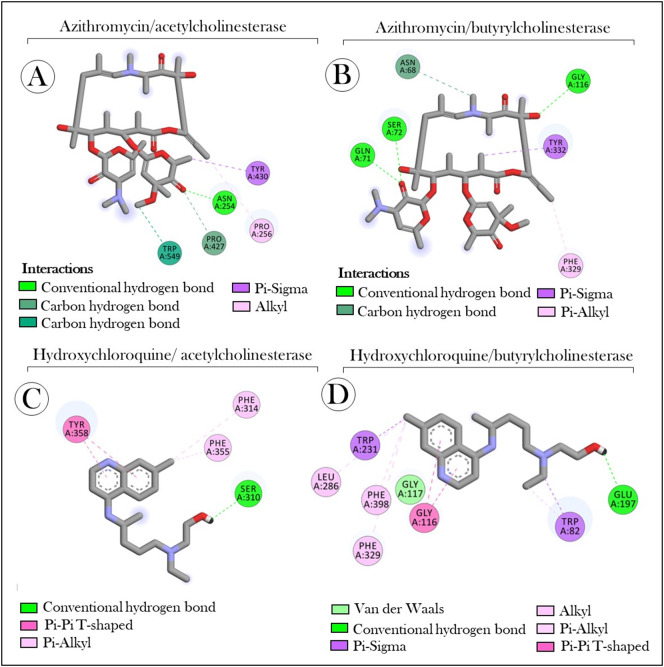
The impacts on human health and the economic and social disruption caused by the pandemic COVID-19 have been devastating. However, its environmental consequences are poorly understood. Thus, to assess whether COVID-19 therapy based on the use of azithromycin (AZT) and hydroxychloroquine (HCQ) during the pandemic affects wild aquatic life, we exposed (for 72 h) neotropical tadpoles of the species Physalaemus cuvieri to the water containing these drugs to 12.5 μg/L. We observed that the increase in superoxide dismutase and catalase in tadpoles exposed to AZT (alone or in combination with HCQ) was predominant to keep the production of NO, ROS, TBARS and HO equitable between the experimental groups. In addition, the uptake of AZT and the strong interaction of AZT with acetylcholinesterase (AChE), predicted by the molecular docking analysis, were associated with the anticholinesterase effect observed in the groups exposed to the antibiotic. However, the unexpected increase in butyrylcholinesterase (BChE) in these same groups suggests its constitutive role in maintaining cholinergic homeostasis. Therefore, taken together, our data provide a pioneering evidence that the exposure of P. cuvieri tadpoles to AZT (alone or in combination with HCQ) in a predictably increased environmental concentration (12.5 μg/L) elicits a compensatory adaptive response that can have, in the short period of exposure, guaranteed the survival of the animals. However, the high energy cost for maintaining physiological homeostasis, can compromise the growth and development of animals and, therefore, in the medium-long term, have a general negative effect on the health of animals. Thus, it is possible that COVID-19 therapy, based on the use of AZT, affects wild aquatic life, which requires greater attention to the impacts that this drug may represent.
新型冠状病毒肺炎(COVID-19)大流行对人类健康以及经济和社会造成的破坏是毁灭性的。然而,其环境后果却鲜为人知。因此,为了评估大流行期间基于使用阿奇霉素(AZT)和羟氯喹(HCQ)的COVID-19治疗方法是否会影响野生水生生物,我们将库维氏泡蟾的新热带蝌蚪暴露于含有这些药物(浓度为12.5μg/L)的水中72小时。我们观察到,暴露于AZT(单独或与HCQ联合使用)的蝌蚪体内超氧化物歧化酶和过氧化氢酶的增加占主导地位,以保持实验组之间一氧化氮、活性氧、丙二醛和羟基自由基的产生平衡。此外,分子对接分析预测的AZT摄取以及AZT与乙酰胆碱酯酶(AChE)的强烈相互作用,与在暴露于该抗生素的组中观察到的抗胆碱酯酶作用相关。然而,这些相同组中丁酰胆碱酯酶(BChE)的意外增加表明其在维持胆碱能稳态中的组成作用。因此,综合来看,我们的数据提供了一个开创性的证据,即库维氏泡蟾蝌蚪在可预测增加的环境浓度(12.5μg/L)下暴露于AZT(单独或与HCQ联合使用)会引发一种补偿性适应性反应,在短时间暴露内可以保证动物的存活。然而,维持生理稳态的高能量成本可能会损害动物的生长和发育,因此,从中长期来看,会对动物健康产生普遍的负面影响。因此,基于AZT的COVID-19治疗方法有可能影响野生水生生物,这需要更加关注这种药物可能带来的影响。