Stiewert Austin M, Wooming Brian, Archer Gregory S
Department of Poultry Science, Texas A&M University, College Station, USA 77843.
Cargill, Inc., Minneapolis, MN, USA 55440.
Poult Sci. 2021 May;100(5):101053. doi: 10.1016/j.psj.2021.101053. Epub 2021 Feb 16.
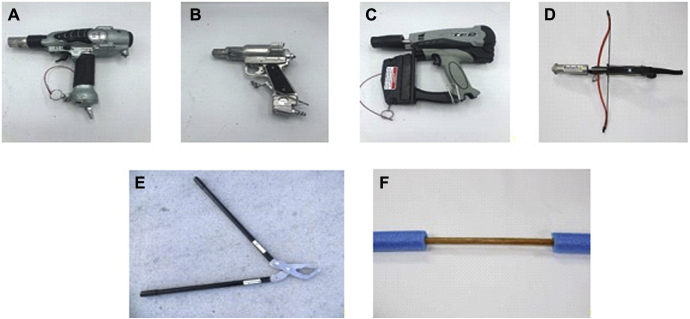
On-farm euthanasia of poultry is a necessity for minimizing disease spread and removing sick or injured birds to maintain optimum animal welfare. There are numerous methods that are approved for euthanasia of poultry by organizations like the American Veterinary Medical Association; however, all approved methods are not easily carried out on-farm or as effective as one another. Therefore, the objective of this study was to compare several captive bolt devices (Turkey Euthanasia Device, Zephyr-EXL, Jarvis Stunner, Experimental Crossbow), mechanical cervical dislocation (Broomstick method [BRM] and Koechner Euthanasia Device [KED]), and manual cervical dislocation (MAN) methods on 8 and 12-week-old turkey hens. Each method was assessed for impact on loss of brain stem reflexes, euthanasia success, and torn skin. The cervical dislocation techniques were also analyzed via radiograph for proper dislocation. Furthermore, each device was assessed for physical parameters. Turkeys (n = 1,400) were euthanized on 20 sampling days, 10 sampling days for each age period. All methods resulted in euthanasia of all turkeys in this study. The captive bolt devices all resulted in immediate loss of nictitating membrane and pupillary reflex at both the ages tested. The cervical dislocation methods differed in both nictitating membrane and pupillary reflex cessation at both ages (P < 0.05). The pattern was the same at both ages with the KED device have longer latencies to cessation of both reflexes when compared to the BRM and MAN methods (P < 0.05). Cessation of movement was also generally longer in dislocation methods compared to captive bolt at both ages. However, captive bolt devices resulted in more lacerations of the skin in general. MAN was also found to result in less damage to the vertebrae and proper location of separation than the mechanical methods of dislocation. All methods resulted in effective euthanasia; however, captive bolt methods resulted in immediate loss of brain stem reflexes indicating that they maybe more humane than cervical dislocation methods.
对家禽进行农场内安乐死是减少疾病传播、移除病禽或受伤禽类以维持最佳动物福利的必要手段。美国兽医协会等组织批准了多种用于家禽安乐死的方法;然而,并非所有批准的方法都便于在农场实施,且彼此的效果也不尽相同。因此,本研究的目的是比较几种栓击式致昏设备(火鸡安乐死设备、西风EXL、贾维斯击晕器、实验性弩)、机械颈椎脱臼法(扫帚柄法[BRM]和科赫纳安乐死设备[KED])以及人工颈椎脱臼法(MAN)对8周龄和12周龄火鸡母鸡的效果。评估了每种方法对脑干反射丧失、安乐死成功率和皮肤撕裂的影响。还通过X光片分析颈椎脱臼技术是否正确脱臼。此外,评估了每个设备的物理参数。在20个采样日对火鸡(n = 1400)实施安乐死,每个年龄段各有10个采样日。本研究中所有方法均导致所有火鸡被安乐死。在两个测试年龄段,栓击式致昏设备均导致瞬膜和瞳孔反射立即消失。颈椎脱臼法在两个年龄段的瞬膜和瞳孔反射停止方面均存在差异(P < 0.05)。两个年龄段的模式相同,与BRM和MAN方法相比,KED设备使两种反射停止的延迟时间更长(P < 0.05)。与栓击式致昏相比,两个年龄段的脱臼法中运动停止的时间通常也更长。然而,总体而言,栓击式致昏设备导致的皮肤撕裂更多。还发现与机械脱臼方法相比,MAN对椎骨的损伤更小且分离位置正确。所有方法均能有效实施安乐死;然而,栓击式致昏方法导致脑干反射立即消失,这表明它们可能比颈椎脱臼法更人道。