Orthopaedic Clinic, Ospedale Policlinico San Martino, Largo R. Benzi 10, 16132, Genova, Italy.
Department of Surgical Sciences and Integrated Diagnostic (DISC), University of Genoa, Viale Benedetto XV 6, 16132, Genoa, Italy.
Int Orthop. 2021 Jul;45(7):1683-1691. doi: 10.1007/s00264-021-05013-5. Epub 2021 Mar 27.
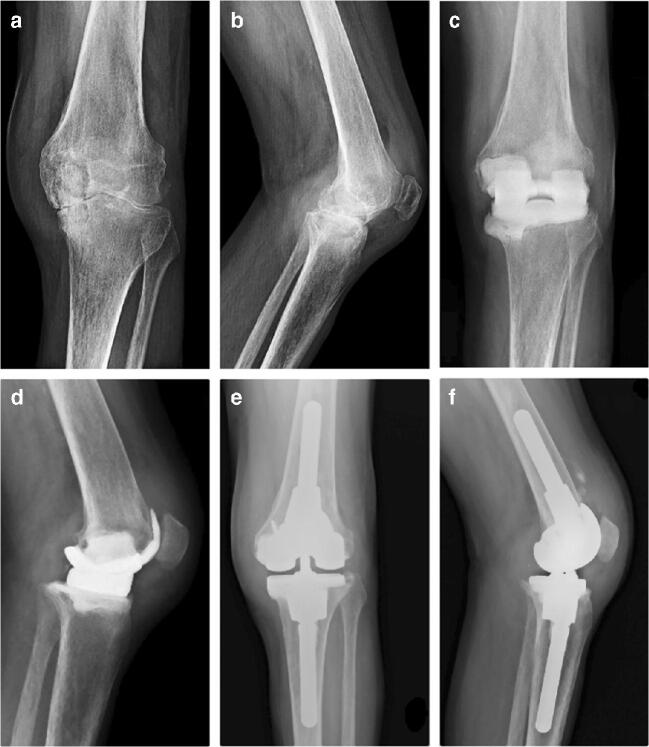
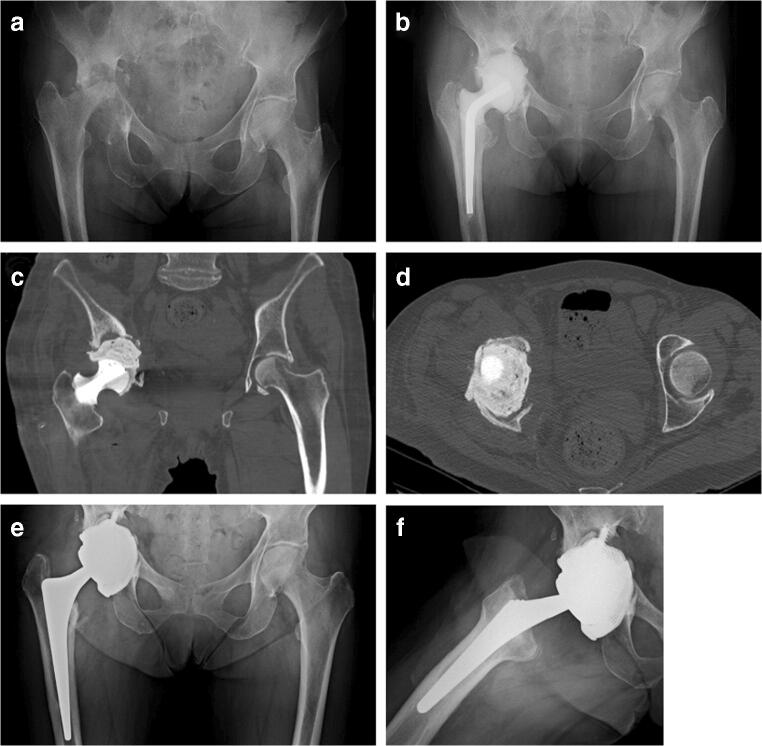
Septic arthritis of the native joint is challenging for orthopedic surgeons because it may lead to wide bone defects and severe impairment of joint function. This study aimed to analyze clinical functional outcomes, the rate of infection eradication, and survival of implants of patients who underwent two-stage arthroplasty for septic arthritis of the hip and knee.
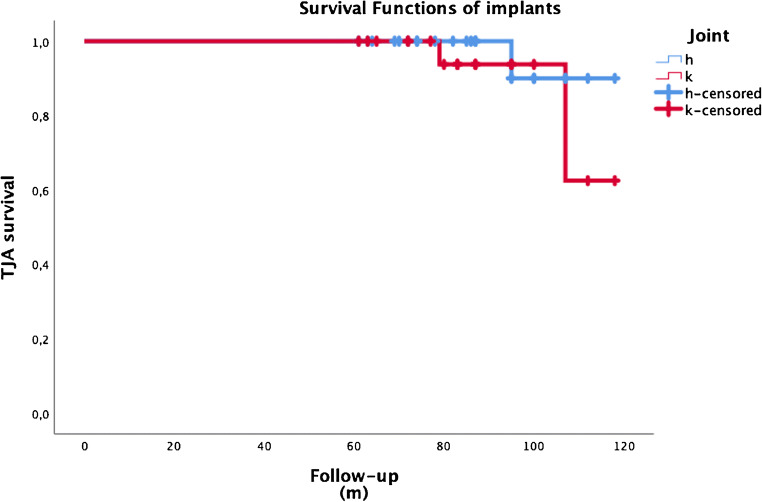
A retrospective single-centre analysis was conducted of patients treated for septic arthritis of the hip and knee joints through a two-stage surgery between 2012 and 2015. Clinical and radiological records were gathered from the prospectively collected Institutional Arthroplasty Registry. Patients' pre-operative Harris hip scores and Knee Society scores were compared with those obtained at the latest follow-up. Kaplan-Meier curves were generated to assess survival of implants.
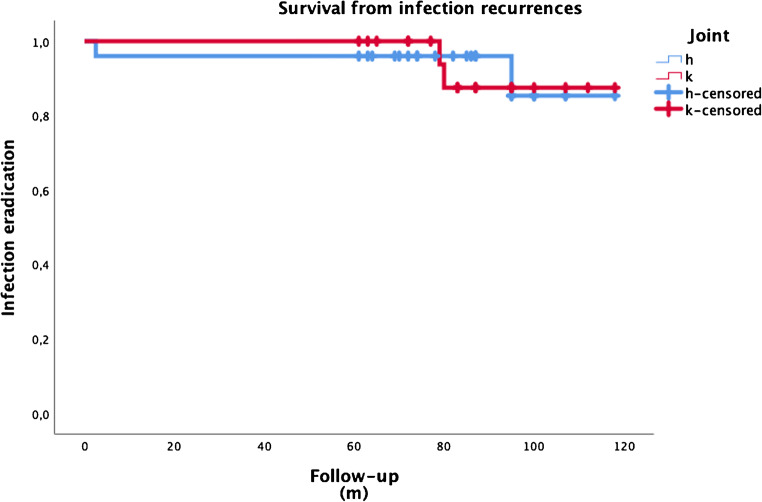
Forty-seven patients were included. The mean follow-up was 85.2 ± 15.4 months. The Harris hip score improved from 39.4 ± 9.9 to 84.5 ± 10.8 points (p < 0.001). The Knee Society score improved from 40.7 ± 8.4 to 86.0 ± 7.8 points (p < 0.001). Knee Society score-function increased from 25.7 ± 14.2 to 85.4 ± 23.4 points (p < 0.001). The infection eradication rates were 92.0% and 90.9% in patients who underwent hip and knee operation, respectively (p = 0.891). Overall survivorship of implants after the second stage was 93.6%.
Two-stage arthroplasty provides good to excellent clinical outcomes in cases of active septic arthritis of the hip and the knee, high rates of infection control, and implant survival.
对于骨科医生来说,原发性关节感染性关节炎具有挑战性,因为它可能导致广泛的骨缺损和严重的关节功能障碍。本研究旨在分析髋关节和膝关节感染性关节炎行二期关节置换术患者的临床功能结果、感染清除率和植入物存活率。
对 2012 年至 2015 年期间通过两期手术治疗髋关节和膝关节感染性关节炎的患者进行回顾性单中心分析。从机构关节置换登记处前瞻性收集临床和影像学记录。将患者术前的 Harris 髋关节评分和膝关节协会评分与最新随访时的评分进行比较。生成 Kaplan-Meier 曲线评估植入物的存活率。
共纳入 47 例患者。平均随访时间为 85.2 ± 15.4 个月。Harris 髋关节评分从 39.4 ± 9.9 分提高到 84.5 ± 10.8 分(p < 0.001)。膝关节协会评分从 40.7 ± 8.4 分提高到 86.0 ± 7.8 分(p < 0.001)。膝关节协会评分-功能从 25.7 ± 14.2 分提高到 85.4 ± 23.4 分(p < 0.001)。髋关节和膝关节手术患者的感染清除率分别为 92.0%和 90.9%(p = 0.891)。二期手术后植入物的总体存活率为 93.6%。
对于活动性髋关节和膝关节感染性关节炎患者,两期关节置换术可提供良好至优秀的临床结果、高感染控制率和植入物存活率。