Lim Hui-Shan Angela, Yeo Kuei Siong Andy, Raghuraman Raghavan, Kon Kam King Charles, Moo Ing How
Department of Orthopedics Surgery, Changi General Hospital, Singapore.
J Orthop Case Rep. 2024 Dec;14(12):46-51. doi: 10.13107/jocr.2024.v14.i12.5014.
Prompt diagnosis and management of septic arthritis are pivotal for early infection eradication, joint preservation, and prevention of quality-of-life impact consequences. Total hip arthroplasty has been introduced for the management of severe destructive septic arthritis with the aims to eradicate infection while preserving hip function. Few case studies have been done on two-stage exchange total hip arthroplasty for treatment of native hip septic arthritis using prosthesis with antibiotic-loaded acrylic cement articulating spacer with generally good outcomes. However, a small percentage of patients electively chose not to proceed with the second-stage exchange arthroplasty. Therefore, 1.5-stage total hip arthroplasty was considered a viable option; however, it has only been established in periprosthetic infection management, but not in native hip septic arthritis. Custom-made articulating spacers are considered an ideal option as has no constraints, are more readily available, and were designed to be a functional single-stage spacer that can remain permanent yet not preclude the possibility of a second-stage exchange surgery if required. Overall, this led to the consideration of 1.5-stage total hip arthroplasty using custom-made articulating spacers for the management of chronic destructive hip septic arthritis.
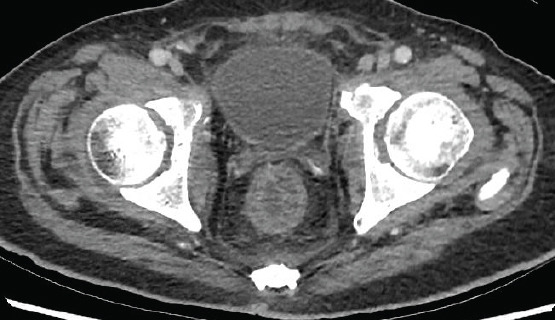
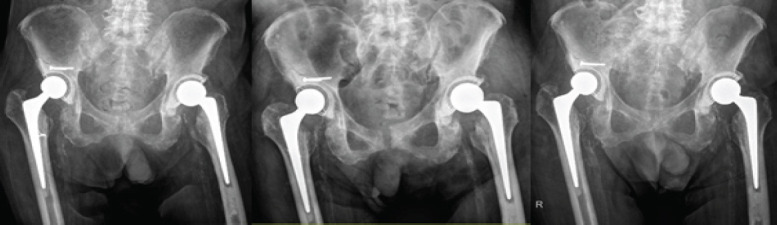
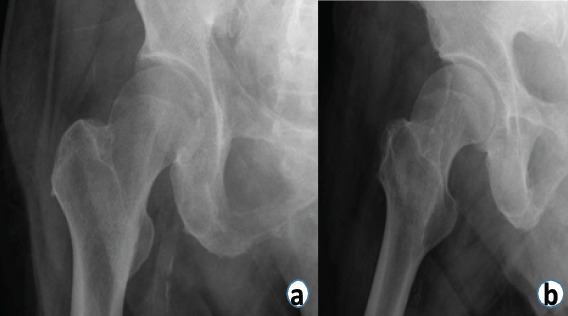
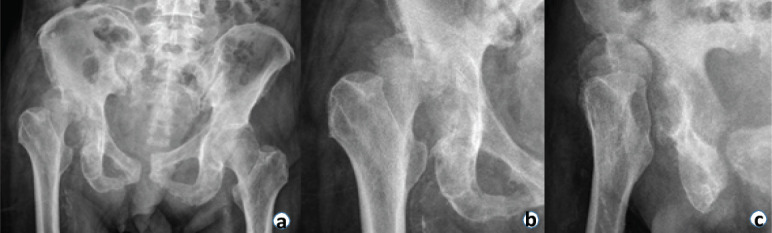
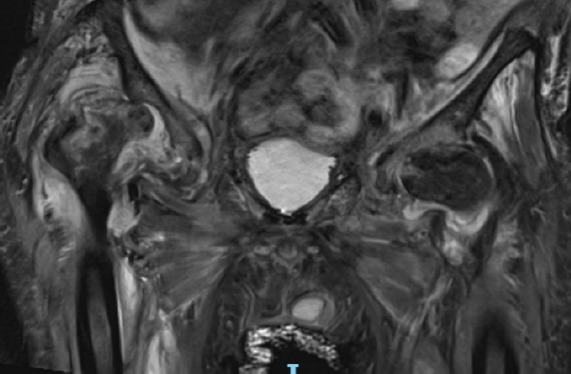
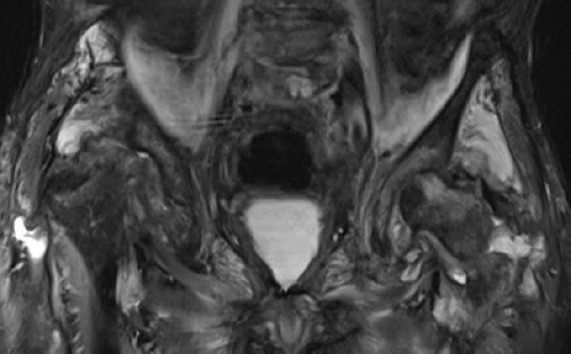
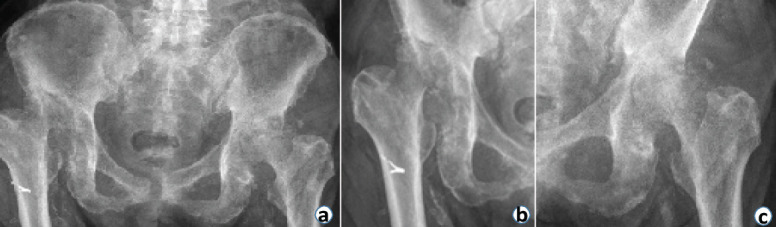
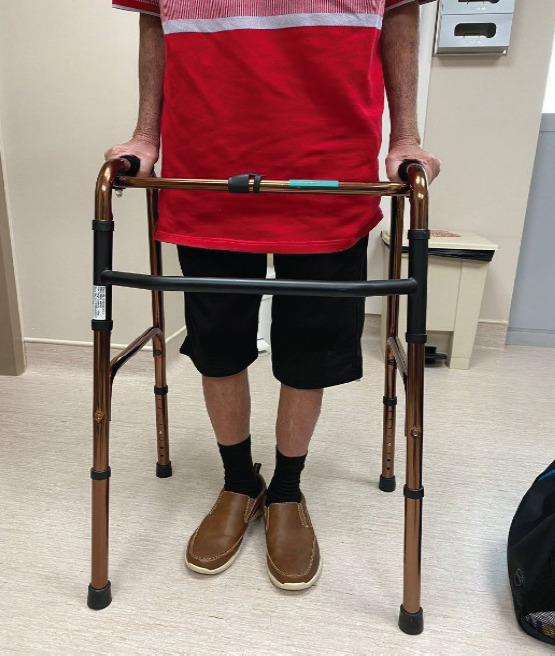
We report a 67-year-old patient with functional decline from fully independent without aids to chairbound over 8 months. Work-up revealed raised inflammatory markers and bilateral destructive hip septic arthritis. He underwent bilateral 1.5-stage total hip arthroplasty with antibiotic-loaded custom-made articulating spacers. One-year post-operation, he remains infection-free and is progressing well with rehabilitation - ambulating independently with walking frame.
Management of septic arthritis varies largely depending on infection duration, activity level, and extent of joint destruction. In significantly destructed hip septic arthritis, 1.5-stage total hip arthroplasty using antibiotic-loaded custom-made articulating spacer is a viable option with the benefits of effective infection eradication, good functional outcomes, cost-effectiveness, reduced physical and psychological burden in avoiding a second operation, all whilst not precluding the possibility of a second-stage exchange arthroplasty if required with ease.
脓毒性关节炎的及时诊断和治疗对于早期根除感染、保留关节以及预防对生活质量产生影响的后果至关重要。全髋关节置换术已被用于治疗严重破坏性脓毒性关节炎,目的是在保留髋关节功能的同时根除感染。关于使用含抗生素的丙烯酸骨水泥关节连接间隔物的假体进行两阶段置换全髋关节置换术治疗原发性髋关节脓毒性关节炎的病例研究较少,总体效果良好。然而,有一小部分患者选择不进行第二阶段置换关节成形术。因此,1.5阶段全髋关节置换术被认为是一种可行的选择;然而,它仅在假体周围感染的治疗中得到确立,而在原发性髋关节脓毒性关节炎中尚未确立。定制的关节连接间隔物被认为是理想的选择,因为它没有限制,更容易获得,并且被设计为功能性的单阶段间隔物,可以永久保留,但如果需要也不排除进行第二阶段置换手术的可能性。总体而言,这促使人们考虑使用定制的关节连接间隔物进行1.5阶段全髋关节置换术来治疗慢性破坏性髋关节脓毒性关节炎。
我们报告了一名67岁的患者,其功能在8个月内从完全独立无需辅助逐渐下降至需依靠轮椅。检查发现炎症标志物升高以及双侧破坏性髋关节脓毒性关节炎。他接受了双侧1. .5阶段全髋关节置换术,使用了含抗生素的定制关节连接间隔物。术后一年,他仍未感染,康复进展良好,可借助助行架独立行走。
脓毒性关节炎的治疗很大程度上取决于感染持续时间、活动水平和关节破坏程度。在严重破坏的髋关节脓毒性关节炎中,使用含抗生素的定制关节连接间隔物进行1.5阶段全髋关节置换术是一种可行的选择,其优点包括有效根除感染、良好的功能结果、成本效益、避免二次手术减轻身体和心理负担,同时如果需要也可轻松进行第二阶段置换关节成形术。