Department of Thoracic Surgery, The First Hospital of Jilin University, Changchun, 130021, People's Republic of China.
Department of Orthopedic Surgery, China-Japan Union Hospital of Jilin University, Changchun, 130033, People's Republic of China.
Int J Nanomedicine. 2021 Mar 18;16:2247-2269. doi: 10.2147/IJN.S300594. eCollection 2021.
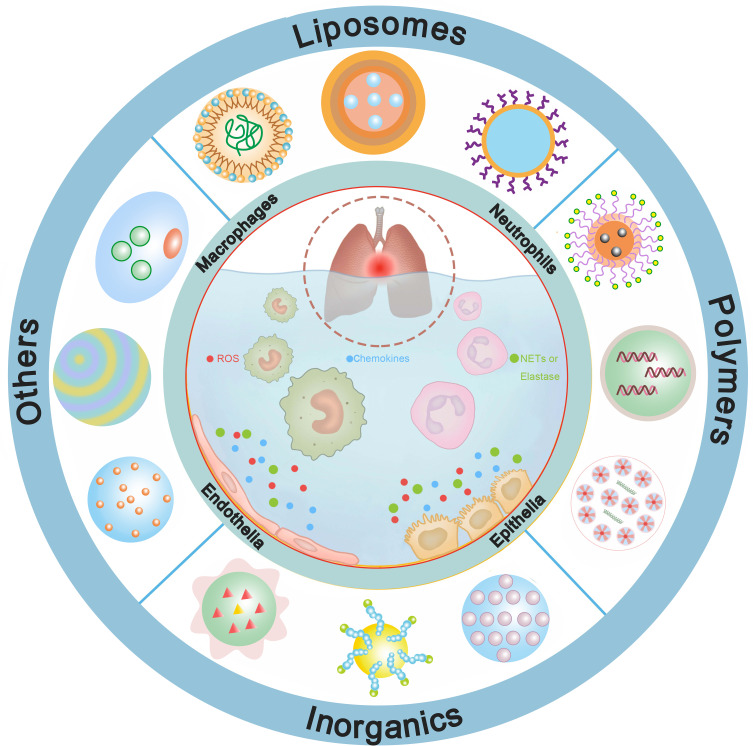
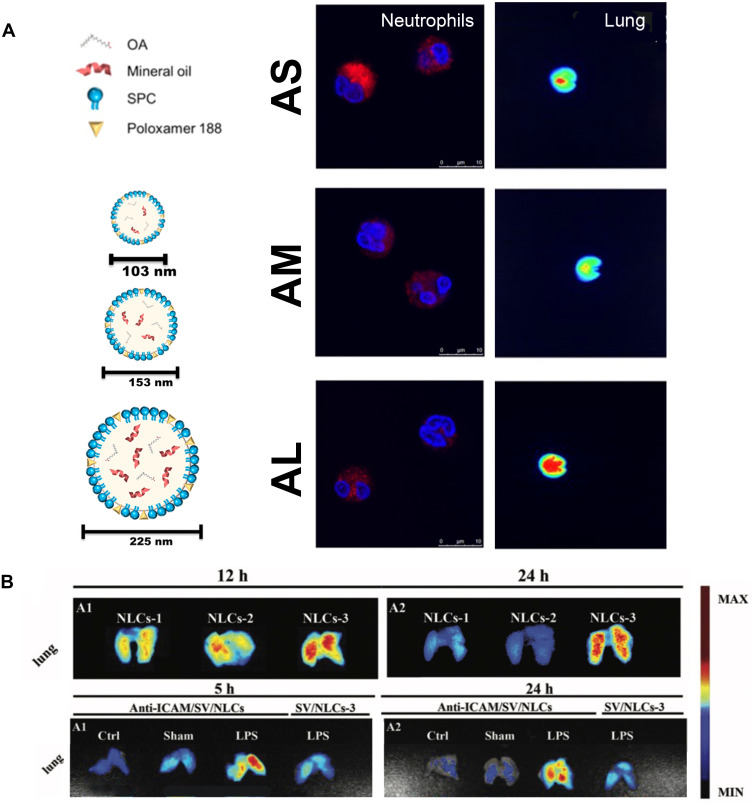
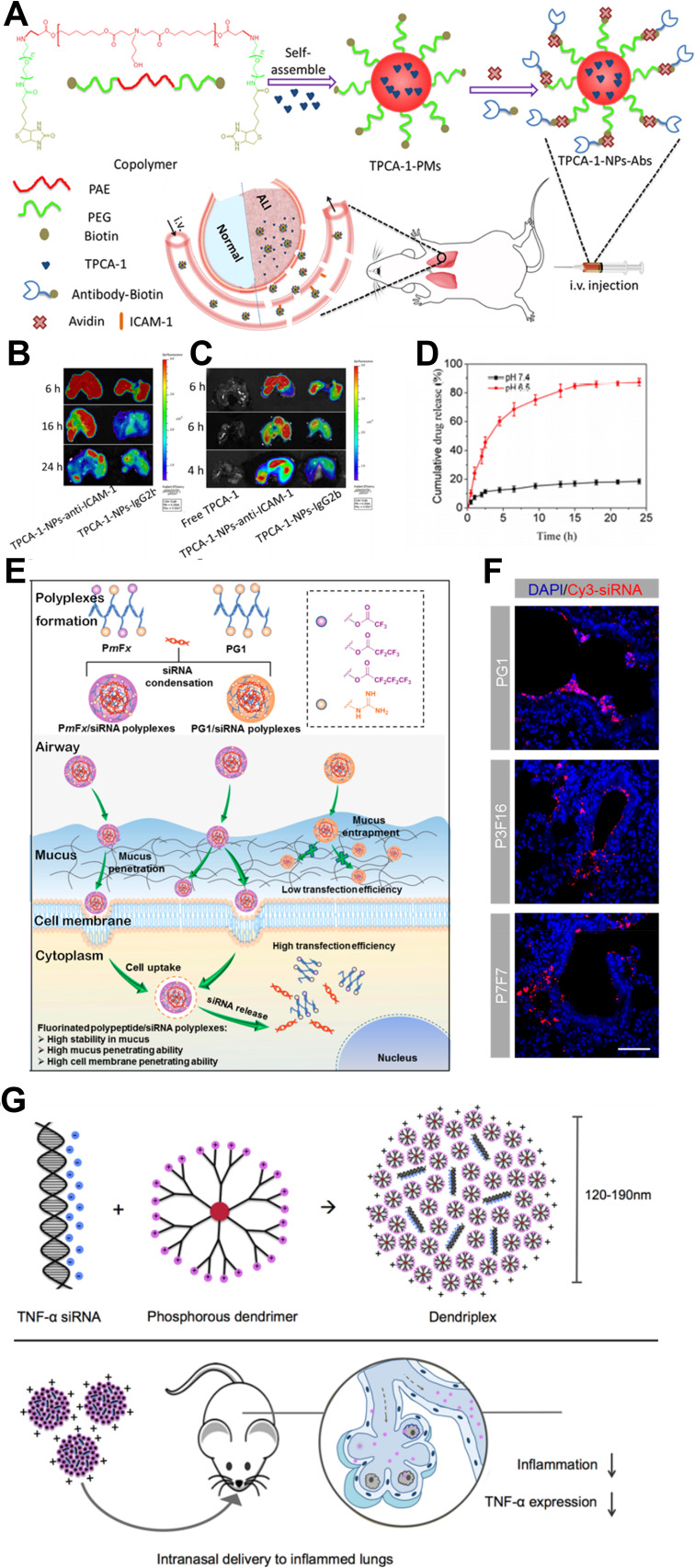
Acute lung injury (ALI) or its aggravated stage acute respiratory distress syndrome (ARDS) may lead to a life-threatening form of respiratory failure, resulting in high mortality of up to 30-40% in most studies. Although there have been decades of research since ALI was first described in 1967, the clinical therapeutic alternatives for ALI are still in a state of limited availability. Supportive treatment and mechanical ventilation still have priority. Despite some preclinical studies demonstrating the benefit of pharmacological interventions, none of these has been proved completely effective to date. Recent advances in nanotechnology may shed new light on the pharmacotherapy of ALI. Nanomedicine possesses targeting and synergistic therapeutic capability, thus boosting pharmaceutical efficacy and mitigating the side effects. Currently, a variety of nanomedicine with diverse frameworks and functional groups have been elaborately developed, in accordance with their lung targeting ability and the pathophysiology of ALI. The in-depth review of the current literature reveals that liposomes, polymers, inorganic materials, cell membranes, platelets, and other nanomedicine approaches have conferred attractive therapeutic benefits for ALI treatment. In this review, we explore the recent progress in the study of the nanomedicine-based therapy of ALI, presenting various nanomedical approaches, drug choices, therapeutic strategies, and outcomes, thereby providing insight into the trends.
急性肺损伤(ALI)或其加重阶段急性呼吸窘迫综合征(ARDS)可能导致危及生命的呼吸衰竭形式,导致大多数研究中的死亡率高达 30-40%。尽管自 1967 年首次描述 ALI 以来已经进行了数十年的研究,但 ALI 的临床治疗选择仍然有限。支持性治疗和机械通气仍然是优先事项。尽管一些临床前研究表明药物干预的益处,但迄今为止,没有一种被证明是完全有效的。纳米技术的最新进展可能为 ALI 的药物治疗带来新的曙光。纳米医学具有靶向和协同治疗能力,从而提高药物疗效并减轻副作用。目前,已经根据其肺部靶向能力和 ALI 的病理生理学,精心开发了具有不同框架和官能团的各种纳米医学。深入回顾当前文献表明,脂质体、聚合物、无机材料、细胞膜、血小板和其他纳米医学方法为 ALI 治疗带来了有吸引力的治疗益处。在这篇综述中,我们探讨了基于纳米医学的 ALI 治疗的最新进展,介绍了各种纳米医学方法、药物选择、治疗策略和结果,从而洞察了该领域的发展趋势。